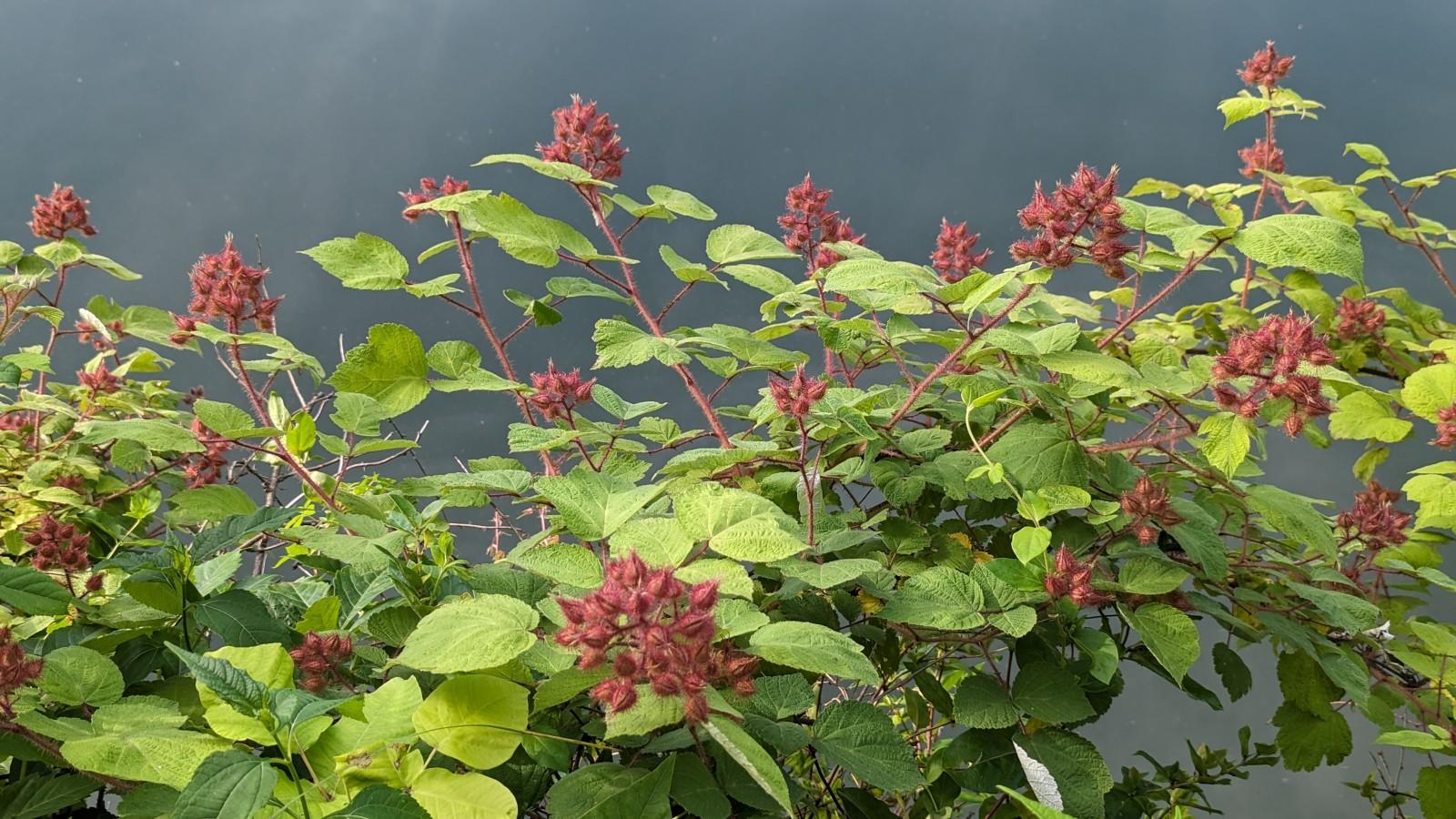
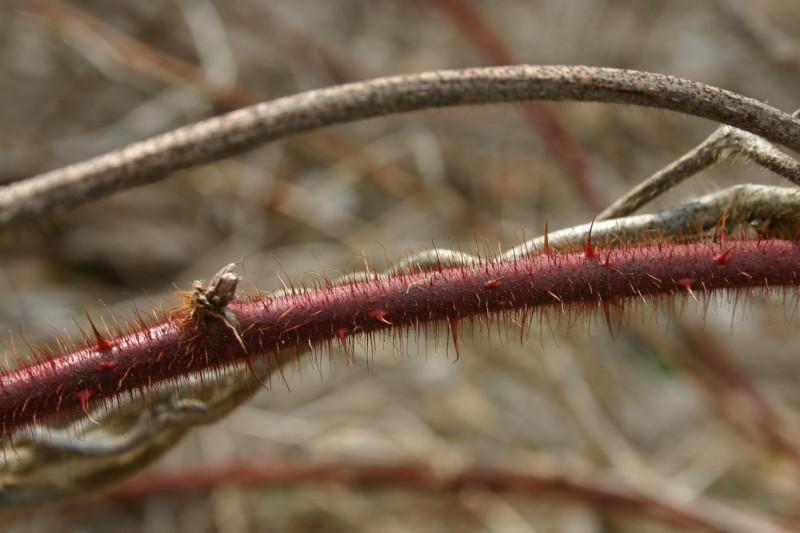
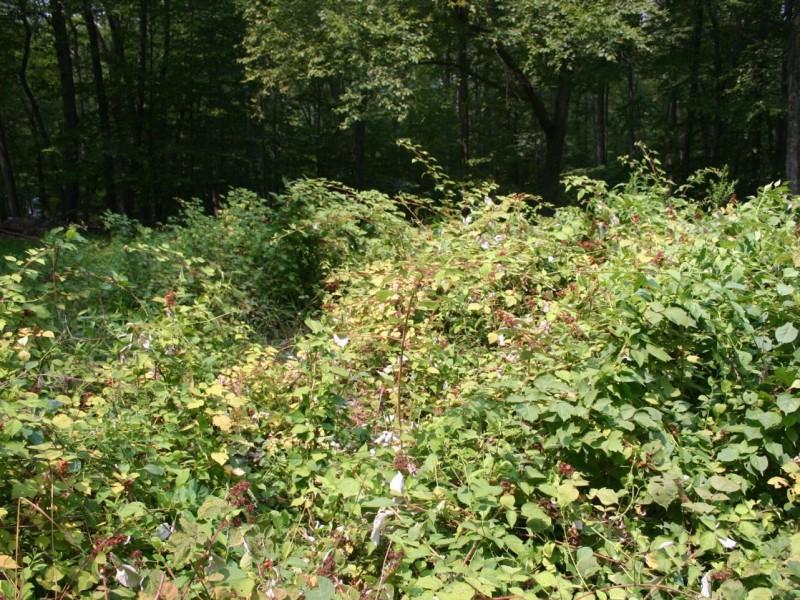
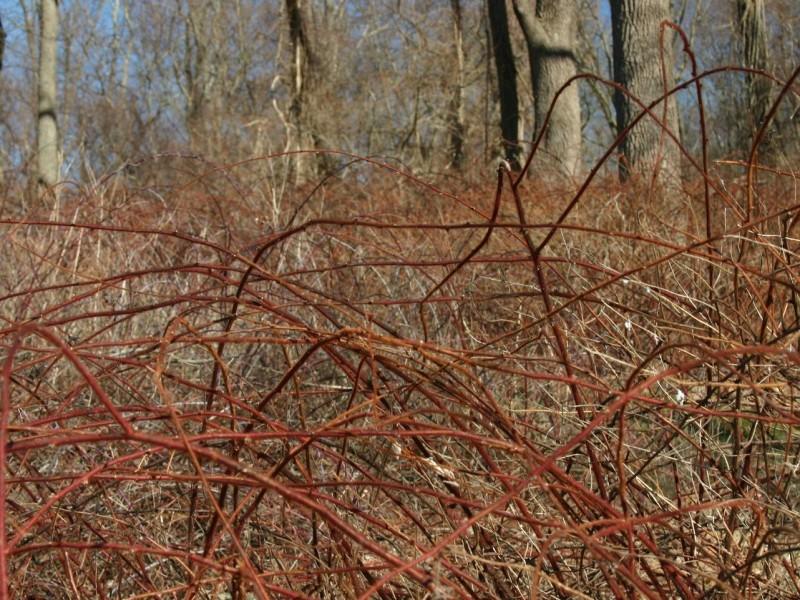
Wineberry (Rubus phoenicolasius) with stems and flower buds covered with wine-red prickles and hairs.
Photo: Miri Talabac, University of Maryland Extension
Updated: April 28, 2026
Wineberry, also called wine raspberry (Rubus phoenicolasius), is a deciduous flowering shrub bearing edible fruit. It is native to East Asia and was introduced to the U.S. in the late 1800s as hybridization material for new raspberry cultivars.
Physical features of wineberry
Wineberry shares many physical features with several of its raspberry and blackberry relatives. Flowers in late spring or early summer develop into edible berries in midsummer. The stems (canes) are biennial and the roots are perennial: the plant is continually replacing canes since two-year-old canes die after fruiting in their second year of growth. Thickets form easily when the canes touch soil and root.
Growth rate and habit: medium to rapid (1 foot or more per year); initially upright in habit, becoming arching as the canes grow longer
Typical mature size: 3 to 6 feet tall and indefinitely wide as arched stems (potentially 10 feet long) root into the ground and produce more canes
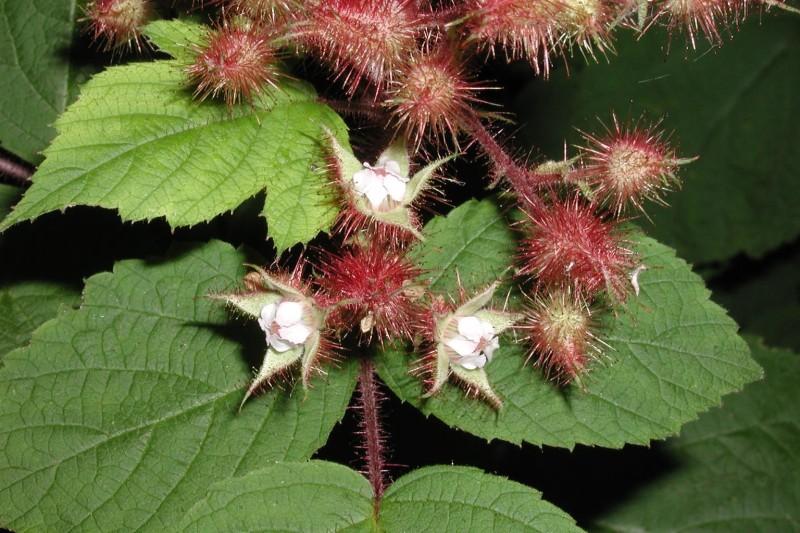
Blooms: small white five-petaled flowers; sepals (structures enclosing the flower) are densely covered in red bristles
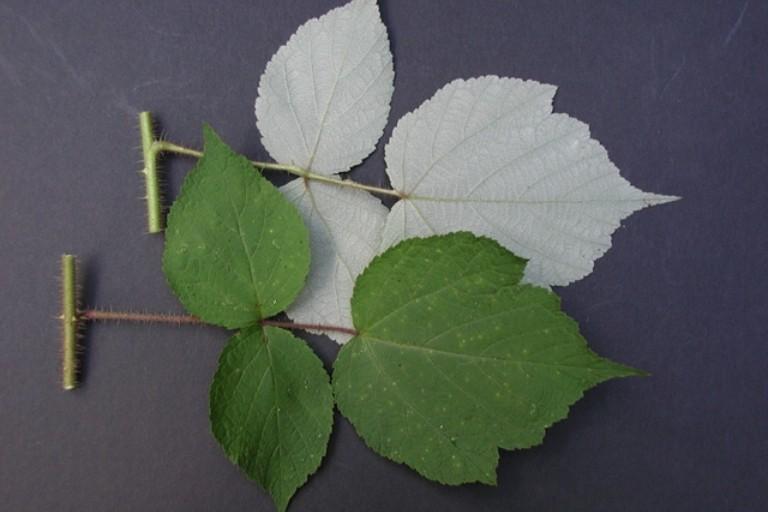
Leaves: compound (divided into leaflets) with serrated leaf edges; leaflets are larger and wider (more heart-shaped or ovate) than those of garden-variety raspberries; petiole (leaf stem) is often wine-red; silvery leaf underside due to dense, fine hairs; alternate arrangement on the stems
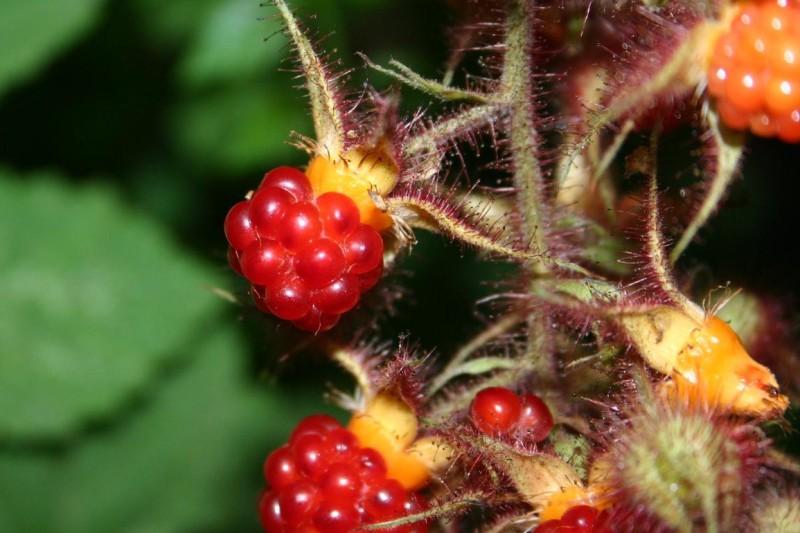
Fruit: glossy, small red raspberries; like garden raspberries, the fruit has a hollow core when picked (blackberry fruits have a solid core)
Stems: dense covering of wine-red hairs and prickly spines
Small white flowers are surrounded by star-shaped sepals covered in red bristles. Photo: Leslie J. Mehrhoff, University of Connecticut, Bugwood.org
Wineberry fruits look like small, glossy red raspberries when ripe. Photo: Leslie J. Mehrhoff, University of Connecticut, Bugwood.org
Wineberry leaf undersides have a prominent silvery-white color. Photo: Leslie J. Mehrhoff, University of Connecticut, Bugwood.org
Wineberry canes are densely covered with wine-red hairs and prickles. Photo: Leslie J. Mehrhoff, University of Connecticut, Bugwood.org
Environmental impacts of wineberry
Wineberry easily spreads into thickets that out-compete native plants. Even though individual stems are not long-lived, the plant has vigorous growth, and fresh-cut stems may root before dying if mown and left on the surface of the soil. The plant reproduces by seed (spread by birds, people, and other mammals), suckers (root sprouts), rhizomes (underground runners), and the rooting of stems that arch over and touch the ground.
Impenetrable thicket of wineberry stems along the sunny border of a forest. Photo: Leslie J. Mehrhoff, University of Connecticut, Bugwood.org
Masses of prickly wineberry stems where the plants have dominated an open woodland. Photo: Leslie J. Mehrhoff, University of Connecticut, Bugwood.org
Conditions that favor growth
Wineberry produces denser growth and more flowers/fruits in full sun, but tolerates part shade. Moist soil is preferred, and thickets can form along a pond or wetland edge. It is common along fence rows, paths, and forest edges, as well as in open sites like fields, orchards, and roadsides.
Alternatives to wineberry
Do not plant wineberry, even though it produces edible fruit. Use cultivated varieties of raspberry or blackberry instead if you want to harvest bramble fruits. For wildlife, plant a variety of native plants that provide shelter, berries and seeds, and resources for insects in order to support birds and other animals.
Removing wineberry
Identify and remove young seedlings from gardens and landscape beds while they are small and easy to pull out or dig up. For specimens that are difficult to remove, cut all of the canes back to ground level, and remove any regrowth promptly. Since wineberry cannot produce seeds on one-year-old canes, preventing canes from maturing will restrict the plant's spread.