Skip to main content
Menu
Get Involved
Give
Contact
Ask Extension
About
Leadership
UMD Extension Impact
Careers
Directory
Civil Rights Compliance
Extension Advisory Council and Committees
Program and Organizational Development
Resources
Animal Agriculture
Plant Agriculture
Yard & Garden
Pests
Natural Resources
Environment & Energy
Agribusiness Management
Food & Nutrition
Health & Well-Being
4-H & Youth Education
Programs
4-H Youth Development
Family & Consumer Sciences
Agriculture & Food Systems
Environment & Natural Resources
Home & Garden Information Center
Locations
Publications
News & Events
All News
Events
Forest Health
Home
Resources
Forest Health
For full functionality of this site it is necessary to enable JavaScript. Here are
instructions for how to enable JavaScript in your web browser
.
Sort by:
Date
Title
Updated: August 12, 2024
Becoming a Steward of the Land: UME Forestry Program Offers Certification Course
Learn to be a steward of the land this fall with the University of Maryland Extension General Forestry Course. This online course will be offered beginning Sept.1 through Dec. 15, 2022.
Updated: August 12, 2024
Invasives in Your Woodland: Japanese Hop
Japanese hop is a native of Asia and was imported to North America as an ornamental plant and for Oriental medicinal purposes in the late 1800s. It is an annual vine that can climb or twine around trees, fences, and more. It also spreads rapidly across open spaces and can overgrow and shade out native species in the understory.
Updated: August 12, 2024
Why conserving existing forest buffers is just as important as planting new ones
Forest buffers are critical to the health of the Chesapeake Bay and its wildlife. But while forest buffer planting may be gaining momentum, the Chesapeake Bay watershed has lost more forest buffers than it’s gained.
Updated: August 12, 2024
Native Trees of Maryland: Red Maple
Red Maple is one of the most commonly occurring trees in eastern North America. The tree is well adapted to many different site conditions, from lowlands to uplands, and shady to sunny. Its suitable habitat can be found across the entirety of Maryland.
Updated: August 12, 2024
A Mix of Young and Old for the Future
Occasionally, the two roles I have with UME intersect, and I find I can use a mix of old and new skills to move projects forward, just as forest managers have learned it's good to have a mix of new and old growth to keep woodlands and wildlife healthy.
Updated: June 18, 2024
Invasives in Your Woodland: Sawtooth Oak
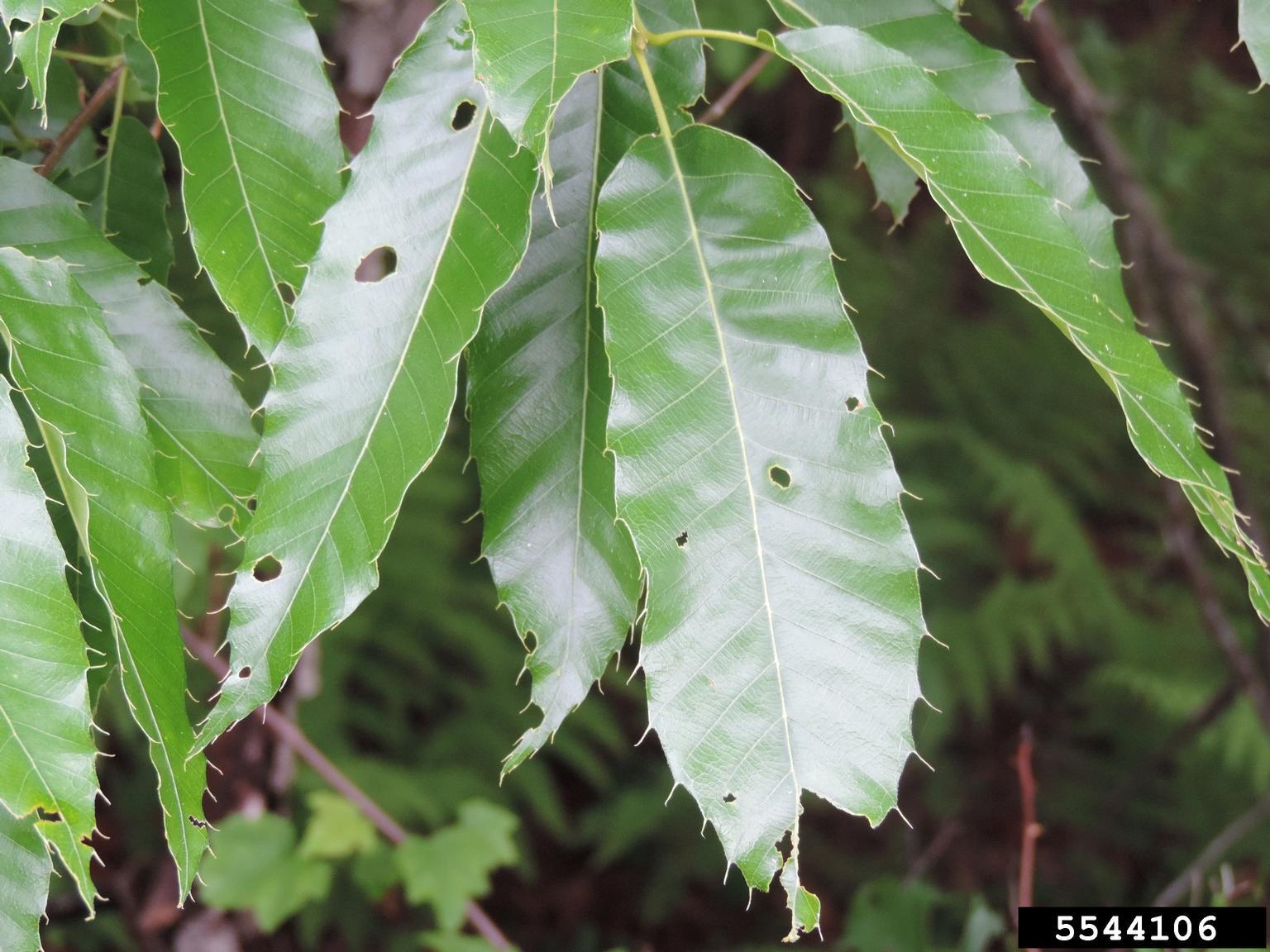
Sawtooth oak (Quercus acutissima) is native to Asia, from northeast India to Korea, and was introduced to the eastern U.S. in 1920. However, sawtooth oaks have adapted to a wide area of the nation and now are escaping from plantings into natural areas, particularly in the eastern states, where they can outcompete native species.
Updated: May 30, 2024
Montgomery County Parks Weed Warriors Program Has Record-Breaking Year
Montgomery Parks has announced a record-breaking year for its Montgomery Parks Weed Warrior Volunteer Program, galvanizing the county in the fight against non-native invasive plants.
Updated: May 30, 2024
Native Trees of Maryland: The Tuliptree
The tuliptree, Liriodendron tulipifera, is one of the tallest of Maryland's native trees, and one of the tallest of the deciduous trees in North America.
Updated: May 30, 2024
Citizen Science Project Brings Pure American Chestnuts Back To Appalachia
Read about the efforts of Shepherd University's Center for Appalachian Studies and Communities and the American Chestnut Foundation to bring back this iconic species to the eastern panhandle of West Virginia.
Updated: April 26, 2024
Maryland Small Acreage Professional Foresters Directory (Fact Sheet 1067)
The consulting and industrial professional foresters listed in this publication are willing to work with small acreage woodland owners to encourage healthy and sustainable woodlands.
First
Previous
…
Page
5
Page
6
Page
7
Page
8
Current page
9
Page
10
Page
11
Page
12
Page
13
…
Next
Last