Skip to main content
Menu
Get Involved
Give
Contact
Ask Extension
About
Leadership
UMD Extension Impact
Careers
Directory
Civil Rights Compliance
Extension Advisory Council and Committees
Program and Organizational Development
Resources
Animal Agriculture
Plant Agriculture
Yard & Garden
Pests
Natural Resources
Environment & Energy
Agribusiness Management
Food & Nutrition
Health & Well-Being
4-H & Youth Education
Programs
4-H Youth Development
Family & Consumer Sciences
Agriculture & Food Systems
Environment & Natural Resources
Home & Garden Information Center
Locations
Publications
News & Events
All News
Events
Squash, Zucchini
Home
Resources
Squash, Zucchini
For full functionality of this site it is necessary to enable JavaScript. Here are
instructions for how to enable JavaScript in your web browser
.
Sort by:
Date
Title
Updated: June 11, 2025
Combining Biosolarization, Cover Cropping, and Strip Tillage for Weed Management in Vegetables
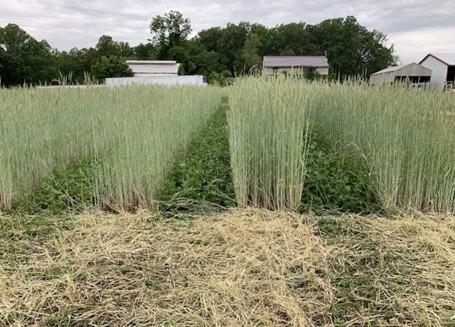
Vegetable farmers face challenges due to the limited availability of herbicides registered for vegetable production compared to row crops. Furthermore, existing herbicides often fail to provide full-season weed control and may pose risks of crop injury if not applied correctly. Weed management issues are even more pronounced in organic systems, where reliance on manual and mechanical control is both time consuming and labor intensive.
Updated: October 23, 2024
Squash Vine Borers and Pumpkins
On a recent visit to a farm I saw bright yellow leaves in a pumpkin field and wondered if this could be Cucurbit yellow vine decline that was first seen two years ago (fig. 1). Upon closer inspection of the plants it was found to be an old nemesis of pumpkins and squash - the squash vine borer. Borer moths lay eggs mostly at the base of pumpkin and squash plants starting in late June and going through the first few weeks of July. Eggs hatch and borers quickly move their way into the base of the pumpkin stem where they feed inside the stem (fig. 2) disrupting water and nutrient flow to the rest of the plant (fig. 3).
Updated: October 23, 2024
Mild Winter Induces Three Pest Problems This Year
There have been problems in our vegetable fields with three pests, which include striped cucumber beetles, leafhoppers and twospotted spider mites. I think most of the problems we are having with these three comes from our mild winter as each has had an outbreak population after a mild winter sometime in the last 12 years.
Updated: October 23, 2024
Vegetable and Fruit News-July 2021
Fruit and Vegetable News, Volume 12, Issue 4 (July 15, 2021)
Updated: October 22, 2024
Evaluation of fungicides for management of powdery mildew on squash, 2015
Evaluation of fungicides for management of powdery mildew on squash, 2015
Updated: October 22, 2024
Fusarium Crown Rot in Squash
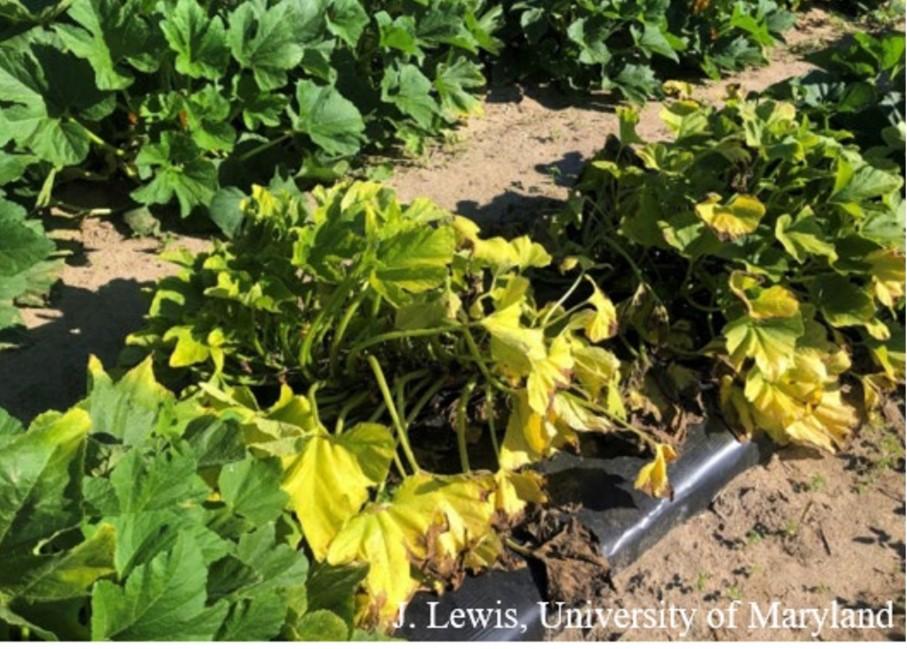
A County agent sent pictures of squash that were turning yellow and wilting (fig. 1). This was found to be Fusarium crown rot caused by the fungus Fusarium solani f. sp. cucurbitae with a little Anthracnose caused by Colletotrichum orbiculare mixed in with it. In the field, Fusarium crown rot is generally a problem in summer and winter squash, and some pumpkin cultivars, but most cucurbits have been found to be susceptible.
Updated: October 21, 2024
Striped Cucumber Beetles and Bacterial Wilt
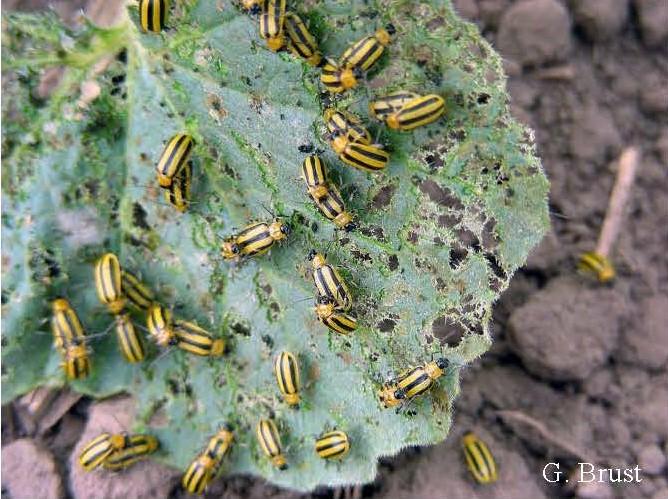
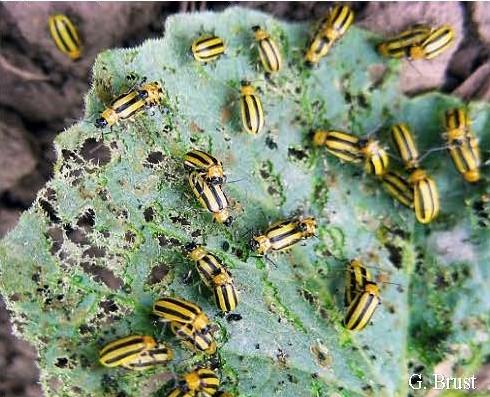
Striped cucumber beetles (Acalymma vittatum) (SCB) are the most important insect pests of muskmelon and cucumbers in our area. They overwinter as adults and emerge when temperatures reach 54–62°F at which time they begin searching for cucurbit hosts. Volatiles produced by the plant attracts SCB to cucurbits initially, then male SCBs produce an aggregation pheromone attracting more beetles. The beetles tend to mass on small plants where they eat, mate and defecate (fig 1).
Updated: April 18, 2022
Plectosporium Blight in Some Pumpkin Fields this Year - 2021
I am seeing some plectosporium blight in a few pumpkin fields this year, not as bad as last year but still there. This disease will probably increase if we continue having frequent rains in some locations.