

FS-2025-0790 | August 2026
You’re Not Alone: Maryland Farmers Seek Mental Health Support at Rates on Par with Everyone Else
By Alexander Chan, Family & Consumer Sciences Specialist, Shannon Dill, Director of Operations, and Ryan Salsman, Farm Stress Program Coordinator
Maryland farmers sought mental health services at rates comparable to the general population. Despite facing well-documented occupational stressors, farmers in this survey also reported high levels of resilience.
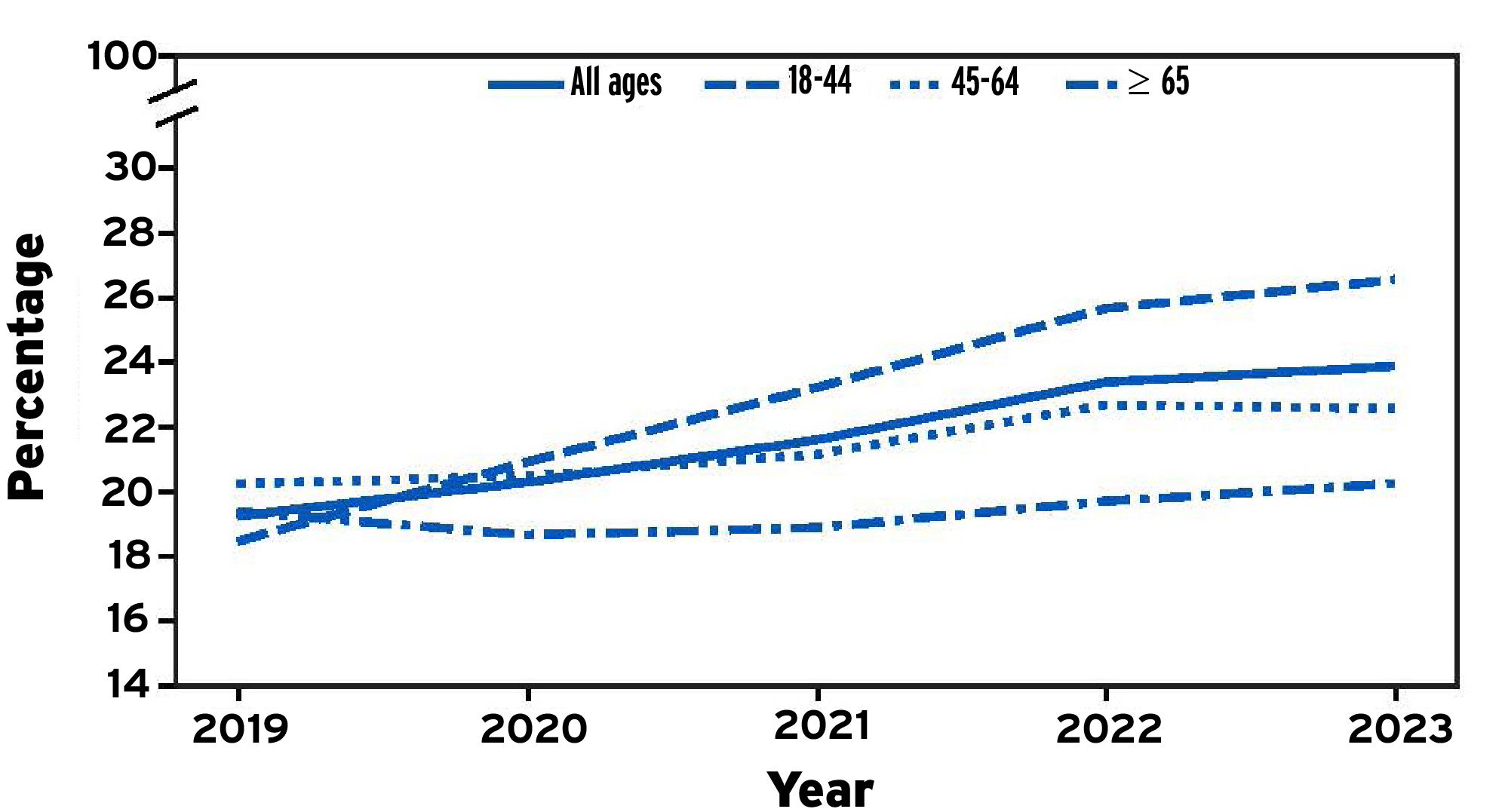
University of Maryland Extension faculty conducted a paper-based survey about resilience and mental health services utilization during the winters of 2022 and 2023. This research was conducted to help both public health professionals and Extension educators understand how Maryland farmers are engaging with mental health services, and to reassure farmers themselves that seeking help is common among their peers. Although 2022 was closer to the peak of the COVID pandemic, nationwide statistics show modest, ongoing increases in mental health services utilization from 2019-2023 (Stanley, 2025).
Respondents were 101 farmers attending winter production meetings hosted by UME Agriculture and Food Systems agents. Participation was incentivized by raffling attractive items such as UMD-branded hats and rain gauges.
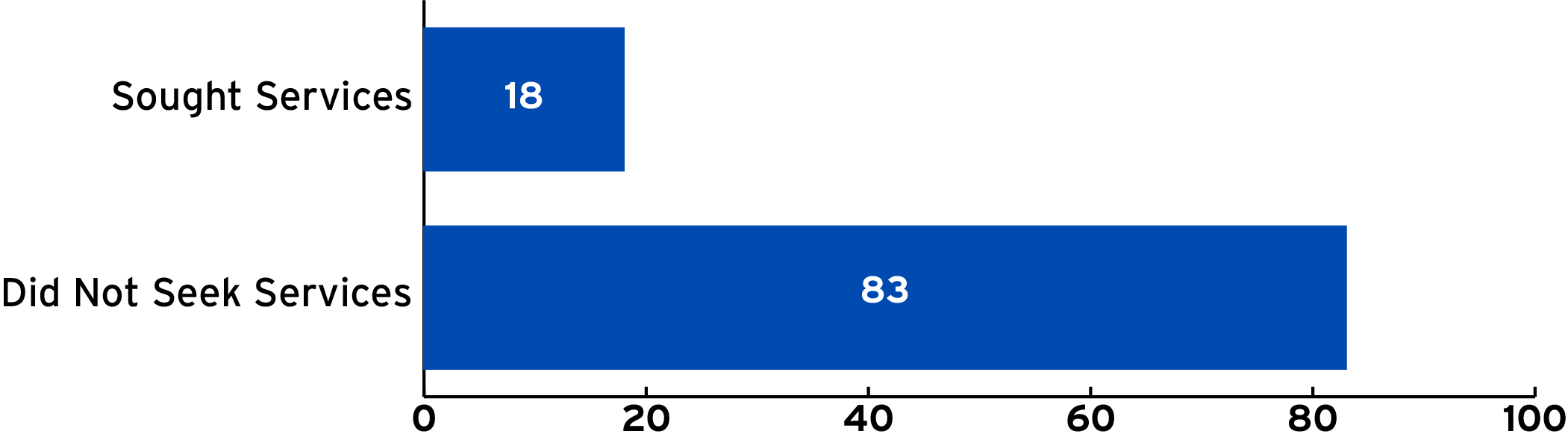
Of the 101 respondents, approximately 18% reported utilizing some form of mental health services during the past year (see Figure 1). The survey did not distinguish between the types of services received, so participants could have received therapy, medication, or a combination of services. The approximately 1-in-5 figure is similar to national rates of mental health service consumption. A national study conducted by the US Centers for Disease Control and Prevention (CDC) estimated that approximately 22% of all adults in the United States sought some form of mental health treatment in 2021 (Terlizzi & Schiller, 2022).
In addition to the descriptive analyses above, the UME study compared outcomes between farmers who sought treatment and those who did not. The study found that farmers who sought mental health treatment were significantly more likely to report improved mental health year over year compared to farmers who did not seek treatment. Aside from seeking treatment, the sample reported other factors that may have contributed to resilience (see Table 1 for an example item), including strong social ties and self-efficacy to manage life’s problems.
These resilience factors likely contributed to improvements in wellbeing, or perhaps farmers who are more resilient overall are more likely to seek treatment in the first place. Future studies could examine these follow-up questions.
Farmers reviewing these findings may find it useful to remember that their peers, who also report many resilient qualities, sought help at rates comparable to those of the general population. For example, Table 1 shows farmers’ self-perception of how true the statement “I can deal with whatever comes my way” is. The majority of farmers completing the survey felt that the statement was often true or true nearly all the time. Mental health services are consumed by farmers who as a group feel quite resilient, and using those services led to improvement in perceived mental health among survey respondents.
| Response | Percentage | Count |
|---|---|---|
| Sometimes true | 16% | 16 |
| Often true | 48% | 47 |
| True nearly all the time | 36% | 35 |
| Total | 100% | 98 |
Note. Three of the 101 survey respondents did not answer this item. No respondents selected “not true at all” or “rarely true.”
Public health officials consuming this information may consider including the results of this study as they communicate with the agricultural population to help reduce stigma that still lingers regarding seeking help for mental health challenges. Farmers are asking for help, they report feeling better when they do, and these findings came from a population with many protective / resilience factors.
References:
Stanley B. J. (2025). Trends in mental health care utilization in rural and nonrural areas, 2019-2023. The Journal of rural health: official journal of the American Rural Health Association and the National Rural Health Care Association, 41(3), e70074. https://doi.org/10.1111/jrh.70074
Terlizzi E.P & Schiller, J.S. (2022). Mental health treatment among adults aged 18–44: United States, 2019–2021. National Center for Health Statistics. DOI: https://dx.doi.org/10.15620/cdc:120293
ALEXANDER CHAN
alexchan@umd.edu
SHANNON DILL
sdill@umd.edu
RYAN SALSMAN
rsalsman@umd.edu
This publication, You’re Not Alone: Maryland Farmers Seek Mental Health Support at Rates on Par with Everyone Else (FS-2025-0790), is a part of a collection produced by the University of Maryland Extension within the College of Agriculture and Natural Resources.
The information presented has met UME peer-review standards, including internal and external technical review. For help accessing this or any UME publication contact: itaccessibility@umd.edu
For more information on this and other topics, visit the University of Maryland Extension website at extension.umd.edu
University programs, activities, and facilities are available to all without regard to race, color, sex, gender identity or expression, sexual orientation, marital status, age, national origin, political affiliation, physical or mental disability, religion, protected veteran status, genetic information, personal appearance, or any other legally protected class.
When citing this publication, please use the suggested format:
Chan, A., Dill, S., & Salsman, R. (2026). You’re Not Alone: Maryland Farmers Seek Mental Health Support at Rates on Par with Everyone Else (FS-2025-0790). University of Maryland Extension. go.umd.edu/FS-2025-0790.