

EC-2024-0710 | October 2025
Track C: Homeowner Solar Energy Curriculum
By Drew Schiavone, Ph.D.
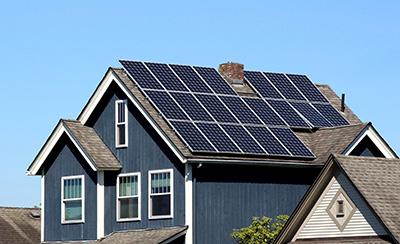
For homeowners considering the installation of solar PV systems, providing essential information on design, installation, and financial benefits. This track provides homeowners with the essential knowledge needed to make informed decisions about installing solar PV systems, including design, installation, and financial considerations.
Intended Audience:
Homeowners considering the installation of solar PV systems on their properties.
Benefits:
Learn about the basics of solar energy and the practical steps involved in installing a PV system. Understand the financial incentives and benefits of solar energy for homeowners.
Modules:
-
Module 2: Solar Science
Module 2: Solar ScienceLearn the fundamental principles of photovoltaic systems.
-

Module 3: Solar Design
Module 3: Solar DesignExplore the design considerations for effective PV systems.
-
Module 4: Battery Backup
Module 4: Battery BackupUnderstand how to integrate battery storage with PV systems.
-

Module 6:Solar Installation
Module 6:Solar InstallationGain insights into the practical aspects of installing solar systems.
-

Module 7: Solar Financing
Module 7: Solar FinancingUnderstand the financial aspects and incentives related to solar.
Module 2: Solar Science
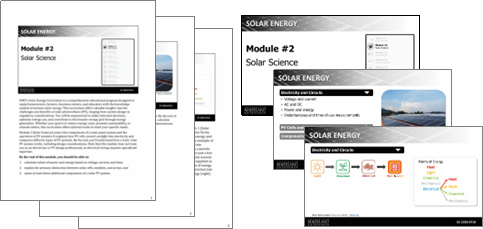
Module 2 covers the basics of electricity and circuits, photovoltaic (PV) cells and modules, and components and configurations. It explores various electrical concepts (e.g., voltage, current, power, energy), as well as PV panel composition and function. Topics also address system types, balance of system components, racking and mounting, and electrical components. It is not the purpose of this module to teach you how to become an electrician or a professional PV installer. Electrical systems are serious business.
Outcomes
Learn the fundamental principles of PV systems, including how PV cells convert sunlight into electricity. By the end of this module, you should be able to:
- calculate values of power and energy based on voltage, current, and time;
- explain the primary distinction between solar cells, modules, and arrays; and
- name at least three additional components of a solar PV system.
Module #2 Curriculum


Module 3: Solar Design
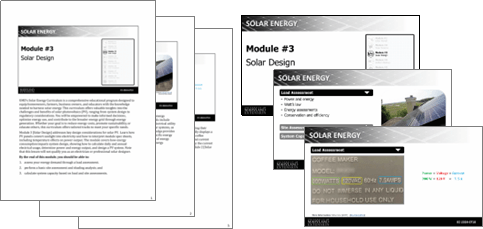
Module 3 covers various design considerations for solar photovoltaics (PV), including load assessments, site assessments, and system capacity. It explores how energy consumption impacts the design of your solar PV system and how to plan your solar PV system layout through building and site assessments. Topics also address how electrical usage and energy loads correlate to PV requirements and energy supply. It is not the purpose of this module to teach you how to become an electrician or a professional PV installer. Electrical systems are serious business.
Outcomes
Learn how to correlate a site assessment with the energy load of your home, farm or business to determine the necessary PV system capacity. By the end of this module, you should be able to:
- assess your energy demand through a load assessment;
- perform a basic site assessment and sharding analysis; and
- calculate system capacity based on load and site assessments.
Module #3 Curriculum


Module 4: Battery Backup
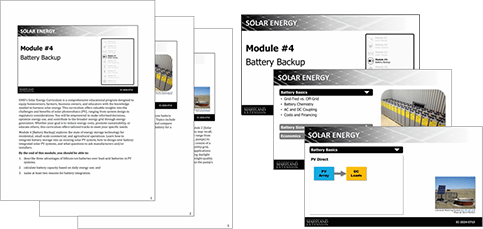
Module 4 covers the basics of batteries, battery sizing, and the economics of battery integration for residential, small-scale commercial, and agricultural operations. It explores battery fundamentals (e.g., chemistry, AC/DC coupling), as well as battery sizing considerations with respect to critical loads and system voltage. Topics also address demand side management, the impact of utility outages, and various financial incentives to support battery backup. It is not the purpose of this module to teach you how to become an electrician or a professional PV installer. Electrical systems are serious business.
Outcomes
Learn how to integrate battery storage with photovoltaic (PV) systems and what questions to ask manufacturers and/or installers. By the end of this module, you should be able to:
- describe three advantages of lithium-ion batteries over lead-acid batteries in PV systems;
- calculate battery capacity based on daily energy use; and
- name at least two reasons for battery integration.
Module #4 Curriculum


Module 6: Solar Installation
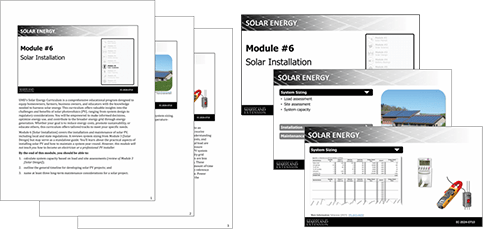
Module 6 covers various aspects of photovoltaic (PV) system sizing, installation, and maintenance. It explores capacity calculations based on load and site assessments, as well as various considerations for installation, including contractor selection and permitting. Topics also address operations and maintenance requirements for upkeep of the system and installation site. It is not the purpose of this module to teach you how to become an electrician or a professional PV installer. Electrical systems are serious business.
Outcomes
Learn about the practical aspects of installing solar PV systems, including how to determine system size. By the end of this module, you should be able to:
- calculate system capacity based on load and site assessments;
- outline the general timeline for developing a solar project; and
- name at least three long-term maintenance considerations for a solar project.
Module #6 Curriculum


Module 7: Solar Financing
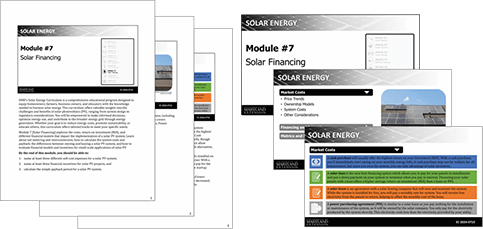
Module 7 covers market costs, financing opportunities, and economic models for solar photovoltaic (PV) systems. It explores system costs and pricing trends, as well as various financial incentives (e.g., tax credit, depreciation, grants, loans). Topics also address cash flow models and various financial metrics (e.g., simple payback, internal rate of return) that may impact the implementation of a solar PV system.
Outcomes
Learn how to evaluate financial models and incentives for small-scale applications of solar PV. By the end of this module, you should be able to:
- name at least three different soft cost expenses for a solar PV system;
- name at least three financial incentives for solar PV projects; and
- calculate the simple payback period for a solar PV system.
Module #7 Curriculum


Additional Resources
This appendix compiles additional resources for UMD’s Solar Energy Curriculum, designed to support a diverse range of end users. Whether you are a homeowner, farmer, or business owner interested in installing solar photovoltaic (PV) systems, or an educator from an extension service or non-profit organization aiming to deliver educational programs on solar energy, these resources provide valuable information and guidance. The resources are organized by their corresponding educational module for easy reference.
Module #2: Solar Science
- Barbose, G., Darghouth, N., O’Shaughnessy, E., and Forrester, S. (2023). Tracking the Sun: Pricing and Design Trends for Distributed Photovoltaic Systems in the United States. Lawrence Berkeley National Laboratory. https://emp.lbl.gov/sites/default/files/emp-files/5_tracking_the_sun_2023_report.pdf
- Franklin, E. (2017). Types of Photovoltaic Systems. The University of Arizona, (az1745). https://repository.arizona.edu/handle/10150/625568
- NREL. (2022). Solar Resource Data, Tools, and Maps: Solar Resource Maps and Data. National Renewable Energy Laboratory. Washington, DC. https://www.nrel.gov/gis/solar.html
- NREL. (2024). Best Research-Cell Efficiency Chart. National Renewable Energy Laboratory. Washington, DC. https://www.nrel.gov/pv/cell-efficiency.html
- Philipps, S., Warmth, W. (2023). Photovoltaics Report. Fraunhofer Institute for Solar Energy Systems, ISE. https://www.ise.fraunhofer.de/en/publications/studies/photovoltaics-report.html
- Schiavone, D. (2022). A Brief Guide to On-Farm Solar. The University of Maryland Extension, (FS-1187). https://extension.umd.edu/resource/brief-guide-farm-solar-fs-1187/
- Schiavone, D. (2023). Working on Solar Design and System Sizing. The University of Maryland Extension, (FS-2023-0655). https://extension.umd.edu/resource/working-solar-design-and-system-sizing-fs-2023-0655/
- Schiavone, D. (2023). Working on Solar Panels and Power Output. The University of Maryland Extension, (FS-2022-0646). https://extension.umd.edu/resource/working-solar-panels-and-power-output-fs-2022-0646/
Module #3: Solar Design
- Barbose, G., Darghouth, N., O’Shaughnessy, E., and Forrester, S. (2023). Tracking the Sun: Pricing and Design Trends for Distributed Photovoltaic Systems in the United States. Lawrence Berkeley National Laboratory. https://emp.lbl.gov/sites/default/files/emp-files/5_tracking_the_sun_2023_report.pdf
- Dunlap, M. A., Marion, W., & Wilcox, S. (1994). Solar radiation data manual for flat-plate and concentrating collectors (No. NREL/TP-463-5607). NREL, Golden, CO. https://www.nrel.gov/docs/legosti/old/5607.pdf
- EIA. (2023). Annual Energy Outlook, Reference Case, Table 4: Residential Sector Key Indicators and Consumption. The U.S. Energy Information Administration. https://www.eia.gov/tools/faqs/faq.php?id=96&t=3
- Energy Star. (2024). ENERGY STAR certified products help you save energy. U.S. Environmental Protection Agency. https://www.energystar.gov/
- NASA. (2022). Prediction of Worldwide Energy Resource (POWER): Data Access Viewer Enhanced (DAVe) (Version beta 2.0.4) [Web app]. https://power.larc.nasa.gov
- NREL. (2023). PVWatts Calculator (Version 8.1.0) [Web app]. National Renewable Energy Laboratory. Golden, CO. https://pvwatts.nrel.gov
- Roberts, B. (2008). U.S. Photovoltaic Solar Resource: Flat Plate Tilted at Latitude (Poster). National Renewable Energy Lab, Golden, CO. http://en.openei.org/wiki/File:NREL-National-PV-Poster.pdf
- Schiavone, D. (2023). Working on Solar Design and System Sizing. The University of Maryland Extension, (FS-2023-0655). https://extension.umd.edu/resource/working-solar-design-and-system-sizing-fs-2023-0655/
- U.S. EPA. (2015). EnviroAtlas Interactive Map [Web app]. U.S. Environmental Protection Agency, Washington, DC. https://enviroatlas.epa.gov/enviroatlas
Module #4: Battery Backup
- Centolella, P., Farber-DeAnda, M., Greening, L. A., and Kim, T. (2006). Estimates of the Value of Uninterrupted Service for the Mid-West Independent System Operator. Science Applications International Corporation, McLean. https://hepg.hks.harvard.edu/sites/g/files/omnuum10586/files/hepg/files/voll_final_report_to_miso_042806.pdf
- Congress. (2025). H.R. 1 – One Big Beautiful Act, 119th Congress (2025-2026). Library of Congress, 4 July 2025. https://www.congress.gov/bill/119th-congress/house-bill/1
- Gaur, V., and Lang, C. (2020). Property Value Impacts of Commercial-Scale Solar Energy in Massachusetts and Rhode Island. University of Rhode Island. https://www.uri.edu/news/wp-content/uploads/news/sites/16/2020/09/PropertyValueImpactsOfSolar.pdf
- IRS. (2023). Investment Credit: Instructions for Form 3468 (Commercial) and Form 5695 (Residential). U.S. Department of Treasury.
https://www.irs.gov/pub/irs-pdf/i3468.pdf
https://www.irs.gov/pub/irs-pdf/i5695.pdf - LaCommare, K. H., and Eto, J. H. (2004). Understanding the Cost of Power Interruptions to U.S. Electricity Consumers (No. LBNL-55718). Lawrence Berkeley National Lab.(LBNL), Berkeley, CA. https://www.osti.gov/servlets/purl/834270
- Lindstrom, A., and Hoff, S. (2020). U.S. Customers Experienced an Average of Nearly Six Hours of Power Interruptions in 2018. U.S. Energy Information Administration (EIA). https://www.eia.gov/todayinenergy/detail.php?id=43915
- NFPA. (2022). NFPA 70: National Electrical Code 2023. National Fire Protection Association (NFPA). https://www.nfpa.org/codes-and-standards/all-codes-and-standards/list-of-codes-and-standards/detail?code=70
Module #6: Solar Installation
- EIA. (2023). Annual Energy Outlook, Reference Case, Table 4: Residential Sector Key Indicators and Consumption. The U.S. Energy Information Administration. https://www.eia.gov/tools/faqs/faq.php?id=96&t=3
- Roberts, B. (2008). U.S. Photovoltaic Solar Resource: Flat Plate Tilted at Latitude (Poster). National Renewable Energy Lab, Golden, CO. http://en.openei.org/wiki/File:NREL-National-PV-Poster.pdf
- Schiavone, D. (2023). Working on Solar Design and System Sizing. The University of Maryland Extension, (FS-2023-0655). https://extension.umd.edu/resource/working-solar-design-and-system-sizing-fs-2023-0655/
Module #7: Solar Financing
- Barbose, G., Darghouth, N., O’Shaughnessy, E., and Forrester, S. (2023). Tracking the Sun: Pricing and Design Trends for Distributed Photovoltaic Systems in the United States. Lawrence Berkeley National Laboratory. https://emp.lbl.gov/sites/default/files/emp-files/5_tracking_the_sun_2023_report.pdf
- Byrne, J., Nyangon, J., Hegedus, S., Chajes, M., Taminiau, J., Ahmed, N., Dinardo, N., Li, P., and Xu, J. (2019). Feasibility Study of City-Scale Solar Power Plants Using Public Buildings: Case Studies of Newark and Wilmington Delaware with Early Investigations of Bifacial Solar Modules and Dual Orientation Racking as Tools for City-Scale Solar Development. Technical report prepared for the Delaware General Assembly. Newark, DE: CEEP, University of Delaware. http://dx.doi.org/10.2139/ssrn.3397772
- Congress. (2025). H.R. 1 – One Big Beautiful Act, 119th Congress (2025-2026). Library of Congress, 4 July 2025. https://www.congress.gov/bill/119th-congress/house-bill/1
- DSIRE. (2020). Where are Solar PV Incentives in 2020? DSIRE Insight. https://www.dsireinsight.com/blog/2020/8/25/where-are-solar-pv-incentives-in-2020
- EIA. (2023). Annual Energy Outlook, Reference Case, Table 4: Residential Sector Key Indicators and Consumption. The U.S. Energy Information Administration. https://www.eia.gov/tools/faqs/faq.php?id=96&t=3
- EIA. (2024). Electricity Data Browser. The U.S. Energy Information Administration. https://www.eia.gov/electricity/data/browser/
- Fu, R., Feldman, D., Margolis, R., & Woodhouse, M.(2018). US solar photovoltaic system cost benchmark: Q1 2018 (No. NREL/TP-6A20-72399). National Renewable Energy Laboratory (NREL), Golden, CO. https://www.nrel.gov/docs/fy19osti/72399.pdf
- IRS. (2023). Investment Credit: Instructions for Form 3468 (Commercial) and Form 5695 (Residential). U.S. Department of Treasury.
https://www.irs.gov/pub/irs-pdf/i3468.pdf
https://www.irs.gov/pub/irs-pdf/i5695.pdf - NREL. (2023). PVWatts Calculator (Version 8.1.0) [Web app]. National Renewable Energy Laboratory. Golden, CO. https://pvwatts.nrel.gov
- NREL. (2023). System Advisor Model (2023.12.17 Revision 1, SSC 290) [Software]. National Renewable Energy Laboratory. Golden, CO. https://sam.nrel.gov/
- Ramasamy, V., Zuboy, J., Woodhouse, M., O’Shaughnessy, E. Feldman, D., Desai, J., Walker, A., Margolis, R., and Basore, P. (2023). U.S. Solar Photovoltaic System and Energy Storage Cost Benchmarks, With Minimum Sustainable Price Analysis: Q1 2023, National Renewable Energy Laboratory (NREL). https://www.nrel.gov/docs/fy23osti/87303.pdf
- Roberts, B. (2008). U.S. Photovoltaic Solar Resource: Flat Plate Tilted at Latitude (Poster). National Renewable Energy Lab, Golden, CO. http://en.openei.org/wiki/File:NREL-National-PV-Poster.pdf
- Schiavone, D. (2023). Working on Solar Design and System Sizing. The University of Maryland Extension, (FS-2023-0655). https://extension.umd.edu/resource/working-solar-design-and-system-sizing-fs-2023-0655/
- Utility Rate Database. (2024). Electric Utility Rates. OpenEI. https://openei.org/wiki/Utility_Rate_Database
Glossary
This glossary compiles important terms and acronyms used throughout UMD’s Solar Energy Curriculum. It serves as a quick reference guide to help users, including homeowners, farmers, business owners, and educators, better understand the key concepts and terminology related to solar energy. By familiarizing yourself with these terms, you can more effectively navigate the curriculum and apply the knowledge to your specific needs and interests.
- AC Coupled System: A solar PV system where solar power is converted to AC before being stored in batteries.
- Accessory Use: A secondary use of property that supports the primary use, such as installing solar panels on a farm primarily used for agriculture.
- Alternating Current (AC): Electric current that periodically reverses direction.
- Array, PV: Multiple solar modules connected together to increase power output.
- Azimuth: The compass direction from which the sunlight is coming at any specific point in time, used to orient solar panels.
- Balance of System (BOS): Additional components in a solar PV system, such as inverters, wiring, and mounting hardware, that ensure the system operates safely and efficiently.
- Battery Bank: A group of batteries connected together to store energy in a solar PV system.
- Building Integrated Photovoltaics (BIPV): Solar PV systems integrated into building materials, such as roof tiles or windows.
- Capacity, System: The maximum output of a solar PV system, typically measured in kilowatts (kW) or megawatts (MW).
- Cell, PV: A semiconductor device that converts sunlight into direct current (DC) electricity.
- Certificate of Public Convenience & Necessity (CPCN): A permit required for the construction and operation of certain utility-scale solar projects.
- Charge Controller: A device that regulates the flow of electricity from solar panels to batteries, preventing overcharging and undercharging.
- Combiner Box: A device that consolidates the output from multiple solar panel strings and connects them to an inverter.
- Commissioning: The process of testing and verifying that a solar PV system is installed correctly and operating as intended.
- Community Solar: Solar energy projects that provide power to multiple customers within a community, allowing participants to receive credits on their utility bills for their share of the power produced.
- Critical Loads: Essential devices that require continuous power, such as refrigerators, medical equipment, and computers.
- Current, Electrical: The flow of electric charge, measured in amperes (amps, A).
- Days of Autonomy: The number of days a battery system can operate without recharging from solar or other sources.
- DC Coupling: A solar PV system where solar power is stored as DC and converted to AC only when needed.
- Decommissioning: The process of safely removing a solar PV system from service and managing the disposal or recycling of its components.
- Demand Side Management: Strategies to control and reduce energy consumption during peak demand periods to lower utility costs and improve grid stability.
- Depreciation: The reduction in the value of an asset over time, which can be used to recover costs for tax purposes.>
- Depth of Discharge (DoD): The percentage of a battery's capacity that has been used, affecting its lifespan.
- Derate Factor: A multiplier used to account for losses in a solar PV system, such as inefficiencies in inverters and wiring.
- Direct Current (DC): Electric current flowing in one direction.
- Disconnect Switch: A switch that safely interrupts the flow of DC electricity from the PV array, or AC electricity from the inverter, for maintenance and troubleshooting.
- Dispatchable Energy: Energy sources that can be quickly adjusted to meet electricity demand, such as fossil fuels and nuclear power.
- Distributed Generation: Small-scale electricity generation close to the point of use, such as rooftop solar panels.
- Due Diligence Phase: The phase in solar development involving necessary studies and approvals to ensure the project's feasibility.
- Electricity: The flow of electric charge, used as a power source.
- Energy, Electrical: The total amount of electrical power used or produced over time, measured in watt-hours (Wh) or kilowatt-hours (kWh).
- Energy Assessment (Audit): Evaluations of energy use to identify opportunities for conservation and efficiency improvements.
- Energy Conservation: Reducing energy use through efficient practices and technologies to lower consumption and costs.
- Energy Consumption: The amount of electrical energy used by devices and systems.
- Energy Demand: The amount of electricity required by users at any given time.
- Energy Efficiency: Using technology and practices that consume less energy to perform the same function, improving overall energy use.
- Exclusion Screening: Measures to prevent unauthorized access and provide visual screening for solar installations.
- Feed-In Tariffs (FITs): Policies that guarantee a fixed price for renewable energy fed into the grid.
- Green Power Programs: Programs that allow customers to purchase renewable energy from a shared facility, either owned by a utility or a third-party, through one-time or ongoing payments.
- Grid-Tied (Grid-Connect) System: Solar PV systems connected to the utility grid, allowing excess electricity to be fed back into the grid.
- Insolation, Solar: The accumulated solar irradiance over a defined period, measured in watt-hours per square meter (Wh/m²).
- Interconnection: The process of connecting a solar PV system to the electric utility grid, including obtaining necessary approvals.
- Internal Rate of Return (IRR): A financial metric that describes the return on the initial investment, often compared to stock market returns or bonds.
- Inverter: A device that converts direct current (DC) electricity from solar panels into alternating current (AC) electricity for use in homes and businesses.
- Investment Tax Credit (ITC): A federal tax credit that reduces the cost of installing solar PV systems by a percentage of the installation cost.
- Irradiance, Solar: The power per unit area received from the sun, measured in watts per square meter (W/m²).
- Levelized Cost of Energy (LCOE): The average net present cost of electricity generation for a power plant over its lifetime.
- Light Induced Degradation (LID): The initial performance loss in solar panels due to exposure to sunlight, typically occurring in the first year.
- Load, Electrical: A device that consumes electricity, such as a fan, lamp, or pump.
- Load Shifting: The practice of moving energy consumption to different times of the day to take advantage of lower electricity rates or reduce peak demand.
- Maximum Power Point Tracking (MPPT) Charge Controller: A charge controller that optimizes the power output from solar panels by operating at their maximum power point.
- Meter: A device that measures the amount of electricity generated, consumed, or fed back into the grid.
- Microinverter: A small inverter installed behind each solar module, converting DC to AC at the panel level.
- Modified Accelerated Cost Recovery System (MACRS): A tax depreciation system allowing businesses to recover the cost of solar PV systems over five years.
- Module (Panel), PV: A solar panel composed of multiple solar cells.
- Monocrystalline: Solar cells made from a single, large silicon crystal, known for their high efficiency and performance in low light.
- Net Metering: A billing mechanism that credits solar energy system owners for the electricity they add to the grid beyond what they consume.
- Off-Grid PV: A solar PV system that operates independently of the utility grid, typically using batteries for energy storage.
- Optimizer, DC: A device connected to each solar panel that maximizes energy harvest by optimizing the DC output.
- Peak Shaving: The process of reducing power use during peak demand periods to avoid high charges and reduce strain on the grid.
- Peak Sun Hours (PSH): The number of hours in a day when solar irradiance averages 1,000 watts per square meter.
- Photovoltaics (PV): Technology that converts sunlight directly into electricity using solar cells.
- PJM Interconnection: A regional transmission organization that coordinates the movement of wholesale electricity in parts of the Mid-Atlantic and Northeastern United States, including Maryland.
- Polycrystalline (Multi-crystalline): Solar cells made from silicon blocks with multiple small crystals, known for their lower cost and moderate efficiency.
- Power, Electrical: The rate at which electrical energy is generated or transferred, measured in watts (W).
- Power Purchase Agreement (PPA): A contract where a third party owns, operates, and maintains a solar system, and the customer agrees to purchase the system's electric output for a predetermined period.
- Property Assessed Clean Energy (PACE): A financing mechanism that allows property owners to finance energy efficiency and renewable energy projects through property tax assessments.
- Pulse Width Modulated (PWM) Charge Controller: A type of charge controller that pulses power to the battery bank, requiring the nominal voltage of the solar panel to match the battery bank.
- Radiation, Solar: The energy emitted by the sun, which can be harnessed for solar power.
- Rectifier: A device that converts alternating current (AC) to direct current (DC).
- Regional Greenhouse Gas Initiative (RGGI): A market-based program that caps CO2 emissions from power plants and auctions CO2 allowances.
- Renewable Energy: Energy sources that are naturally replenished, such as solar, wind, and hydropower.
- Renewable Energy Certificates (RECs): Certificates representing the environmental benefits of generating one megawatt-hour (MWh) of electricity from renewable energy sources.
- Renewable Portfolio Standard (RPS): A state-level mandate requiring utilities to generate a specific percentage of their electricity from renewable sources.
- Return on Investment (ROI): A measure of the profitability of an investment, calculated as the ratio of net profit to the initial investment cost.
- Service Distribution Panel: The main electrical panel in a building that distributes electricity to various circuits.
- Shared Solar: A solar energy system where multiple subscribers participate and receive credits on their utility bills for their portion of the power produced.
- Soft Costs: Non-hardware costs associated with solar PV installations, such as permitting, financing, customer acquisition, and utility integration.
- Solar Cooperative (Co-op): A community-driven model where members collectively own and manage a solar project, contributing to and controlling the cooperative's capital.
- Solar Renewable Energy Certificates (SRECs): Certificates representing the environmental benefits of generating one megawatt-hour (MWh) of electricity from solar energy, which can be sold to utilities to meet renewable portfolio standards.
- Special Purpose Entity (SPE): A business entity formed to develop a community solar project, often structured to take advantage of tax incentives.
- String, PV: A series of PV modules connected together.
- Solar Renewable Energy Certificate (SREC): Certificates representing the environmental benefits of generating one megawatt-hour of solar power, which can be bought and sold to meet RPS requirements.
- Standard Test Conditions (STC): Specific conditions under which solar panels are tested and rated to ensure consistent performance measurements, including 1,000 W/m² irradiance, 25°C temperature, and 1.5 air mass.
- State of Charge (SoC): The percentage of a battery's remaining capacity, the inverse of Depth of Discharge.
- Subpanel: A secondary electrical panel that distributes power to specific circuits or loads.
- Thin-film: A type of solar cell made from layers of photovoltaic material applied to a substrate, known for its flexibility and versatility.
- Third-Party Ownership (TPO): A model where a third party owns and maintains the solar PV system, and the customer pays for the electricity generated or leases the system.
- Transformer, Electrical: Devices that change the voltage of electricity for transmission and distribution.
- Utility Grid: The network of power lines and infrastructure that delivers electricity to homes and businesses.
- Utility-Scale Solar: Large solar energy projects that generate electricity for the grid, typically over 5 megawatts.
- Virtual Net Metering (VNM): A billing mechanism that allows participants in a shared solar project to receive credits on their utility bills for their share of the power produced.
- Voltage (V): The measure of electrical potential difference between two points, measured in volts (V).
-
Solar Energy Curriculum Home Page (EC-2024-0710) >
Solar Energy Curriculum Home Page (EC-2024-0710) > -
-
DREW SCHIAVONE
dschiavo@umd.edu
This publication, Solar Energy Curriculum (EC-2024-0710), is a part of a collection produced by the University of Maryland Extension within the College of Agriculture and Natural Resources.
The information presented has met UME peer-review standards, including internal and external technical review. For help accessing this or any UME publication contact: itaccessibility@umd.edu
For more information on this and other topics, visit the University of Maryland Extension website at extension.umd.edu
University programs, activities, and facilities are available to all without regard to race, color, sex, gender identity or expression, sexual orientation, marital status, age, national origin, political affiliation, physical or mental disability, religion, protected veteran status, genetic information, personal appearance, or any other legally protected class.
When citing this publication, please use the suggested format:
Schiavone, D., (2025). Solar Energy Curriculum (EC-2024-0710). University of Maryland Extension. go.umd.edu/EC-2024-0710