The common name of Gypsy moth (Lymantria dispar) was officially changed to spongy moth.
Key points
- Spongy moth, native to Europe, was introduced and accidentally released in Massachusetts in 1869.
- This species is a serious threat to oak trees, and is considered a major forest pest. The first significant infestation in Maryland dates back to the 1980s.
- Predators, parasites, and diseases attack spongy moth caterpillars, but the Maryland Department of Agriculture (MDA) continues to survey for this pest to monitor populations. Areas with high populations are treated in cooperation with the USDA Forest Service, MDA, local county governments, or landowners. For details, visit the MDA's website: Spongy Moth Cooperative Suppression Program.
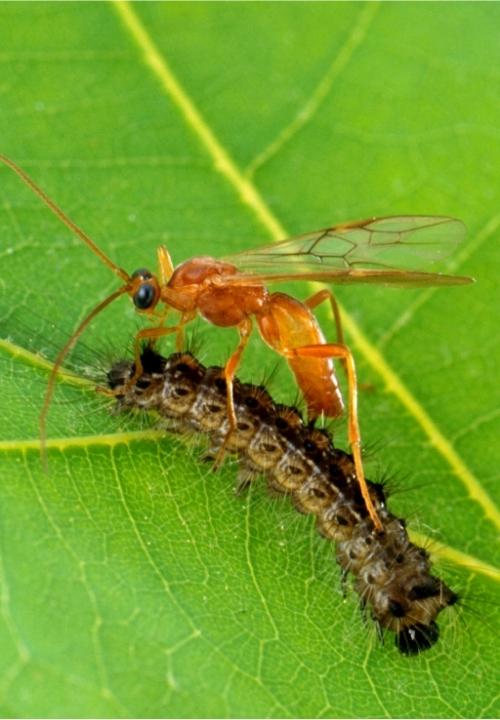
- Spongy moth caterpillars feed in May and June. They prefer oak (Quercus), but will also feed on sweetgum (Liquidambar), linden (Tilia), willow (Salix), birch (Betula), apple (Malus), alder (Alnus), boxelder (Acer negundo), hawthorn (Crataegus), and Colorado spruce (Picea pungens). A large caterpillar population can defoliate acres of trees.
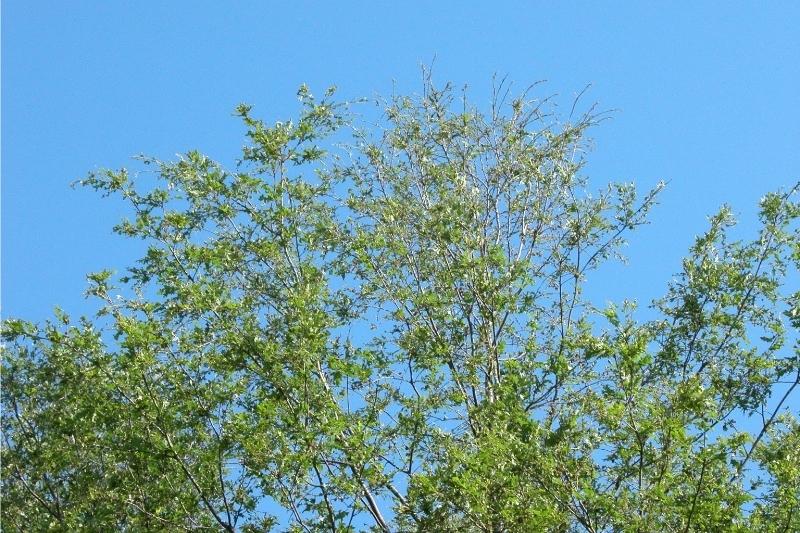
- Deciduous trees suffering more than 50% defoliation for two consecutive years will be significantly weakened and may die.
Spongy moth identification and life cycle
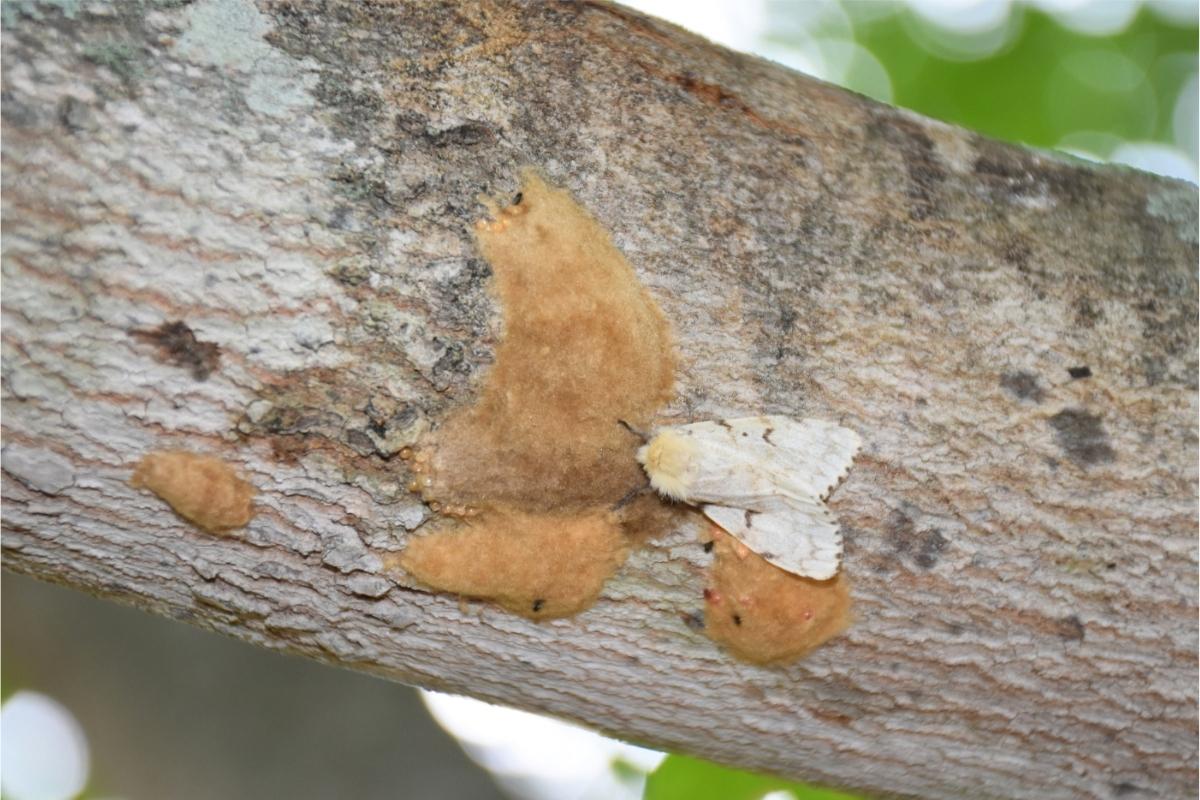
Photo: Karla Salp, Washington State Department of Agriculture, Bugwood.org
- Eggs: The oval-shaped egg masses are felted-looking, tan in color, and about 1½ inches long. They are laid in bark crevices, on the undersides of branches, on the ground under loose stones, or on boards, firewood, lawn furniture, campers, and in many other places. Egg hatch begins in late April or early May, depending on the temperature.
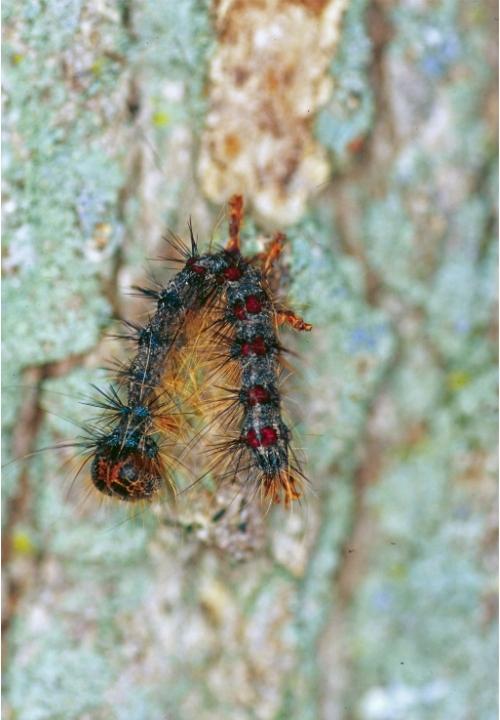
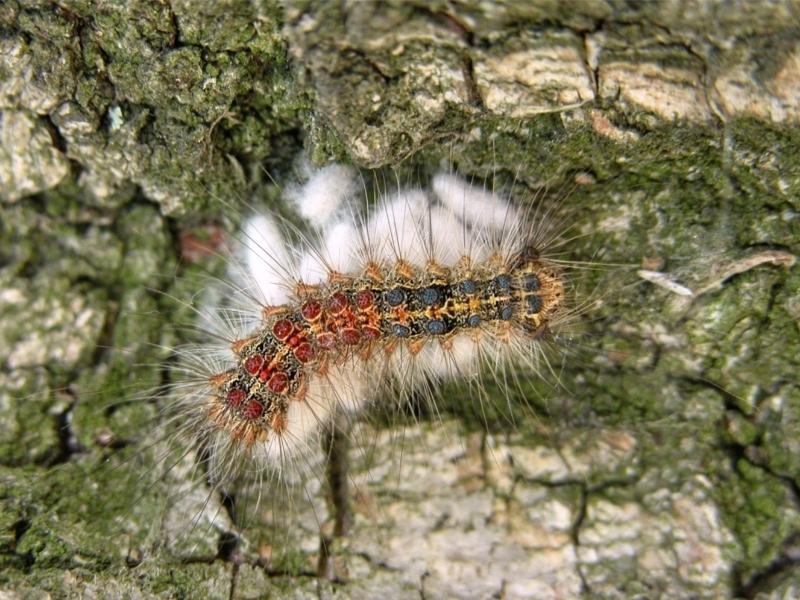
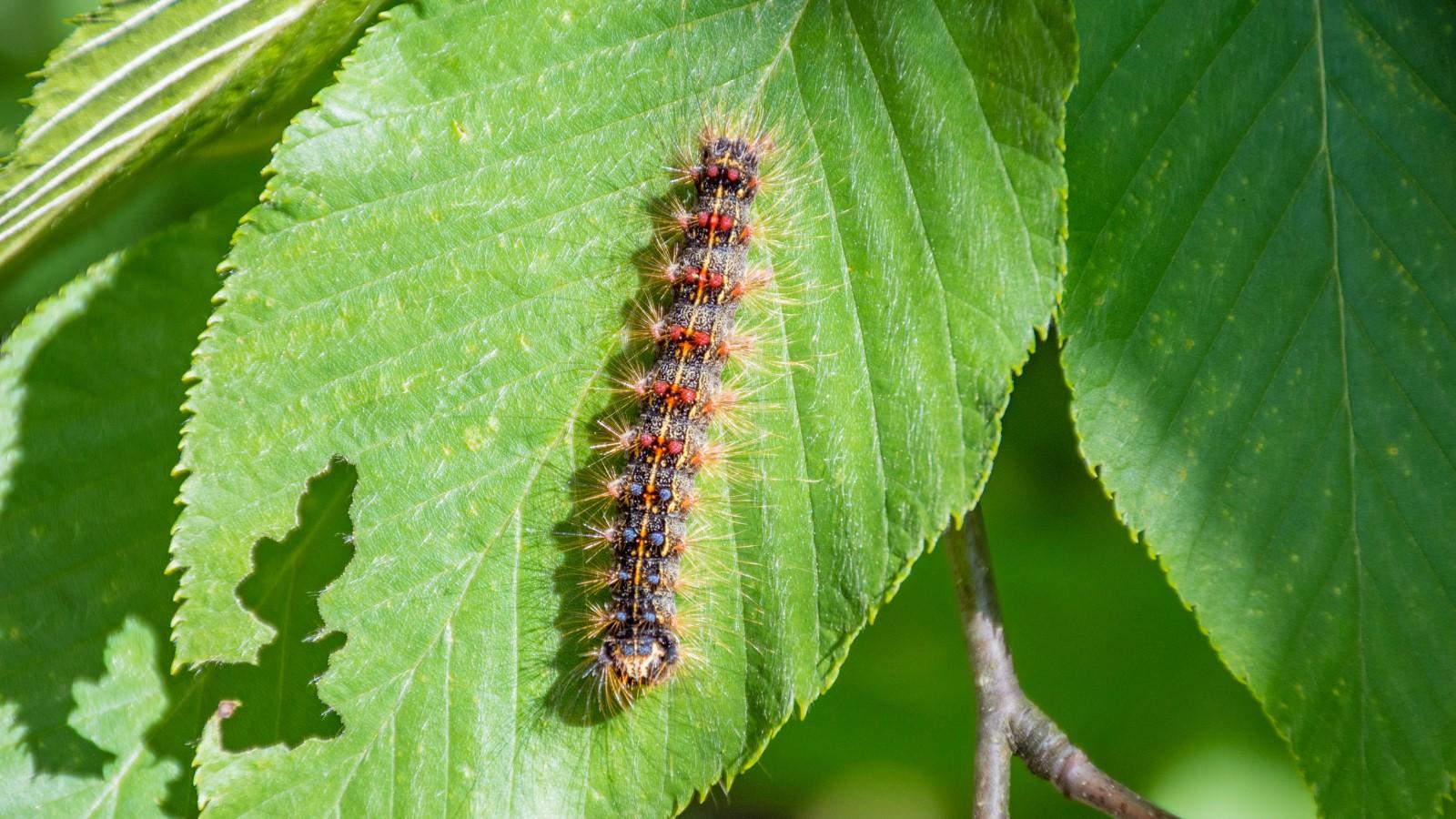
- Larva: Young caterpillars are black, hairy, and only one-sixteenth of an inch long. As they grow, caterpillars change color, and by the third instar (development stage), they are about five-eights of an inch long and have 10 blue spots down their backs. Caterpillars grow up to 2 or 2½ inches in length, and at that point have 5 pairs of blue dots and 6 pairs of red dots on their backs.
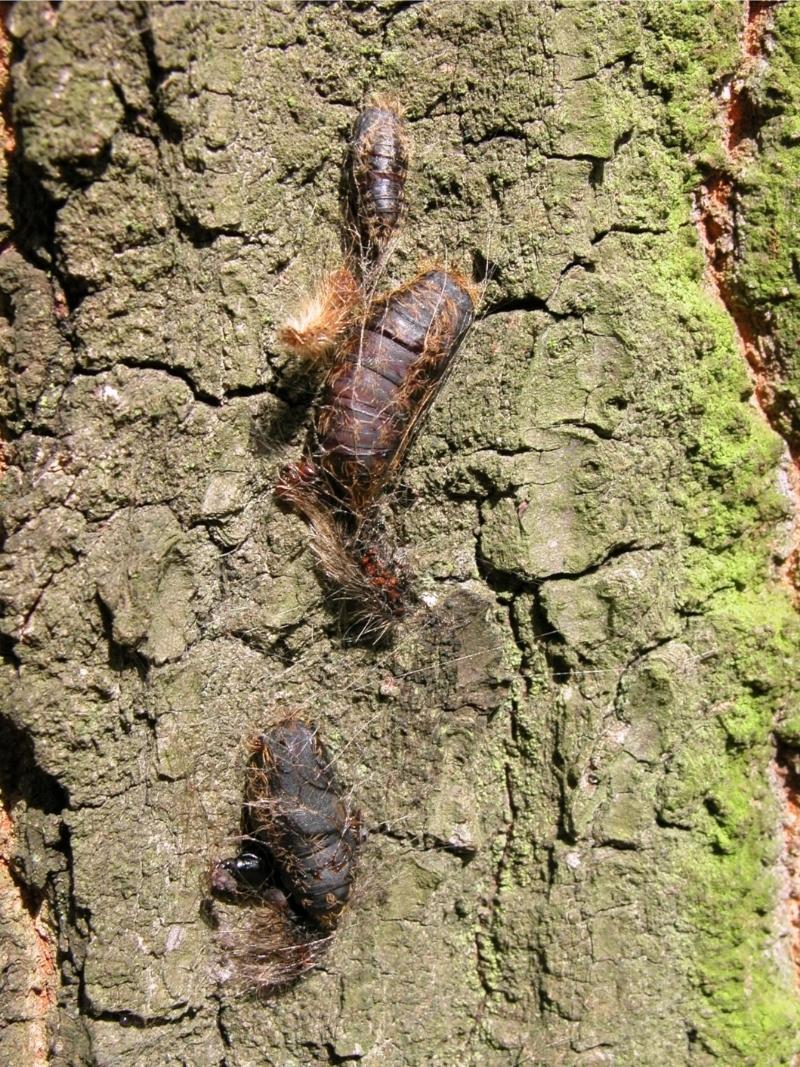
- Pupa: Smooth, teardrop-shaped, and dark brown, about 1 inch long. They are not surrounded by a cocoon. Pupae may be found attached to just about anything around the outside of the home, including tree trunks, cars, trailers, around door frames, on the siding overhang above the foundation, and in many other protected locations.
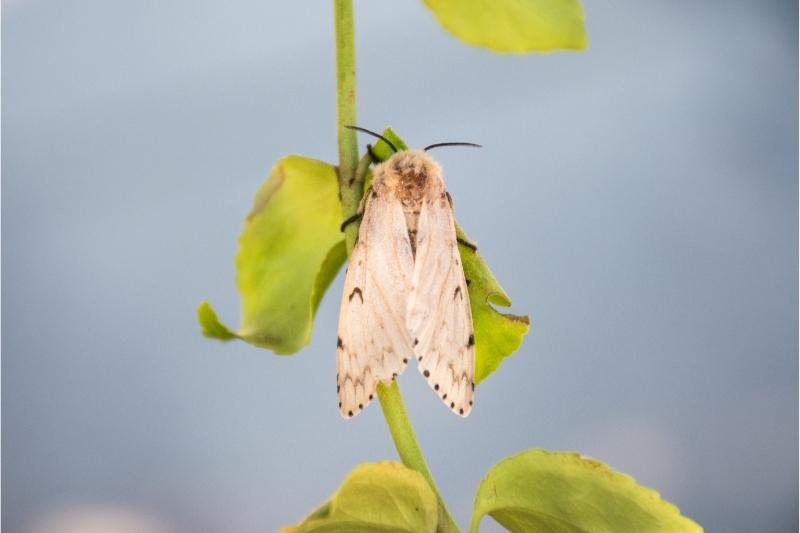
- Adult: Female moths have white wings with small dark markings. The wingspan is 2 inches (the distance between wingtips when the wings are held out to the sides, not over the back). Male moths are brown with black markings. Adult moths emerge and are active from late June to late July.
Life cycle chart
The following bar chart illustrates the life stages of spongy moth throughout the year. From about late June (at the earliest) through early May (at the latest) of the following year, egg masses can be present. The larvae (caterpillars) are present between mid-April (at the earliest) and early July (at the latest). Pupae are present from about late June into the end of July. Adults are active from July into about mid-August.