
Should I Terminate Now, Wait, or Plant Green?
By Dwayne Joseph, Sarah Hirsh and Ray Weil
It’s that time when the weather starts warming up, planting season gets closer, and for fields with cover crops, the question comes up quickly: should I terminate now, wait a little longer, or plant green? That decision can bring a little anxiety with it. Terminate too early and maybe you leave some benefits on the table. Wait too long and maybe planting conditions get tougher, the burndown window gets tighter, or the whole thing starts to feel like more risk than reward. There is no one answer that fits every field, but the decision usually gets clearer when you stop asking only, “When should I terminate?” and start asking, “What am I trying to get out of this cover crop before the cash crop goes in?”
A useful way to think through the decision is to start with your main management priority and let that guide the timing. If your priority is easier planting, lean toward earlier termination. That usually means less biomass to deal with, less residue at planting, and fewer chances for the cover crop to make the system harder to manage. If your priority is more biomass and more residue, waiting longer may make more sense. More spring growth usually means more material on the soil surface after termination, providing soil cover and moisture conservation. If your priority is weed suppression, later termination may also deserve a closer look. More biomass generally means more residue, and more residue results in better physical suppression of small-seeded weeds. If the cover crop is terminated too far ahead of planting, some of that value starts slipping away. You have less biomass to begin with and more time for it to break down, which can reduce residue cover and allow more weeds to germinate. If corn is the crop and one of your goals is nutrient contribution, waiting a little longer may add value, especially where legumes are part of the stand. Research has shown that allowing a legume cover crop to keep growing into late April or early May can add about 2 pounds of nitrogen per acre per day. That means terminating too early may leave some of that nitrogen contribution on the table. If your priority is keeping the system simple, that usually points away from pushing termination too late. A cover crop that looked manageable a week or two ago can become a very different planting situation after a stretch of favorable weather. The biomass that makes the cover crop more valuable from a weed suppression, nitrogen, or soil cover standpoint can also make it more demanding from a management standpoint.
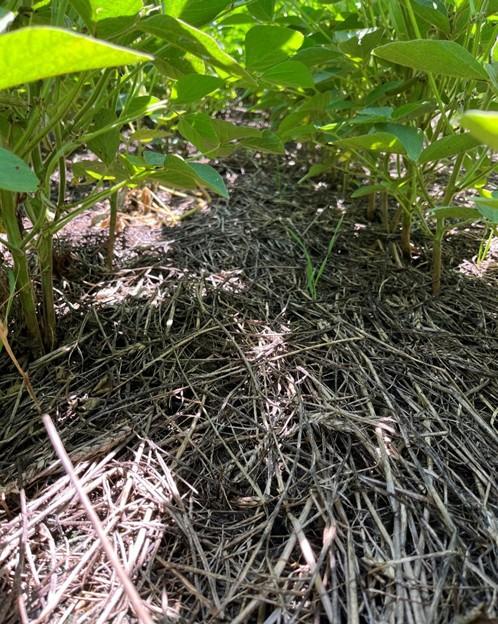
The next question is: what is the cash crop? Corn and soybean do not always respond the same way to delayed termination or planting green. If the field is going to soybean, there is often more flexibility to carry a cereal cover crop later into the spring, especially where the goal is to build biomass and create mulch. In higher residue systems, it is harder to maintain precise seed depth and spacing. Soybean has the ability to “fill in” or branch more in low population areas and therefore tends to be more forgiving of planting issues that arise in higher-residue systems. This is one reason later termination and planting green come up more often in soybean discussions than corn. If the field is going to corn, a more cautious approach may make sense. That does not mean corn always needs earlier termination. The challenge is that corn is generally less forgiving when the cover crop gets too big. Under those conditions, soils can stay cooler, emergence may be less uniform, and nitrogen tie-up can become more of an issue, especially with cereal rye or other grass cover crops as they get larger. At the same time, if a legume is part of the stand, carrying it a little longer may increase the nitrogen contribution available to the following corn crop. That tradeoff is part of the reason termination timing ahead of corn deserves a little more thought. All of these factors can either help corn get off to a good start or put it at a disadvantage early in the season, depending on the cover crop species, termination timing, and spring conditions.
Weather should shape the decision too, but not in a simple one-direction way. It is not as easy as saying wet means early and dry means late. In a wet, cool spring, some farmers may want to terminate earlier to avoid making planting conditions any tougher. Others may see value in less bare soil and having a living cover helping pull moisture out of the field. In a dry spell, some may want to carry the cover crop a little longer to build residue and help conserve moisture later on. Others may choose to terminate sooner if they are worried that living cover is pulling from the same soil moisture the cash crop needs to get established. That is one of the important tradeoffs with termination timing. A living cover crop can continue using water right up until termination, but once it is terminated, the residue left on the surface can help reduce moisture loss and moderate soil conditions later on. In the end, weather matters, but what matters more is how the weather is actually affecting field conditions when the termination decision is being made.
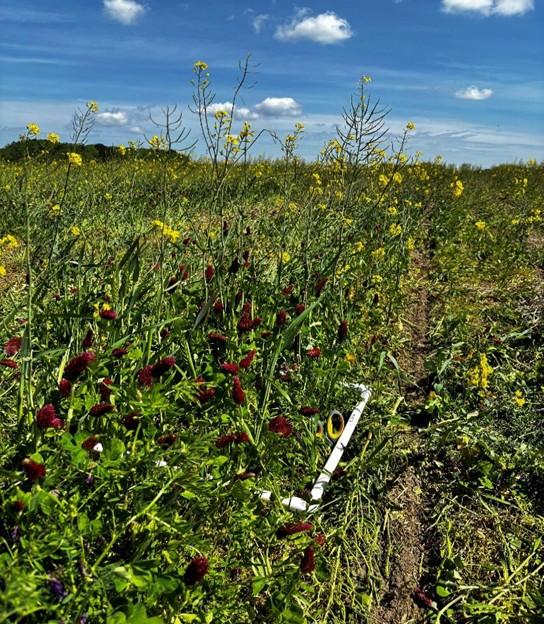
Cover crop species matter too. A straight cereal rye cover crop may behave very differently in the spring than a mixed stand with legumes and/or brassicas. If the field has cereal rye and the goal is biomass, residue, and weed suppression, that may support waiting longer to terminate. If the cover crop is a mix such as wheat, radish, and crimson clover, and the goal was nutrient scavenging and winter soil cover, that may lead to a different termination decision. If legumes such as hairy vetch or crimson clover are part of the mix, that can shift the conversation toward nitrogen contribution and away from looking only at biomass or weed suppression. It is hard to talk about the “right” termination timing without also asking what cover crop is growing in the field and what role it is expected to play.
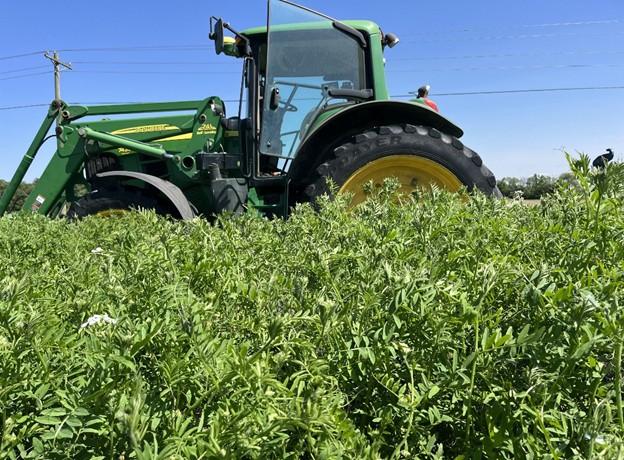
That is also where planting green fits. Planting green is not just “wait a few more days.” It is more of a systems decision. One advantage is that the cover crop is still standing and alive at planting instead of already dead and lying on the soil surface as residue. In some situations, that can make planting easier than waiting to plant into heavy residue after termination. That difference matters because planting into laid-down residue after termination can create more challenges for the planter, including cutting through residue, maintaining consistent seed placement, and fully closing the seed slot. But that does not mean planting green is automatically easy. Planter setup matters. Down pressure needs to be sufficient for consistent seed placement, and closing wheels need to fully close the seed slot. Depending on the cover crop and field conditions, row cleaners may help. But they are not always necessary in planting green and can create issues if they move too much residue or disturb too much soil, including wrapping and making seed slot closure more difficult. Cover crop selection matters too. Planting green can be more straightforward in an upright cereal cover crop, but more difficult in a viny species such as hairy vetch. Hairy vetch can become thick, tangled, and harder to manage at planting depending on its growth stage and planter setup. If you are thinking about planting green, ask a more specific set of questions.
- Can my planter handle the residue or standing biomass?
- Am I comfortable managing a bigger cover crop at planting?
- Is this the right cover crop species and the right cash crop for it?
- Do I have a burndown plan that works for the cover crop, cash crop, and weeds?
If those answers are mostly yes, planting green may be worth considering. If you are working through those questions and hearing a lot of “umms” in your head, that may be a sign the field is not the best candidate for planting green.
One simple way to think through the decision this spring is to start with what you are trying to accomplish. If easy planting is the goal, lean earlier. If more biomass is the goal, lean later. If weed suppression is high on the list, later termination may deserve a closer look. If building nitrogen from a legume is part of the goal, earlier termination may leave some value on the table. If the goal is to keep risk lower in corn, be more cautious. If the field is going to soybeans and your setup can handle more residue, later termination or planting green may be worth considering.
- Is this field going to corn or soybeans?
- What cover crop species or mix is out there now?
- Am I trying to maximize biomass, nitrogen contribution, or keep the planting window simpler?
- Is weed suppression one of the main reasons for carrying the cover crop longer?
- Am I trying to build more residue for moisture conservation, or protect existing soil moisture for crop establishment?
- Can my planter handle more residue or standing biomass if conditions allow more spring growth?
- Does my burndown plan still fit the weeds present in that field and the following cash crop?
Ultimately, many farmers ask, “How late can I wait?” and understandably do not want to hear the answer, “It depends.” A better question may be, “What am I trying to get out of this cover crop before planting, and which termination timing best supports that?” That does not remove every tradeoff, but it does make the decision more practical. Instead of chasing one perfect termination date, it shifts the focus back to matching the timing to the priority, the cash crop, the field, and the conditions in front of you.
This article was developed as part of the SARE-funded project, Optimizing Spring Cover Crop Management for Productivity, Soil Health, and Climate Resilience (Award No. LNE23-481-RAWD00001024).
This article appears in April 2026, Volume 17, Issue 1 of the Agronomy News.