Roots in Research Turfgrass Cover
Updated: June 11, 2025

Roots in Research Newsletter

CMREC - Paint Branch Turfgrass Facility - Yield Year 2024

2024 was a momentous year for the CMREC-Paint Branch Turfgrass facility, with manager Dave Funk retiring in April after 25 years of service at the University of Maryland. Dave started with MAES back in 1999, working briefly at the old turfgrass facility off Cherry Hill Road before moving into the new facility on the north end of campus in College Park. As manager, Dave maintained a high level of turfgrass research while cultivating a workplace culture where humor and hard work go hand in hand. We won’t have to miss him just yet, though, as Dave has agreed to return part time as we continue to work to hire a new manager. Also in 2024, our new turfgrass pathologist, Dr. Fereshteh Shahoveisi left UMD and joined Envu. We wish her the best of luck in her new role. We wrapped up 2024 with meetings with USDA scientists about a potential new collaboration, and we look forward to the new research that this partnership will bring to the facility in the future.

Alan Leslie
MAES Center Director
WMREC | CMREC | LESREC                                             Download PDF

QR Code to get to Roots in Research for Turfgrass

To view this newsletter electronically, scan the QR code! 

___________________________________________________________________________________________________________________

Enabling Small Anomaly Detection Using
 Finite-Difference Magnetic Gradiometry

Heidi Myers, Daniel Lathrop and Vedran Lekic

Magnetometry is used to detect ferrous objects at various scales, but detecting small-size, compact sources that produce small-amplitude anomalies in the shallow subsurface remains challenging. Magnetic anomalies are often approximated as dipoles or volumes of dipoles that can be located, and their source parameters (burial depth, magnetization direction, magnetic susceptibility, etc.) are characterized using scalar or vector magnetometers. Both types of magnetometers are affected by space weather and cultural noise sources that map temporal variations into spatial variations across a survey area. Vector magnetometers provide more information about detected bodies at the cost of extreme sensitivity to orientation, which cannot be reliably measured in the field. Magnetic gradiometry addresses the problem of temporal-to-spatial mapping and reduces distant noise sources, but the heading error challenges remain, motivating the need for magnetic gradient tensor (MGT) invariants that are relatively insensitive to rotation. Here, we show that the finite size of magnetic gradiometers compared to the lengthscales of magnetic anomalies due to small buried objects affects the properties of the gradient tensor, including its symmetry and invariants. This renders traditional assumptions of magnetic gradiometry largely inappropriate for detecting and characterizing small-size anomalies. We then show how the properties of the finite-difference MGT and its invariants can be leveraged to map these small sources in the shallow critical zone, such as unexploded ordnance (UXO), landmines, and explosive remnants of war (ERW), using both synthetic and field data obtained with a triaxial magnetic gradiometer (TetraMag).

__________________________________________________________________________________________________________________________

Maryland Extension Publications and Resources on Turf Grass

There is a compiled list of resources from the Maryland Department of Agriculture, Maryland Extension Publications, along with other resources and manuals to help support the turfgrass industry. The Turfgrass Technical Updates (TT-Bulletins) of the University of Maryland's Department of Natural Resource Science and Landscape Architecture are featured here. These are the most current versions of the publications.

Check out Maryland Turfgrass Council website for this list.

__________________________________________________________________________________________________________________________________________________

Editors page

Cool Season Turf Abstract

Steven Holman, Agricultural Technician Lead

Abstract: For most people, turf grasses, especially the cool season grasses look almost identical. Narrow green leaves from eye level all look the same but once you see and pay attention to some key details it be- comes easy to identify from a distance what grass is growing. The goal of this project is to have in one area of the farm a demonstration plot of the five most common cool season turf grasses. This includes Perennial Ryegrass, Turf-type Tall Fescue, K31 Tall Fescue, Kentucky Bluegrass, and Hard Fescue. This set of cool season grasses allow for the visual and physical comparison between cool season grasses. The key characteristics demonstrated by this plot are the color, texture, growth habits and physiological leaf and stem differences taught to students in class. The condensed nature of the plot with five rows of grass allows for a side by side comparison between these five types of grasses to re-enforce topics learned during lectures or labs held at the farm. This demonstration plot follows our standard cool season grass maintenance protocol. Fertilize at .9lbs of Nitrogen per 1k sq ft and apply pre-emergent in the spring, mow at 3 inches during the growing season and apply fungicides, post emergent herbicides and insecticides as needed, irrigate when signs of heat and drought stress occur.

Pennington picture of grass

____________________________________________________________________________________________________________________________________________________________________

Micro Clover Abstract

Steven Holman, Agricultural Technician Lead

Abstract: Growing healthy turf grass starts with building the foundation of meeting nutrient requirements. Having enough nitrogen throughout the growing season though traditional application methods such as sprayable urea or spreadable fertilizer can often result in excessive applications with spikes and dips of plant available nitrogen. But results of having nitrogen in any form from any type of application is very noticeable from a darker color disease resistance and an overall healthier stand of grass, which will grow faster and thicker preventing weeds from competing and choking out the grass. The idea with micro clover is to introduce a legume in the turf grass stand which will provide a steady release of year round nitrogen to reduce and remove unnecessary inputs including fertilizers and post emergent herbicides, while also being aesthetically pleasing as the smaller leaves of the micro clover as to not impact the texture of the grass in a lawn setting. This plot is a demonstration and proof of concept that with the right prep work to establish micro clover with a cool season turf grass the elimination of excessive inputs can be possible in a home lawn or field type setting.

_____________________________________________________________________________________________________________________________________________________________________________
"Make a Mini-Meadow” Outreach Event
at the CMREC Paint Branch Turfgrass Facility

By Lindsay Barranco,
Experiential Learning Coordinator, College of AGNR and Institute of Applied Agriculture

Growing a wildflower pollinator meadow from seed can be an overwhelming task. It takes many years to come into maturity, there is ground to prepare, grass to kill off, weeds to eradicate – lots of steps. In order to break these steps into manageable parts, Madeline Potter, Faculty Specialist in Entomology and Integrated Pest Management with Maryland Extension and Lindsay Barranco, Experiential Learning Coordinator with the Institute of Applied Agriculture at UMD, College Park, led a group of 12 attendees in a hands-on mini meadow-making workshop on the grounds of the Paint Branch Turfgrass Facility in April 2024.A 

Meadow in Three parts: Preparation, Planting and Maintenance

Part One – Preparation:

The workshop was divided into three separate segments. Preparing the Meadow, Planting the Meadow and Maintaining the Meadow.  The preparation phase began on August 21, 2023, when Barranco began the ground preparation phase by laying down a 30 by 6 foot strip of Geotech fabric on the grounds of the facility. Geotech fabric is tightly woven plastic that once laid for a period of months, kills off grass underneath without the need for herbicide treatment. Other preparation methods include herbicide and mechanical sod removal, but a low-cost, non-chemical alternative is the use of Geotech fabric. Once placed in a strip and tamped to the ground using long landscape staples, the fabric sat for a period of seven months until the group gathered in April 2024 to continue the meadow strip preparation and to seed the planting area.

At the April 2024 workshop, the fabric was removed yet some of the dried grass still had roots extending into the soil, so the group used an old-time, hand-pushed, shallow cultivator to loosen the roots and remaining dried grass so it could be raked off the soil strip. What remained was a bare soil strip that was lightly roughed-up with a bow rake prior to seeding.

(Note: On November 17, 2023 half of the Geotech fabric was removed so that half of the strip could be seeded in the Fall and half could be left for a workshop for seeding the other half of the strip in the Spring, so that two sections of the meadow strip could be compared for overall seedling growth and weed intrusion.)

Part Two – Planting:

Some wildflower meadows can be planted by using mature native plants or by using plugs which are immature, smaller native plants, but these plants can be difficult to source and are often expensive. It was decided that this workshop would focus on “the seeded meadow” so a seed mix from Ernst Conservation Seeds (Mesic to Dry Native Pollinator Mix – ERNMX-105) was used. The seed mix was mixed with clay cat litter, which serves as a bulking agent so that the wispy, light wildflower seeds have something to adhere to (sand can also be used) and so the seed dispersal can be viewed by the seeder once it hits the ground, so that even coverage of the seed mix is accomplished. Cover crop seed of grain rye (grain rye is used typically for Fall seeding or grain oats for Spring seeding, but in this case, only grain rye could be sourced for our Spring seeding event) was also added to the mix so that the cover crop could emerge and provide vegetative cover to the strip and “hold the soil” to prevent erosion. Workshop participants took handfuls of seed mix to hand sow the area. Then the seeds were raked into the ground about an inch and tamped into the soil by having participants stomp on top so that good soil to seed contact was achieved.

Part Three – Maintenance:

After the meadow trip was seeded, the group discussed the expected growth of the meadow and future maintenance that would be needed. In months following, Barranco took periodic photographs in order to assemble a document that tracked the growth and this document will be distributed to participants in Spring 2025 when the meadow is in bloom. In general, following seeding in Spring, the cover crop will emerge in full force and should grow to approx.6-8 inches tall before mowing the entire strip. Mowing the cover crop at this stage helps to deter the continued growth of the cover crop and also provides more sunlight to the slow-growing native plants that begin to emerge closer to the ground. Native plants such as Boneset, Blue False Indigo, Hoary Mountain Mint, Common Milkweed, Blackeyed Susan, Little Bluestem and many more will continue to pop up each growing season. A long process, but well worth the wait.

Thank you to CMREC Paint Branch Facility faculty and staff, especially Alan Leslie, Dave Funk, Joe DeRico and Steven Holman.

_______________________________________________________________________________________________________________________________________________________________________
Evaluating the Smith-Kerns Dollar Spot Model on Cultivars with Different Levels of Resistance in Maryland

Uday Kumar Thera¹, Fereshteh Shahoveisi¹, Paul Koch²
1Department of Plant Science and Landscape Architecture, University of Maryland, College Park, MD, USA.  
2Department of Plant Pathology, University of Wisconsin-Madison, Madison, WI, USA

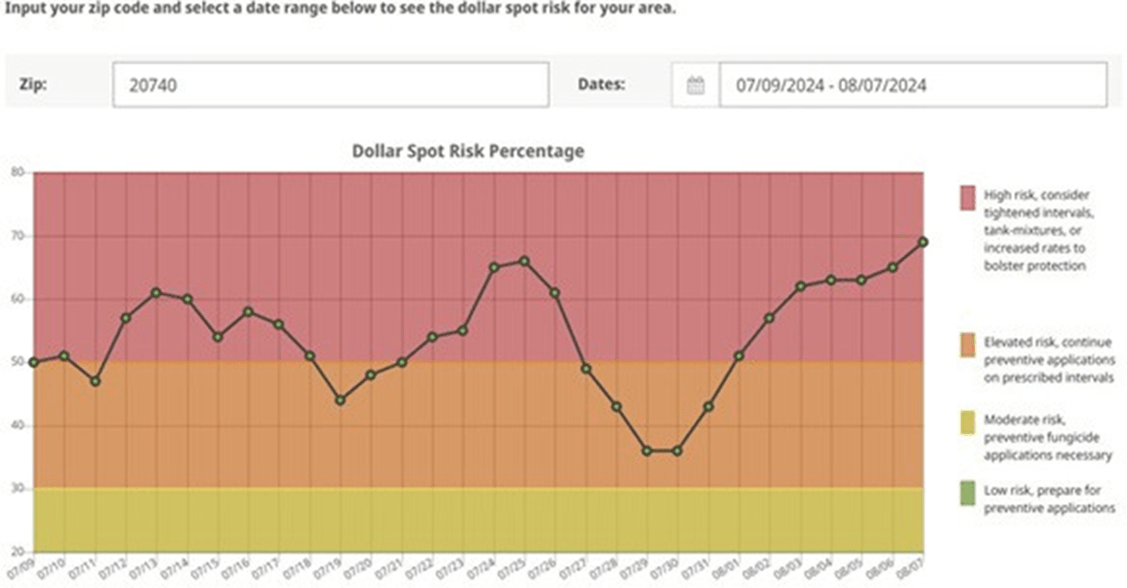
Dollar spot, caused by the fungal pathogen Clarireedia spp., is the most prevalent turfgrass disease globally, affecting numerous species, particularly creeping bentgrass in golf course greens, tees, and fairways. Dollar spot management heavily relies on calendar-based chemical applications. Weather-based disease warning systems, such as the Smith-Kerns model, have been developed to enhance the timing of fungicide applications. However, further research is required to validate the model’s threshold on cultivars with different levels of disease resistance. A multistate NC1208 Dollar Spot Research project was designed to test the Smith-Kerns model threshold on several creeping bentgrass cultivars. Two years of study in Maryland were conducted on fairway height creeping bentgrass cv. 007, L-93, and Penncross Six treatments included a non-treated control, a 14-day calendar-based application, and the model’s threshold at 20%, 40%, 60%, and 80%. The dollar spot severity was evaluated by counting the number of infection centers. The results indicated that using the 20% threshold led to seven spray applications in the 2023 season and nine in the 2024 season, whereas the calendar-based approach resulted in 13 applications in 2023 and 11 in 2024. The relative area under the disease progress curve (AUDPC) at the 20% threshold across all cultivars was 0.848, while the AUDPC for calendar-based sprays was 0.869. However, this difference was not statistically significant. Four sprays at the 40% threshold were required according to the model. This threshold level provided accepted results in the semi-resistant cultivar, 007, and statistically higher disease pressure in more susceptible cultivars. The threshold levels of 60% and 80% did not provide acceptable disease controls in any cultivars compared to

the non-treated plots. These preliminary findings suggest that validating prediction models on cultivars with

varying levels of disease resistance enhances the reliability of warning systems for turfgrass practitioners.

Keywords:
Turfgrass, dollar spot, prediction models, chemical application

Fig One dollar spot
Fig 1. Smith-Kerns dollar spot prediction model from GreenCast Syngenta Website.

_______________________________________________________________________________________________________________________________________________________________________
A Low-cost Wood Vault System

Environmental Monitoring Lab under Dr. Ning Zeng
 The top contributors of this project are myself (Gabe Szybalski), Griffith Uy, and Duncan Santerre

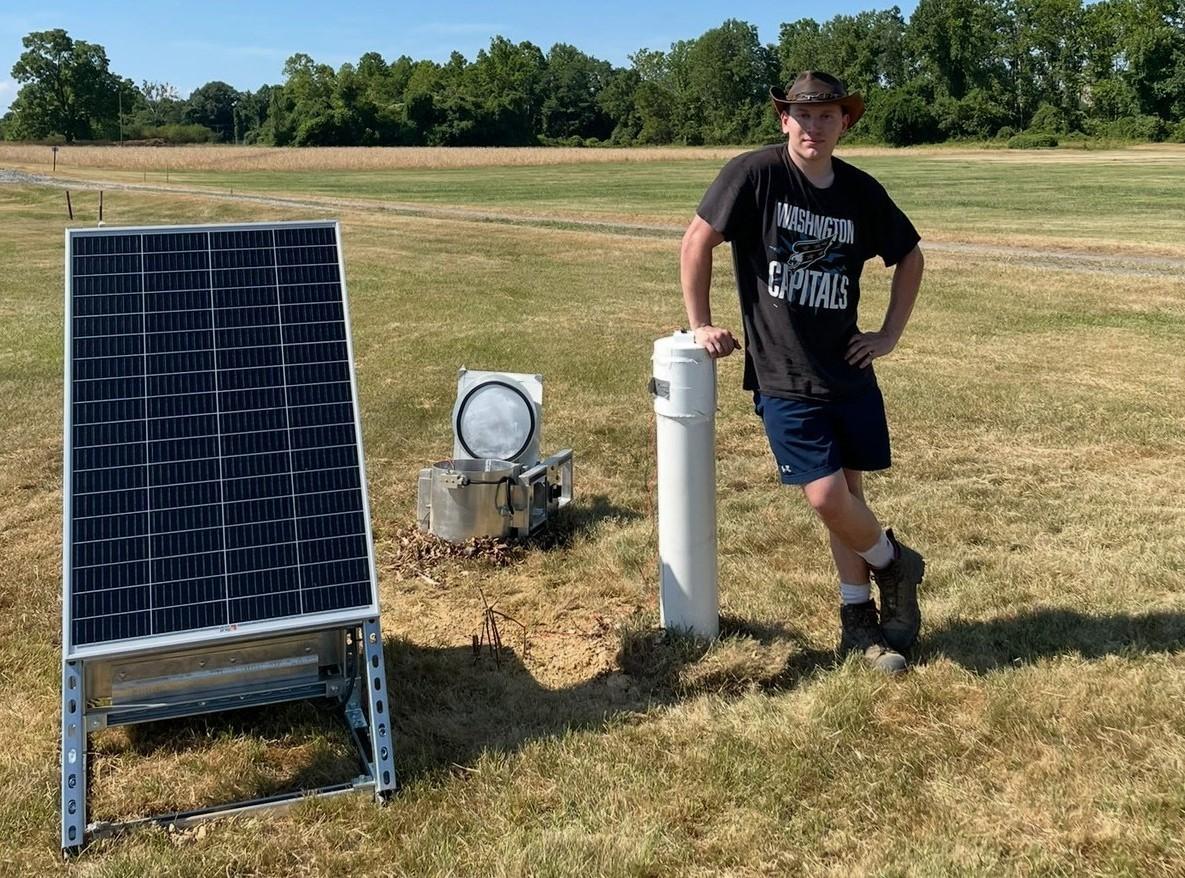
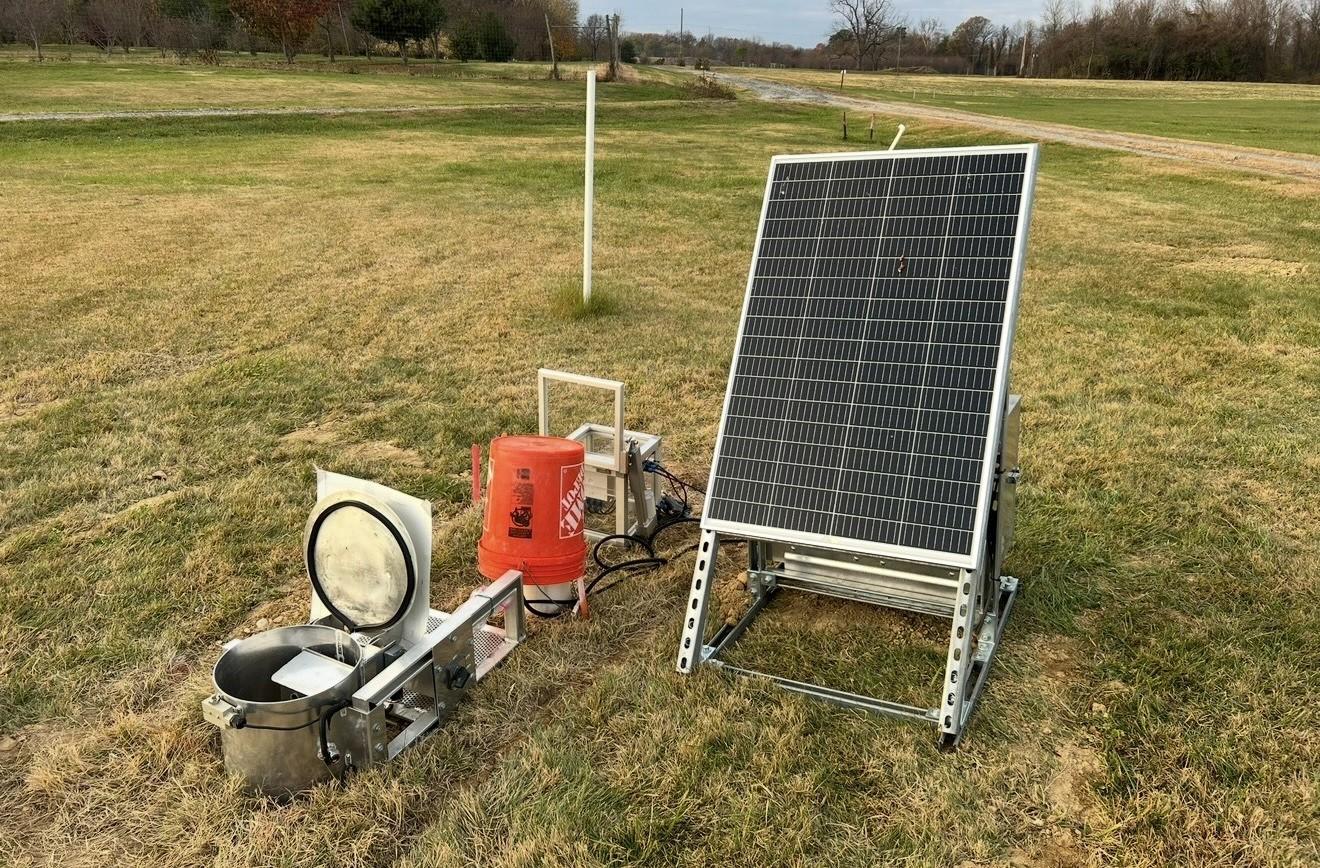
We have made significant progress in developing a low-cost Wood Vault system. Our team has been working on several different models of Wood Vault with varying numbers and kinds of sensors. Most of our testing is completed over at Turfgrass, where we currently have a mini-vault up and running accompanied by sensors to monitor underground and topsoil conditions. Data is transmitted to AOSC servers where it can be accessed and analyzed by members of the Environmental Monitoring Lab team.

the data is being used over time providing various insights to our system, such as monitoring seasonal soil moisture or temperature variations, detecting anomalies (e.g. sensor drift or environmental disturbances), and supporting agricultural or environmental decision-making. In the near future, we plan to further refine our existing system to install Wood Vaults locally throughout the state.

Solar system Wood Vault system at Turfgrass Facility

_________________________________________________________________________________________________________________________________________________________________________________

USDA Notice

__________________________________________________________________________________________________________________________________________________________________________________________

Turfgrass Facility Personnel

Return to CMREC - Turfgrass Facility