
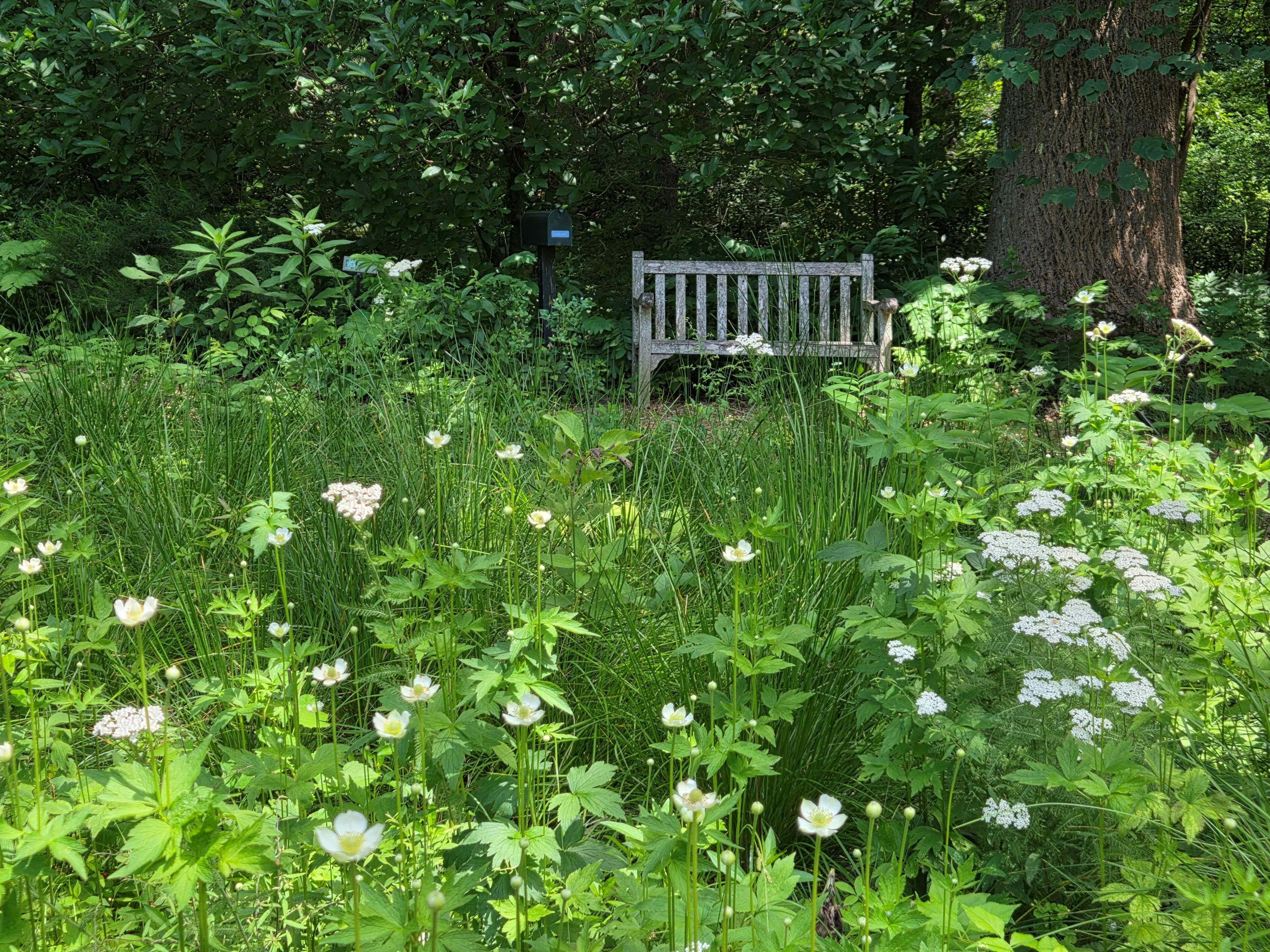
Join us on the first Wednesday of each month from noon to 1 o'clock as we delve into various topics related to native plants. Whether you’re a novice or a seasoned professional, this series provides an opportunity to expand your knowledge and engage with experts in the field. Master Gardeners and Master Naturalists, these sessions are an excellent way to earn Continuing Education Units. Although the presentations are free of charge, registration is required to attend. Don’t miss this chance to enhance your understanding of native plants while enjoying your lunch. Please note: This is a live, interactive session and will not be recorded.
2026 Calendar of Events
Jan 7 Microforests for Macrosolutions
John Evangelista is the Executive Director of Groundwork Elizabeth. He collaborates with City government and community groups to plant microforests to address climate risks in formerly redlined neighborhoods and brownfield areas. Using the Miyawaki method–restoring forests by planting native trees on deforested, degraded soils–these microforests improve soil permeability, mitigate flooding, improve air quality, reduce the heat island effect, and help replenish biodiversity. Health and well-being in the target neighborhoods will also improve as a result of cleaner air, less noise pollution, and the presence of community spaces
Feb 4 Rethinking Lawns: Turning Green Carpets Into Diverse Ecosystems
Dr. Liz Anna Kozik is a Research Scientist at the Chicago Botanic Garden. She is an interdisciplinary researcher who started doing native prairie restoration and ended up using those skills and knowledge to figure out how we can incorporate our native plants into our lawn landscapes. With the Rethinking Lawns team at Chicago Botanic Garden, Chicago Park District, and University of Michigan Flint, she studies and tests the methods and benefits of changing our existing lawns into more diverse spaces that can benefit both people and the living world.
Mar 4 Importance of Mycorrhizal Fungi for Plant Propagation: Where to Start?
Dr. Adriana Corrales is Lead Field Research Scientist & Underground Explorers Program Director at the Society for the Protection of Underground Networks (SPUN), which is a non-profit organization focused on the conservation of mycorrhizal fungi. Most of her work focuses on the ecology of tropical mycorrhizal associations in lowland and montane forests. Before joining SPUN, she was an Assistant Professor at Universidad del Rosario in Colombia for six years. Dr. Corrales is a Forest Engineer with an MS in Environmental Conservation from the Universidad Nacional de Colombia and a PhD in Plant Biology from the University of Illinois at Urbana-Champaign.
Apr 1 Of Moths and Moonlight: Gardens After Dark
Paula Becker has been an ecologist with the Maryland Department of Natural Resources, Natural Heritage Program for over 30 years. She will share her expertise on pollinators of the night with us! It is estimated that 1/3 of all plant families rely on nighttime pollination, including up to 50% of our food crops. Nocturnal pollinators have their own challenges, strategies, and life histories. We'll look at their approaches to survival, how they deal with natural and man-made threats, and how our plant choices can help them out. Remember, just because you've gone to bed doesn't mean your garden has.
May 6 Appalachian Ethnobotany and the Potential for New Horticultural Crops
Dr. Eric Burkhart is a botanist, ethnobotanist, and agroforester in the Department of Ecosystem Science and Management at Penn State. The Appalachian region of the eastern United States, which includes most of Pennsylvania, is a rich repository of temperate plant biodiversity. In this presentation, Dr. Burkhart will share examples of his work with culinary and medicinal crop development using native Appalachian forest species, and discuss some of the conservation, restoration, and economic opportunities associated with these efforts.
Jun 3 Non-Native Earthworms and Their Effects on the Soil Ecosystem
Dr. Katalin Szlavecz is a soil ecologist and Research Professor at the Department of Earth and Planetary Sciences, Johns Hopkins University, Baltimore MD. Her research focuses on how past and present human activities affect the soil physical, chemical and biological properties. She conducts field studies in temperate forests, agricultural fields and on the diverse urban landscape. As Research Associate at the Smithsonian Environmental Research Center, she has been studying the effect of invasive earthworms on forest soils. At JHU she teaches courses on global environmental change, general ecology, and soil ecology.
July 1 From Wasteland to Wonder: Easy Ways We can Help Heal Earth in the Sub/Urban Landscape
In From Wasteland to Wonder, Basil Camu challenges the story we’ve been told about lawns, trees, and “nature” in the modern landscape. Drawing from ecology, urban forestry, and Leaf & Limb’s unlikely journey from profit-driven tree removal service to regenerative tree & land care, this talk shows how everyday sub/urban spaces can become powerful engines for biodiversity, climate resilience, and human well-being. With practical examples and big-picture systems thinking, he invite audiences to trade control for relationship, efficiency for ecology, and abstraction for action, revealing how small, ordinary decisions can help heal the living systems we depend on.
Aug 5 Timing is Everything: The Phenology of Native Plants in a Changing World
Dan Buonaiuto, Assistant Professor in the department of Plant Science and Landscape Architecture at UMD College Park, will present on shifts in phenology—the timing of seasonal life cycle events like leaf budburst or flowering—one of the most prominent biological indicators of climate change to date. However, the magnitude of phenological shifts varies substantially between species, regions, and even specific phases. As a result, the ecological effects of phenological shifts are difficult to predict. In this session, we'll start by unpacking the physiological underpinnings of phenological responses to environmental variability, and go on to investigate the ways that phenological shifts are already altering ecological interactions, from what's going on in your wildflower garden to what's going on in the forest carbon cycle. REGISTER HERE
Sep 2 Saving Ash for Future Forests
Ash trees in North America face a severe threat from the emerald ash borer (EAB), now present in 38 states. Ash species are vital to many forest ecosystems, including black ash (Fraxinus nigra), which holds cultural significance for numerous Indigenous communities. Cornell Botanic Gardens is working to conserve and restore ash to New York Forests by propagating individuals showing natural resistance to EAB. Todd Bitner, Director of Natural Areas, will highlight ash conservation efforts and ways citizen scientists can help restore ash to our forests. REGISTER HERE
Oct 7 Sacred Grounds: Moving from Behavior to Action by Growing Joy
Naomi Edelson is the Senior Director of Wildlife Partnerships. The National Wildlife Federation’s Sacred Grounds program partners with faith congregations and their members to change their behavior to reduce stormwater runoff and increase wildlife habitat. Working with more than 50 DMV congregations we have helped congregations and members replace turf grass with native plants. Our work with the congregations is guided by the approach of Community–based Social Marketing, a behavior change model. We will share the results of the past 12 years including tactics and survey results that show starting with low barrier actions leads to further and more significant change and literally grows joy and ambassadors to extend the reach and impact. REGISTER HERE
Nov 4 Creating Food Forests
Lincoln Smith runs Forested, a 10-acre experimental food forest site in Bowie, Maryland, established in 2012. There, he and his team test food forest methods, educate aspiring forest gardeners, and host forest-to-table dining events that highlight the connections between land stewardship, ecology, and local food. His work emphasizes the value of diverse plant communities, including native species, in creating resilient systems that support both people and wildlife. Grounded in the belief that human health is deeply tied to ecosystem health, Lincoln’s approach shows how food forests can serve as models for regenerative land use, community education, and a more holistic relationship between people and the landscapes that sustain them. REGISTER HERE
2027 Calendar Will be Released Fall 2026