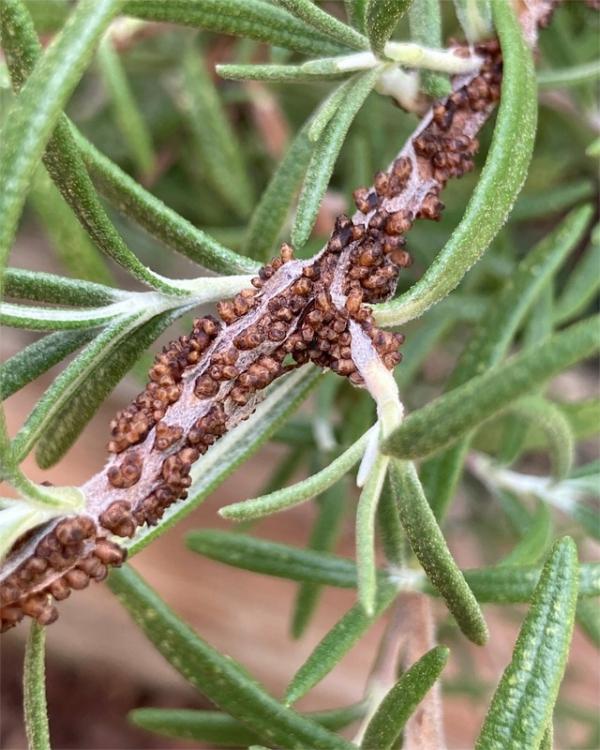
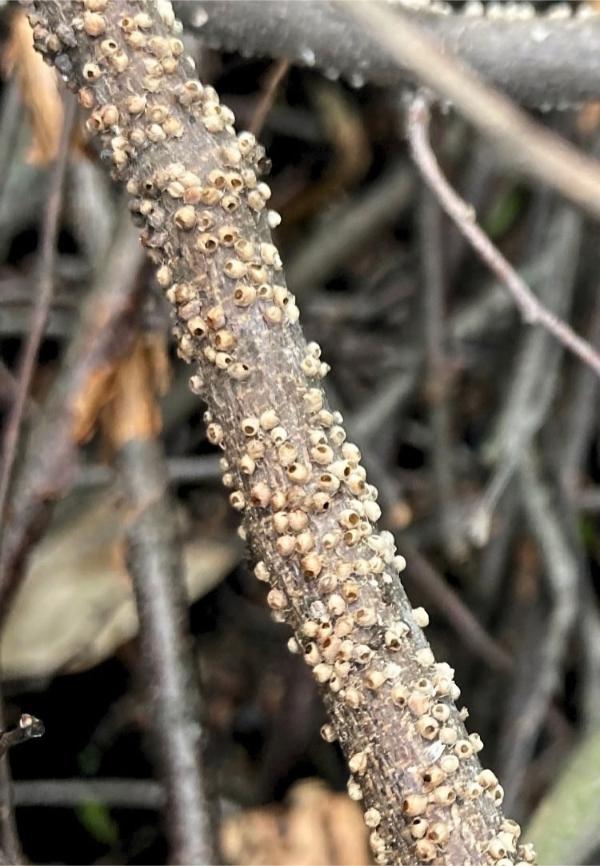
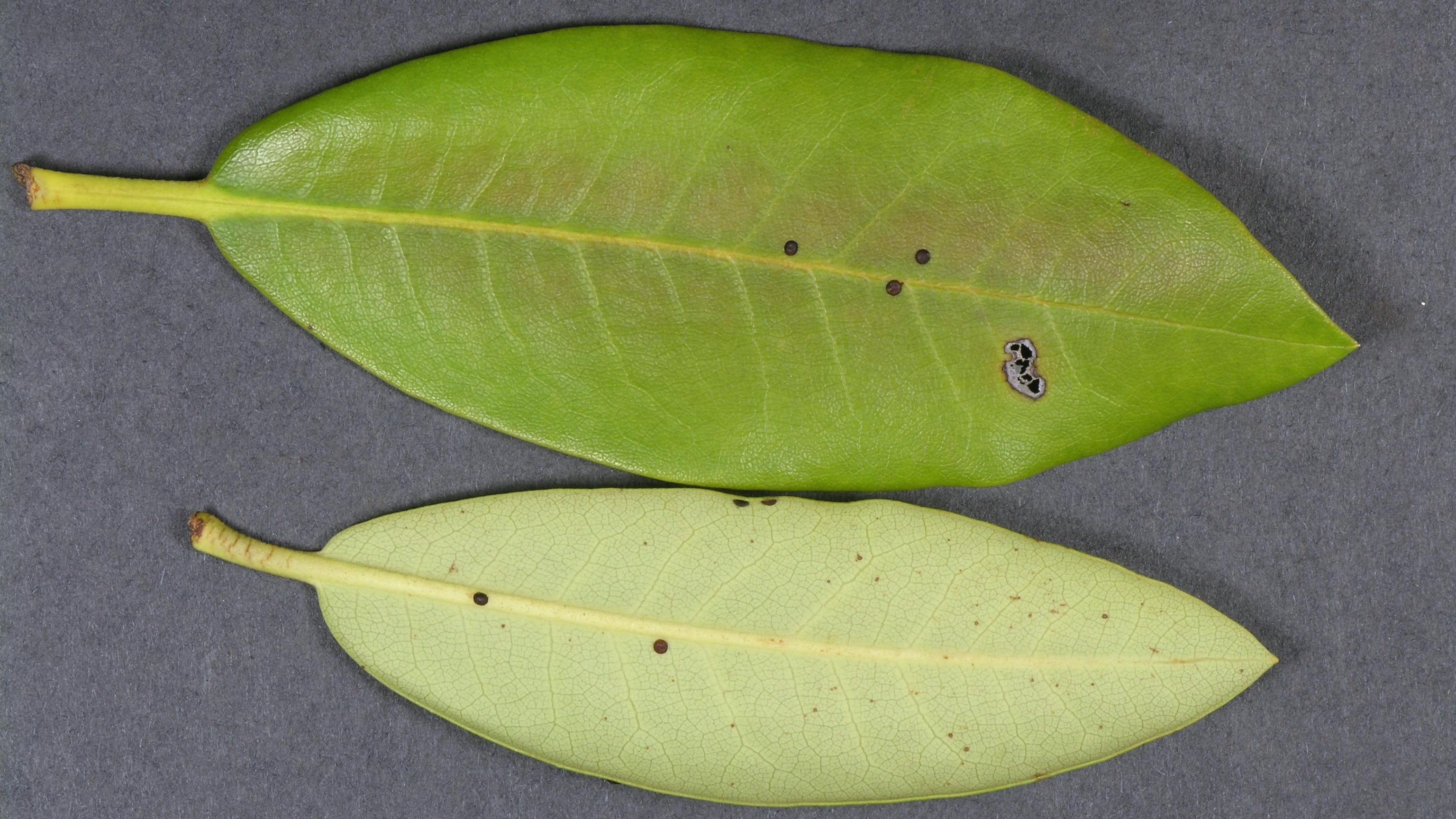
Indian wax scale cover. Photo: Max Bertone, NC State University
Updated: September 22, 2026
Key points
Scale insects have relatively sedentary lives. Their small size and often-inconspicuous colors make them hard to detect.
Plant damage is not always evident until populations become fairly high.
Their waxy covers stick to leaves or bark and dead scale don’t always fall off of a plant right away, making populations look larger than they really are.
Monitoring for soft scale insects
Look for honeydew and sooty mold. Honeydew is a sticky waste product and sooty mold is the dark fungus that grows on it. Sooty mold is often the first noticeable sign of a scale infestation. It can be quite extensive when scale is abundant. Aphids and other sap-sucking pests also produce honeydew, so the scale may not be the only source.
Look for ants. They are attracted to honeydew and will protect this food source from predators. Ongoing ant activity on plants suggests scale may be present if aphids are not found.
Sooty mold growing on a honeydew-covered leaf. The presence of the twice-stabbed ladybird beetle, a beneficial helping to manage the scale, suggests the pest is active. Photo: Mengmeng Gu, Texas A&M AgriLife Extension Service, Bugwood.org
Magnolia Scale tended by ants. Photo: Sarah Vanek, Bugwood.org
Monitoring for all scale insects
Look near plant damage. If you see yellowing blotches on leaves, check leaf undersides for scale, especially along the main veins or at the base of the leaf. If an entire plant is stunted, flowers poorly, has patchy dieback, or shows other signs of stress, check the bark on trunks or main stems for scale.
Look for crawlers. Their tiny size – smaller than a poppyseed or grain of salt – will be more visible with a magnifying land lens.
Scale crawlers can be trapped on double-sided tape wrapped around a twig, though it can be challenging to distinguish them from dust, and the tape may get cluttered with debris. Magnification will be needed to verify crawlers are present. Photo: Joe Boggs, Ohio State University Extension
Know their life cycle. If you can identify the scale based on the host plant and scale appearance, investigate when to expect the crawler period. Many species have temperature benchmarks that herald this window of vulnerability.
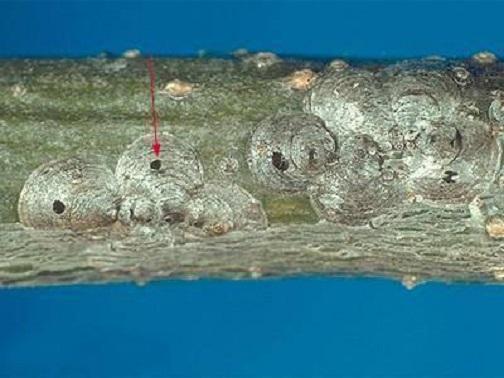
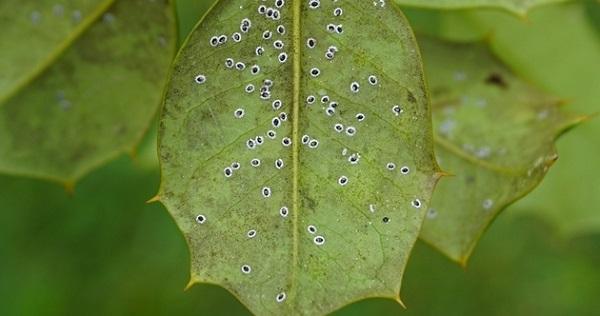
Look for evidence of natural controls. By inspecting scale covers for holes (from parasitoid wasps), spot-checking mature scale for live individuals, and looking for predators (like lady beetles), you can determine if natural enemies are suppressing scale numbers well enough without intervention. Live scale will have a tender body and be easily squashed, leaving a wet residue; dead scale will be crumbly or dry, or so desiccated they won’t be very visible.
Obscure scale covers with small, circular holes indicating they have been parasitized. The adult parasite has emerged and the scale insect is dead. Photo: John Davidson, UMD
Plant diversity
Landscapes with a variety of plants provide better habitats to support natural enemies. Studies show that creating an ecosystem welcoming to birds and predatory and parasitic insects reduces pest problems eliminating or greatly reducing the need to use insecticides. Learn more about creating a pollinator garden to attract beneficial insects.
Scale lookalikes
Other insect pests
Juvenile stages of other pests that are fairly flat, oval, and tiny can resemble scale crawlers. Whitefly nymphs are the closest match in body type, plus they secrete honeydew, but in this case, there will be no older scale present nearby.
Whitefly pupae look very similar to juvenile scale insects. Photo: Joe Boggs, Ohio State University Extension
If honeydew is your main sign of a pest problem, look for other sap-sucking insects in addition to scale — leafhoppers, aphids, or whiteflies.
The fluffy white wax coating the body of certain planthopper nymphs can resemble cottony scale insect covers. Photo: Joe Boggs, Ohio State University Extension
Lichen
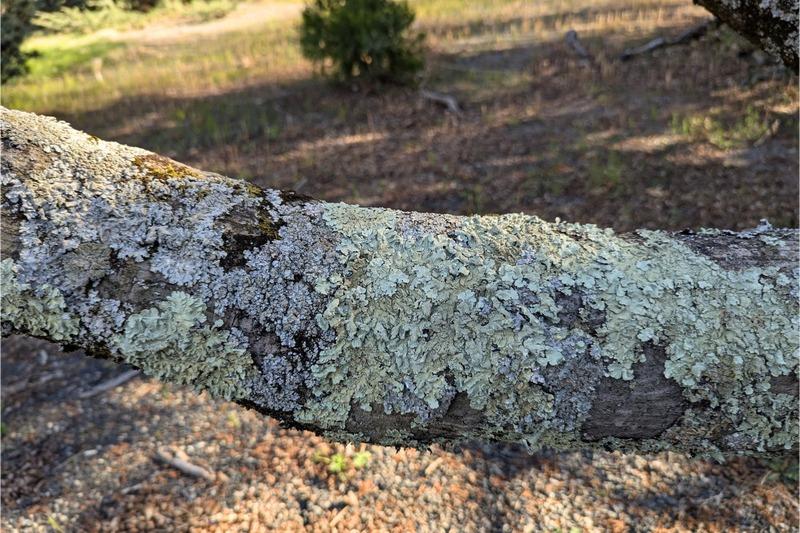
Gray and greenish-gray lichen colonies covering a tree branch. Photo: Miri Talabac, University of Maryland Extension
Colonies of flat lichen on bark might resemble an outbreak of scale, especially since they can be clustered and numerous. Lichen is harmless to trees and may easily detach, but won’t have the even convex or oystershell shape of scale covers. They are often much larger than scale.
Plant parts
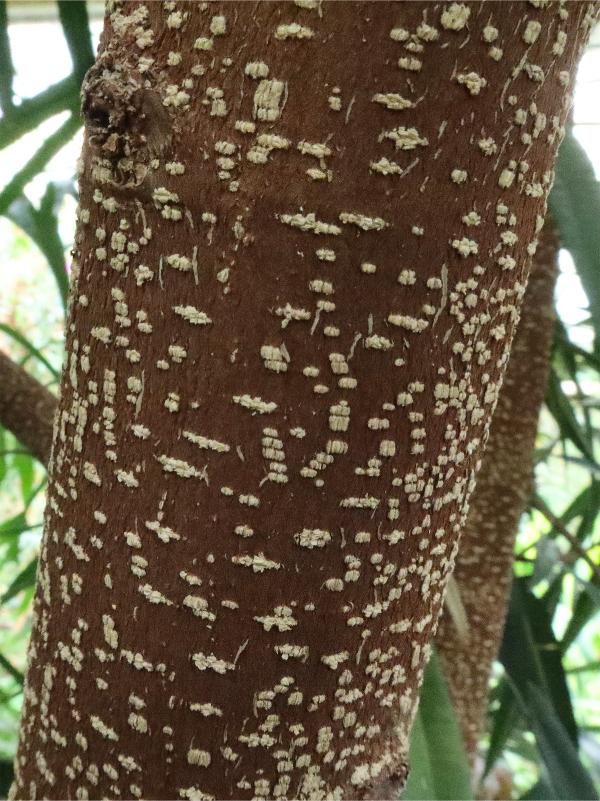
A tree trunk with prominent lenticels, a natural feature that is more visible in some species than others. Photo: Miri Talabac, University of Maryland Extension
It only takes gentle prying to remove scale covers from plant surfaces. Some naturally-occurring bumps or spots on plants can resemble scale, but these will not easily detach. They include adventitious root buds and lenticels, which are pores in bark for gas exchange. Certain plant species have more obvious lenticels than others; one example is the bark of young cherry trees (Prunus).
Adventitious root buds on a rosemary stem. Photo: Ask Extension
Evidence of beneficial insects
A large colony of aphids on a redbud branch which were killed by beneficial parasitic wasps. The pale brown color, bloated appearance, and circular holes in the aphid bodies indicate they are dead. Photo: Ask Extension
Aphid mummies, parasitized by wasps, are scale-like in being hardened, wingless, rounded, and tan. However, they tend to be surrounded by healthy, live aphids, and are not as numerous as a scale infestation.
The larvae of some beneficial insect predators camouflage themselves to avoid being eaten and to better prowl their prey undetected - a “wolf in sheep’s clothing.” A few lady beetle species resemble mealybugs while they consume scale, and debris-carrying lacewings create a shell of lichen on their backs. The easiest way to confirm these are not scale is to nudge them - scale won’t crawl away.
Some species of ladybug larvae look very similar to mealybugs and scale insects. Photo: Joe Boggs, Ohio State University Extension
Artillery fungi
Artillery fungus spore-bearing pellets glue themselves to surfaces like plant leaves and house siding. Look for them on nearby inanimate objects as indicators that they are not scale insects, which will only be found on plants. Photo: Bruce Watt, University of Maine, Bugwood.org
Artillery fungi, which grow harmlessly on mulch, projectile-launch their spores as tiny sticky dark brown pellets which strongly adhere to any surface within about fifteen feet. Plants covered with these, especially on lower stems or foliage undersides, may look infested with scale, but this residue will actually be harder to remove than scale themselves.