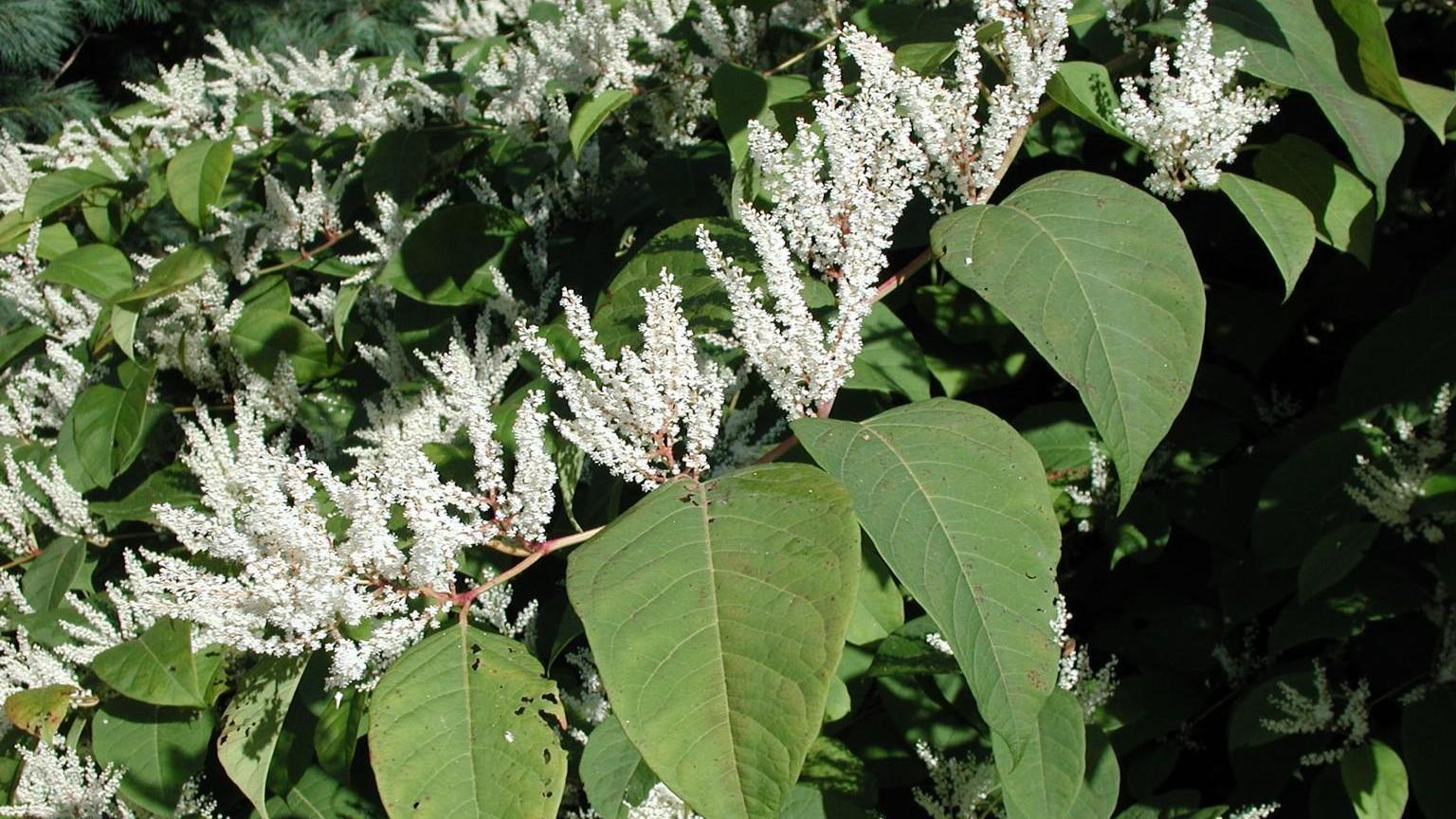
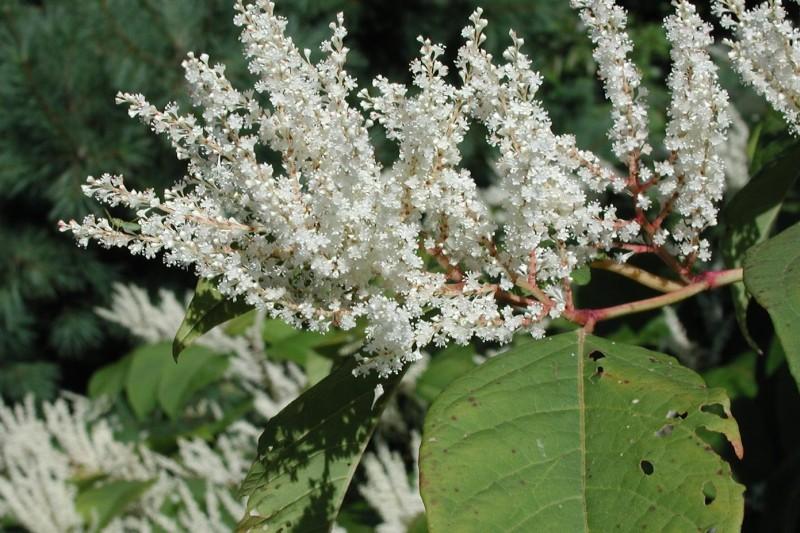
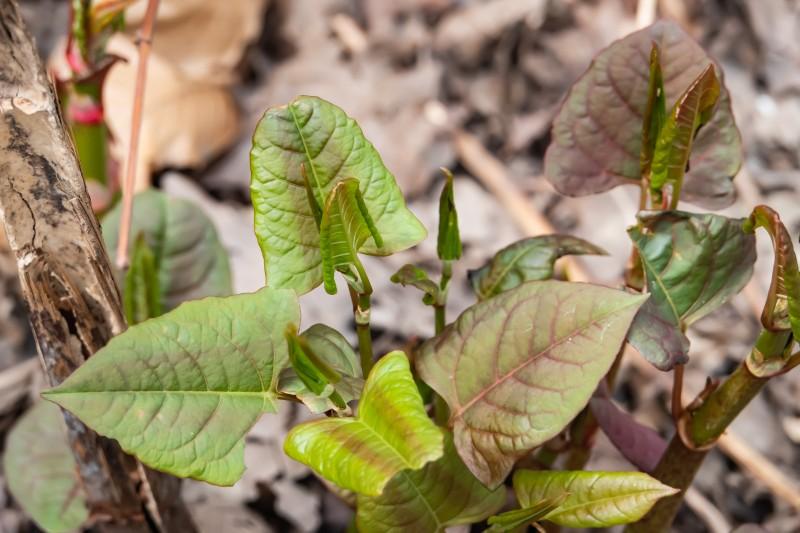
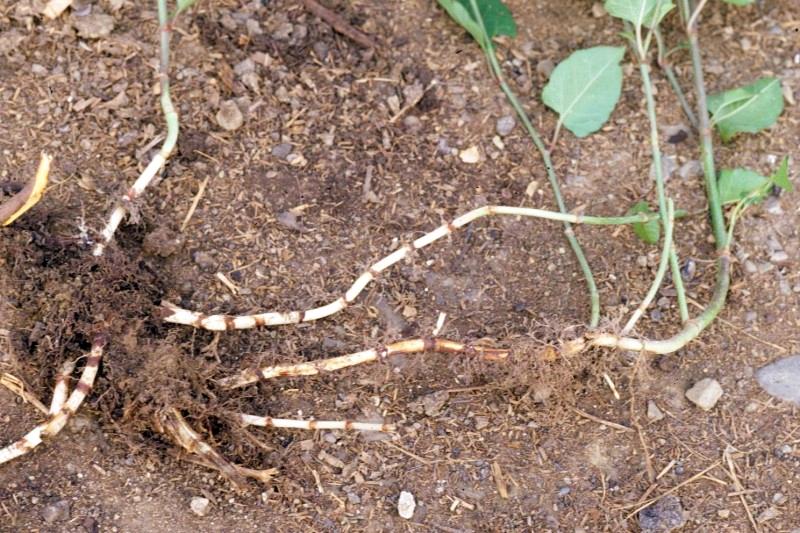
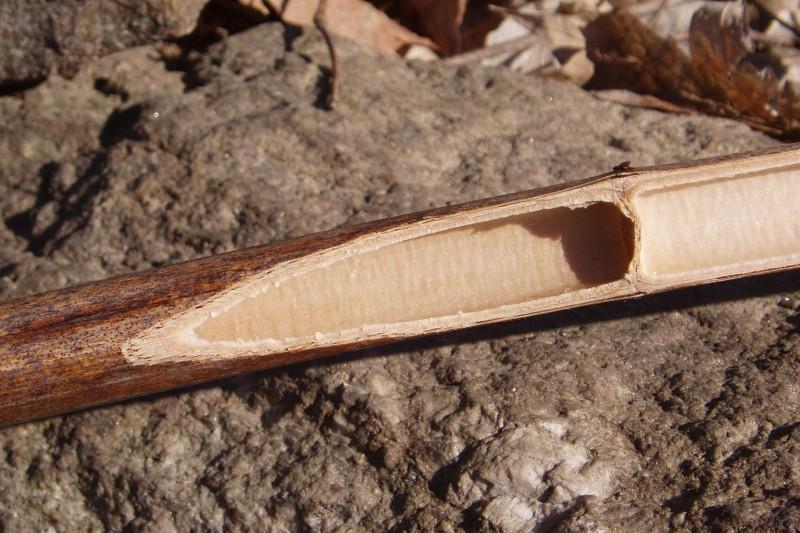
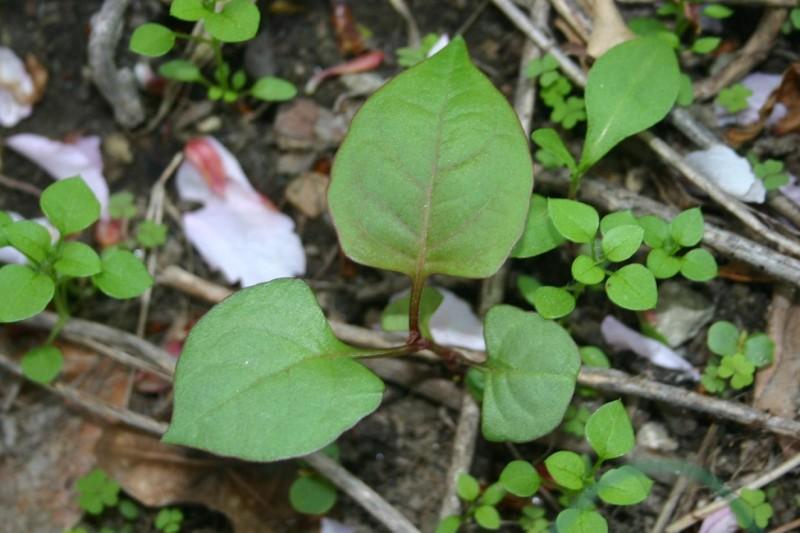
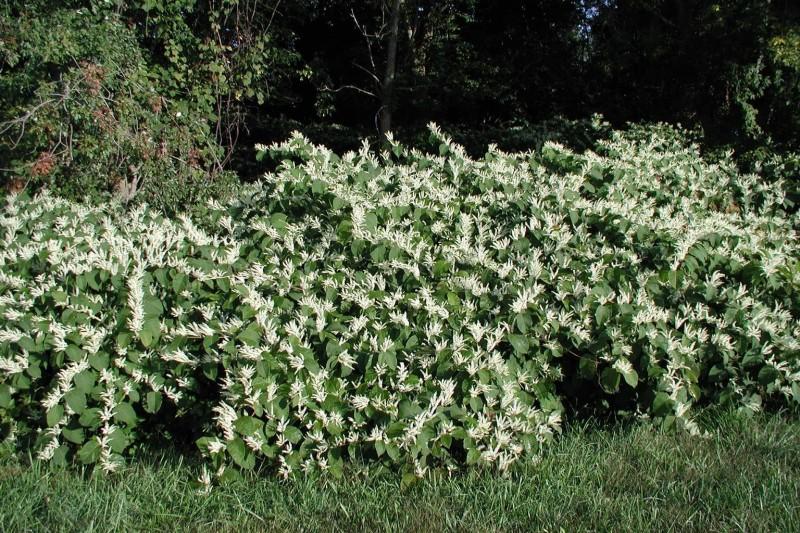
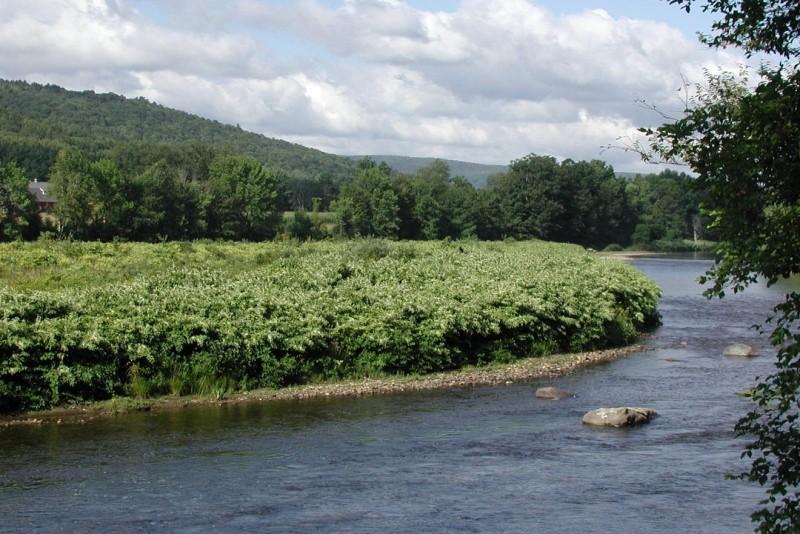
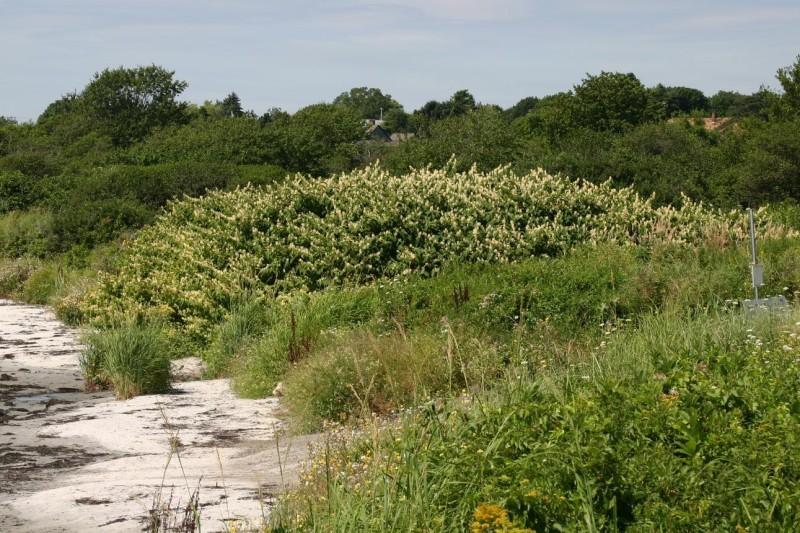
Japanese knotweed foliage and flowers. Photo: Leslie J. Mehrhoff, University of Connecticut, Bugwood.org
Japanese knotweed (Reynoutria japonica, formerly named Fallopia japonica and Polygonum cuspidatum) is a flowering perennial native to Eastern Asia. It was introduced to the U.S. in the late 1800s for ornamental use and erosion control, and has since become invasive. Additional common names include fleeceflower and Mexican or Japanese bamboo. Cultivar 'Variegata' has been grown for its cream-marbled leaves.
Physical features of Japanese knotweed
Japanese knotweed is an herbaceous perennial which dies back to the ground in winter. Despite having "bamboo" as one of its common names due to similarities in stem structure and plant spread, Japanese knotweed is related to buckwheat, while true bamboo is a grass.
A mature Japanese knotweed plant has a shrub-like stature due to its large size and thick, sturdy stems. The plant blooms in mid- to late summer, and seeds ripen in autumn. This species is dioecious: it bears male and female flowers on separate plants. Only female plants produce seeds, which are dispersed by the wind.
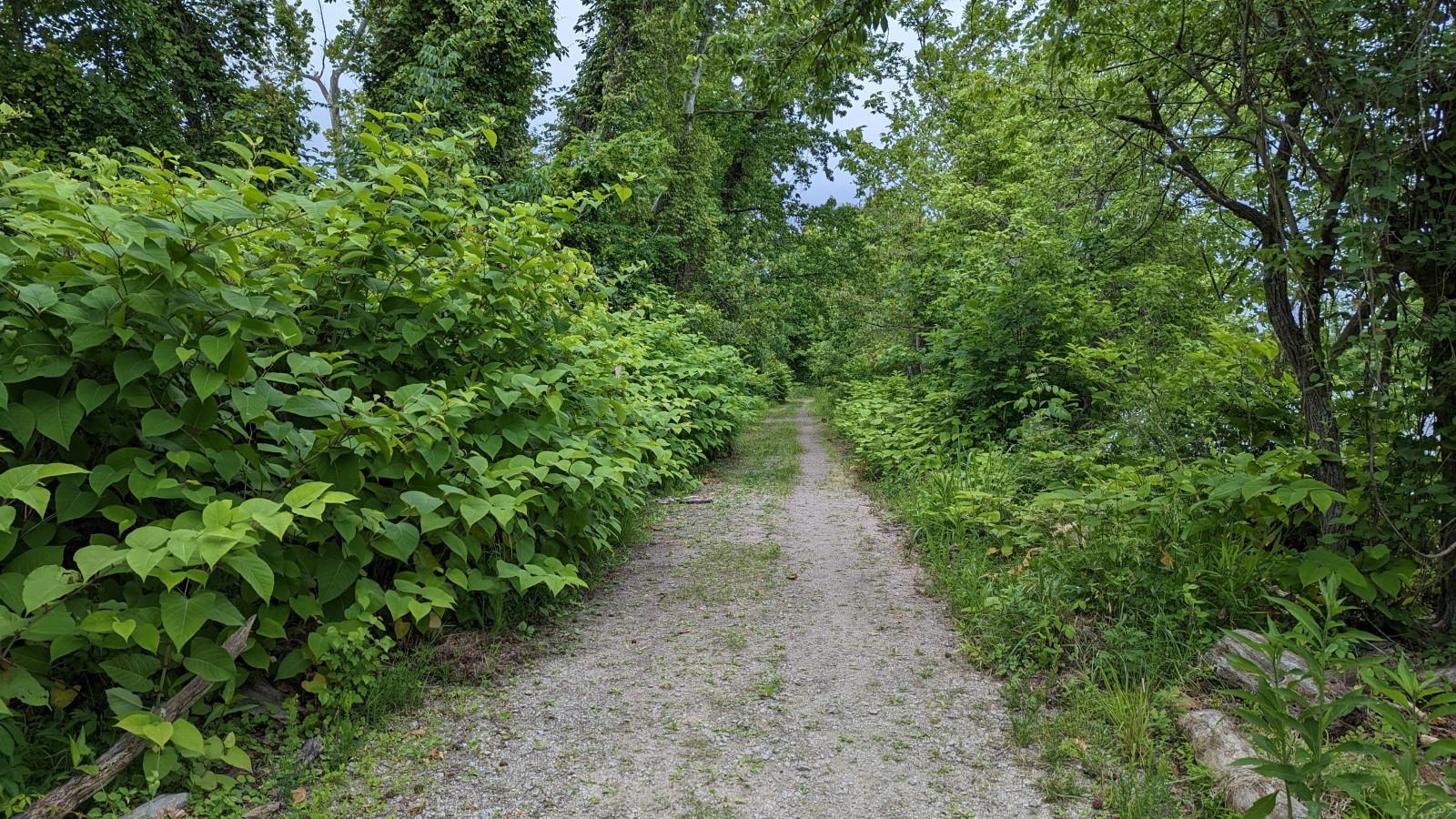
Growth rate and habit: rapid growth rate; clumps wider than tall overall; spreads via rhizomes (underground runners)
Typical mature size: 4 to 10 feet tall; rhizomes may reach 60 feet long
Blooms: upright clusters of tiny creamy-white flowers; multiple clusters are produced along the length of the stem
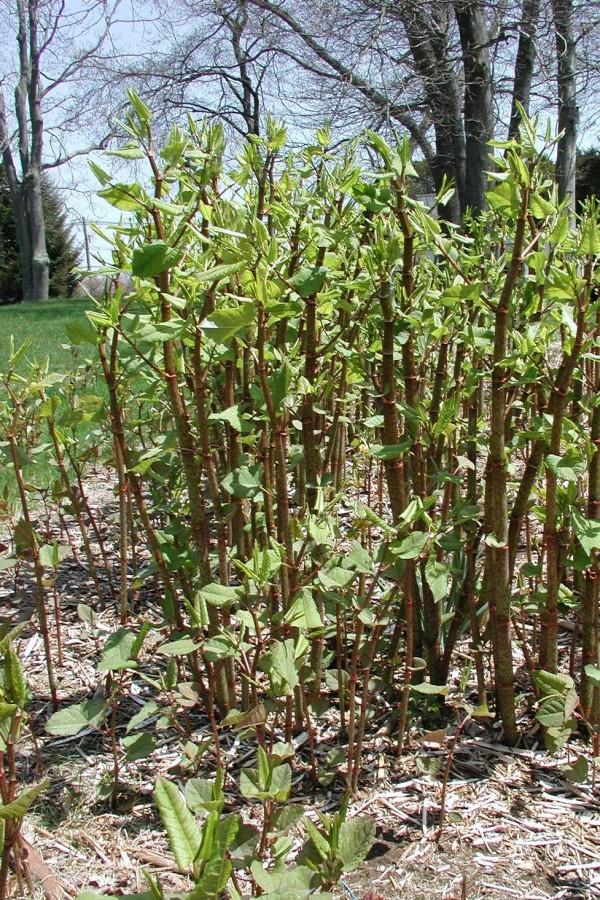
Leaves: simple (not divided into leaflets) with smooth margins; broadly oval in shape, with a pointed tip; base of the petiole (leaf stalk) is surrounded by a membranous sheath (ocrea/ochrea) where it attaches to the stem; alternate arrangement on the stems
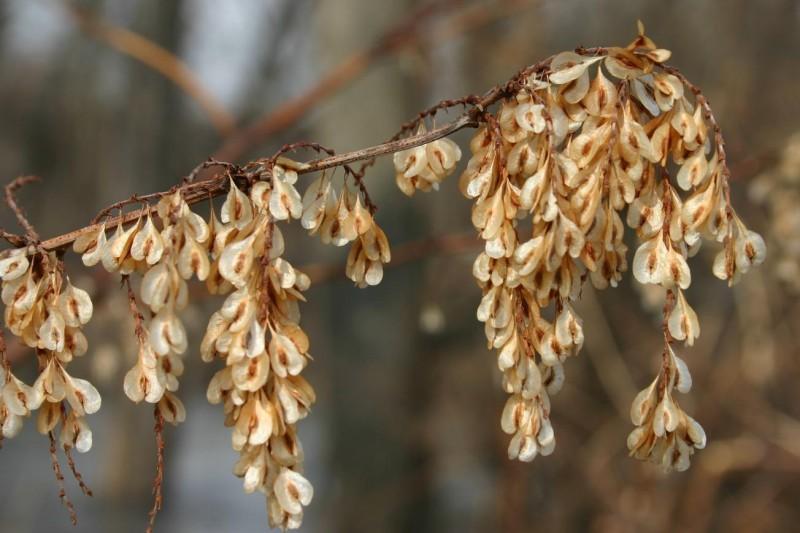
Seeds: in clusters, with each seed enclosed in a 3-winged papery husk
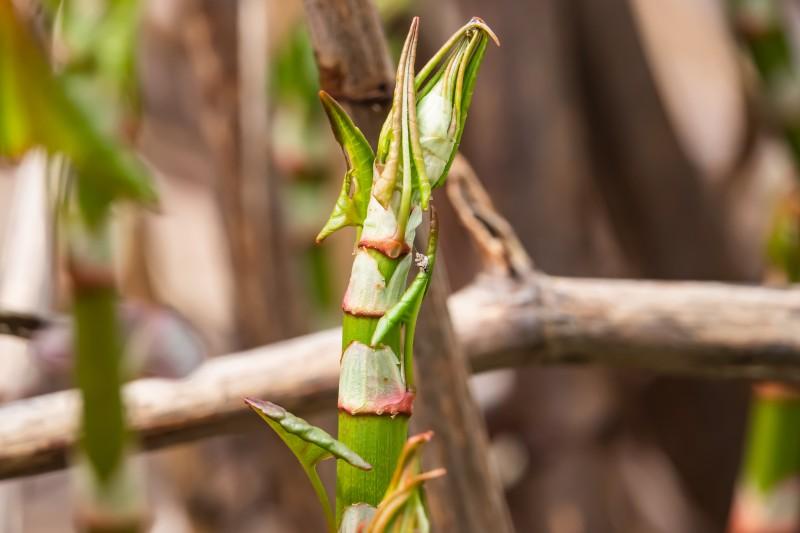
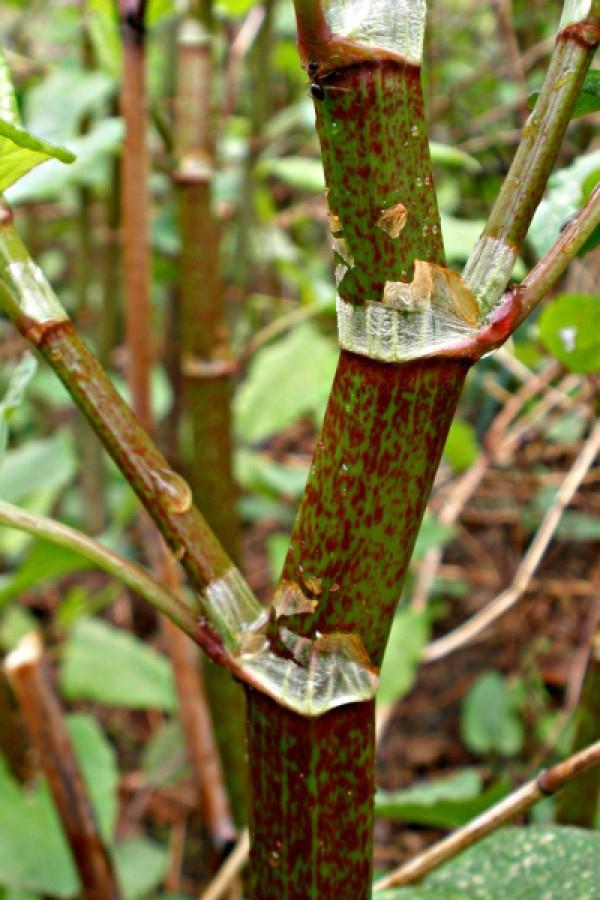
Stems: prominent nodes (where leaves attach to the stem) that can have zig-zag arrangement while new growth is expanding; green or spotted with red-purple; hollow interior except for solid junctions at the nodes
Removing Japanese knotweed
Vigorous growth and resilience to damage and environmental stress (like flooding) make established Japanese knotweed very difficult to control. It spreads primarily with extensive rhizomes, though it can also spread from seed. Cutting a clump down can limit seed production, but will not eradicate the plant unless additional or follow-up measures are taken. Cut plants can easily regrow from rhizome pieces that are not removed. The most efficient and effective removal method is to use systemic herbicide to kill the roots.
Mechanical control
Japanese knotweed can be managed without the use of herbicide, but the process takes more effort and time. After a plant is cut down, any new sprouts must be removed promptly so they do not have time to make and store energy reserves for regrowth. Be vigilant for suckers or seedlings to remove as soon as they appear. Repeat the process until the roots are exhausted of energy and cannot generate any more sprouts. Successful removal of established Japanese knotweed colonies may take several years (possibly a decade) of cutting off all top growth several times per year.
Due to the substantial root system, digging out as many roots and rhizomes as possible could lead to erosion, but with precautions in place, this can speed-up the removal process in combination with continually removing above-ground growth.
Smothering a clump to deprive the plant of light, after first cutting down all stems around early summer, can work if the cover remains in place and intact for several years.
Chemical control
A systemic herbicide applied to the leaves or to fresh-cut stem stumps will be absorbed and kill the roots. This process takes time and may require repeat attempts to achieve full control. Commonly-used systemic ingredients include glyphosate and triclopyr. Follow all product label directions for use.
Applications of systemic herbicide can be more effective when applied to regrowth after first cutting all stems down in early summer to weaken the plant and then waiting about two months. The late summer application coincides with when deciduous perennial plants move carbohydrates down into their roots for winter; applied herbicide will more easily be transported by sap flow.