

FS-2025-0769 | March 2026
Harvesting Rainwater with Rain Barrels
By Caroline DiGiovanni, Claire Cambardella, Amanda Rockler, and Eric Buehl
Extension
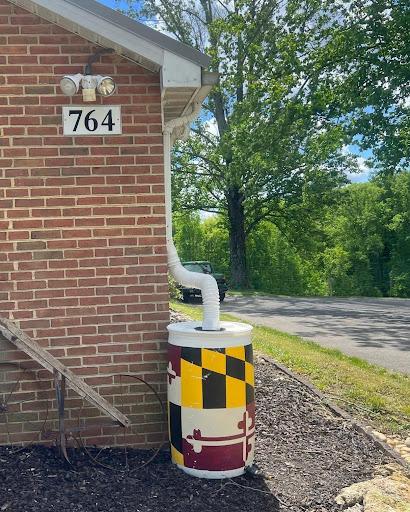
Harvesting rainwater is an easy, practical, and satisfying way to help protect natural resources. The practice of rainwater harvesting involves capturing and temporarily storing rainwater from rooftops. Rain barrels typically hold 50-60 gallons of water and connect to gutter downspouts to collect rainfall. Cisterns, like rain barrels, are used to harvest rainwater, but have a much higher storage capacity. Individuals can purchase rain barrels that come with all of the necessary downspout and drainage connections or may choose to repurpose or upcycle barrels. These can be used to create a customized rainwater harvesting system, and/or can be painted like the photo at the right. In the state of Maryland there are no restrictions on harvesting rainwater, but individuals interested in the practice must follow applicable guidelines and permissions imposed by landlords, HOAs, or other community rules.
Why Use a Rain Barrel?
Using rain barrels reduces the amount of rooftop stormwater runoff which can reduce water pollution, decrease flooding, and help maintain the local groundwater supply. Using harvested rainwater in the right applications helps to reduce the demand on public and private water supplies. There are also financial considerations and practical reasons for why one may choose to install a rain barrel. These topics are explored below.
Rain Barrels Reduce Impacts of Stormwater Runoff
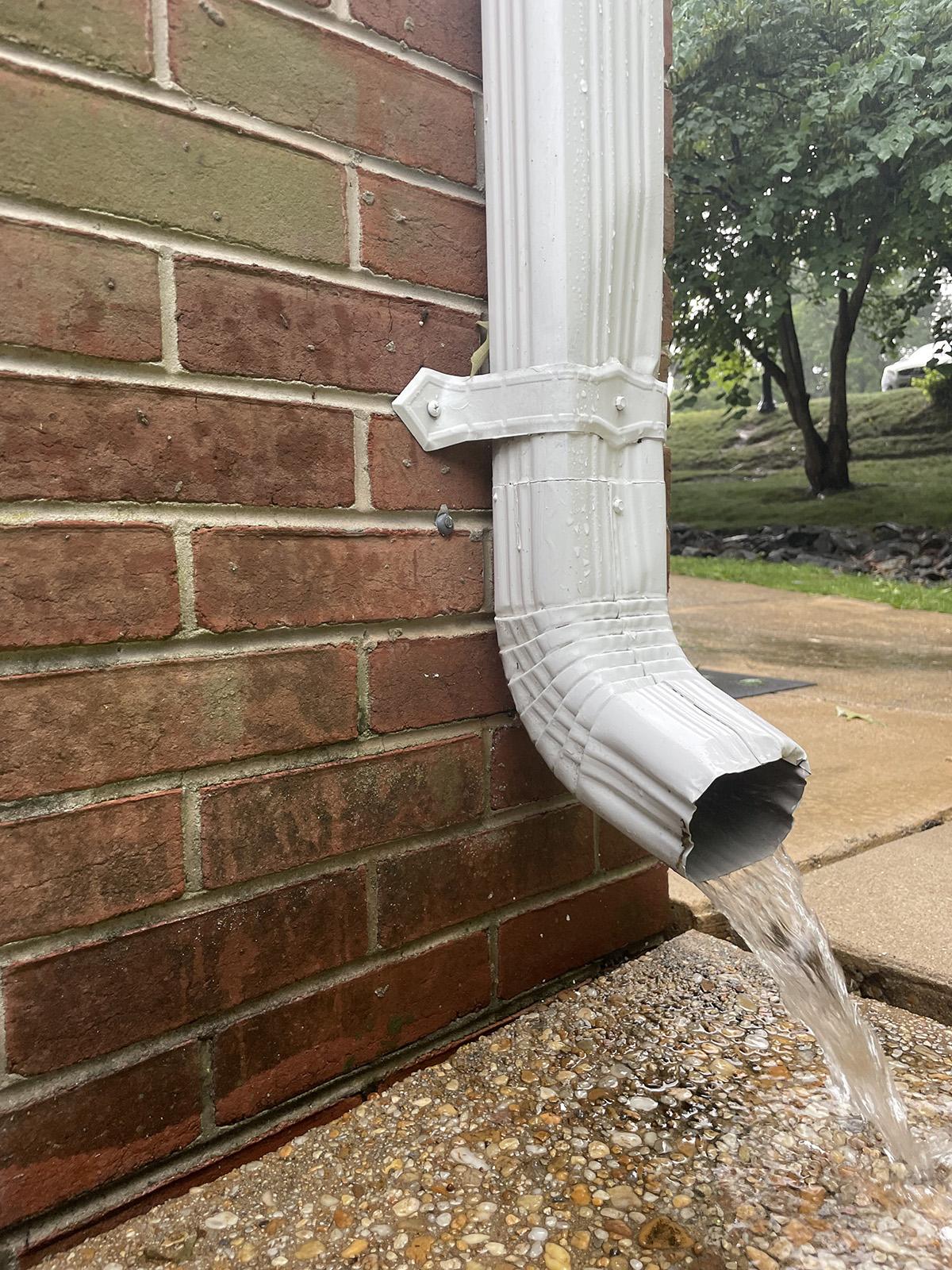
Stormwater runoff occurs when precipitation cannot soak into the ground because of impervious surfaces like rooftops, roadways, sidewalks, and even heavily compacted soils. Prior to large-scale development of urban and suburban areas with these impervious surfaces, precipitation could more readily soak down through the soil, into the shallow groundwater where it was temporarily stored, filtered, and slowly released into streams or used by plants and trees. As land was developed, the rise of stormwater runoff has increased the occurrences and severity of flooding as well as the amount of pollutants such as nutrients, sediment, and harmful contaminants flowing into our streams and rivers. By reducing the volume of stormwater runoff, rain barrels can decrease the chances of pollutants reaching rivers and streams.
Rain Barrels Conserve Potable Water
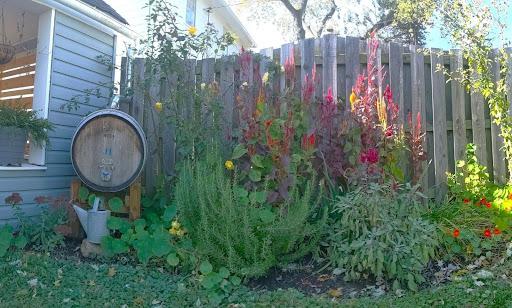
Using harvested rainwater for applications that do not require potable water can reduce the demand on the drinking water supply. As populations increase, so does the demand for potable water. Using the water collected in your rain barrel to water flower beds, lawns, or wash garden tools is a good first step in water conservation. This is true regardless of whether your home is attached to a public water supply or draws from a private well or spring.
Will reducing water consumption by supplementing your outdoor watering needs with a rain barrel reduce your water bill? Generally, using a rain barrel or two will not result in meaningful savings on a water bill. However, being a part of the collective action towards conserving water resources can be very satisfying to many people.
Incentives to Install Rain Barrels
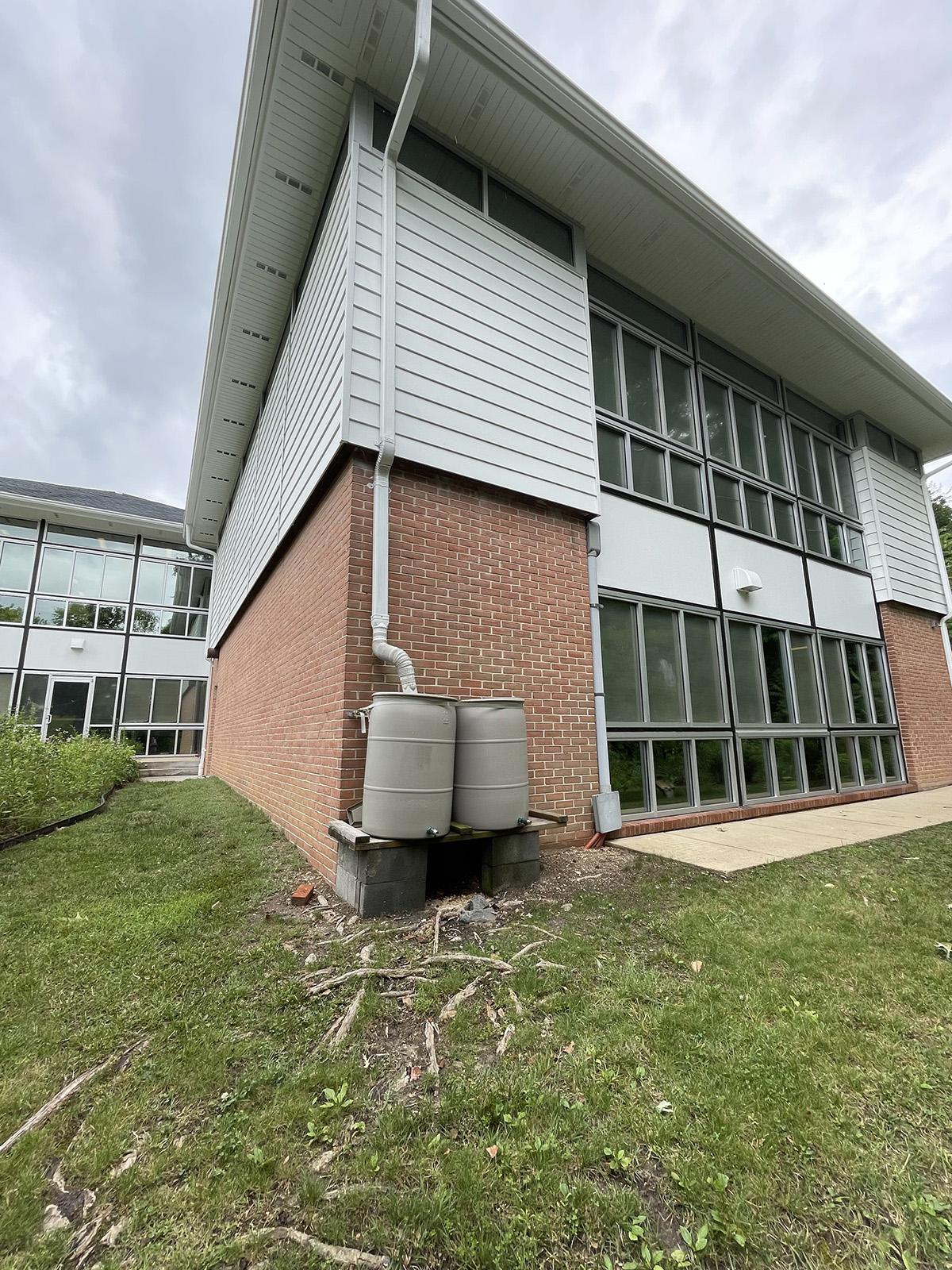
Some local governments offer financial incentives to individuals installing small-scale stormwater management practices such as rain barrels. These come in the form of one-time rebates on the purchase price of a rain barrel or an annual rebate for stormwater remediation fees charged on tax bills. Check with your local government’s department of public works, environmental protection, stormwater management, or other appropriate office to find out if these incentives are available to you.
In addition to environmental and financial motivations, there are practical reasons to install a rain barrel. They can create a water supply when a hose or spigot is inconvenient or inaccessible. For individuals on well water, harvested rainwater can be used where potable water is not required in the event of a power outage when well pumps do not work. By capturing and storing rainwater to be used elsewhere, rain barrels can help address localized erosion or persistent saturation issues at downspouts.
Rain Barrels can Help with Climate Resilience
Changing weather patterns are resulting in longer periods of drought and more intense rainfall events. Rain barrels can help reduce stormwater runoff and can store water for use in periods of drought. While one rain barrel will have a relatively small, local impact, the collective impact of rainwater harvesting among many individuals can be considerable.
Regardless of your reason for collecting rooftop runoff in rain barrels, your community and our natural resources will benefit. Rain barrels are a smallscale stormwater management practice worth adding to your landscape, contributing to a larger, impactful movement towards water conservation.
CAROLINE DIGIOVANNI
cdigiova@umd.edu
CLAIRE CAMBARDELLA
ccanbard@umd.edu
AMANDA ROCKLER
arockler@umd.edu
ERIC BUEHL
ebuehl@umd.edu
This publication, Harvesting Rainwater with Rain Barrels (FS-2025-0769, is a part of a collection produced by the University of Maryland Extension within the College of Agriculture and Natural Resources.
The information presented has met UME peer-review standards, including internal and external technical review. For help accessing this or any UME publication contact: itaccessibility@umd.edu
For more information on this and other topics, visit the University of Maryland Extension website at extension.umd.edu
University programs, activities, and facilities are available to all without regard to race, color, sex, gender identity or expression, sexual orientation, marital status, age, national origin, political affiliation, physical or mental disability, religion, protected veteran status, genetic information, personal appearance, or any other legally protected class.
When citing this publication, please use the suggested format:
Digiovanni, C., Cambardella, C., Rockler, A., & Buehl, E. (2026). Harvesting Rainwater with Rain Barrels (FS-2025-0769). University of Maryland Extension. go.umd.edu/FS-2025-0769