

Download PDF Version Join Our Commercial Poultry Mailing List
July 2025
_______________________________________________________________________________________________________________
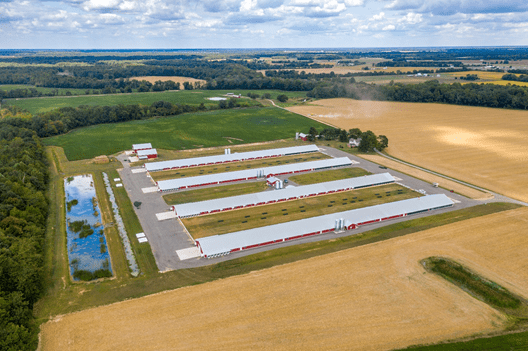
Save the Date for the 2025 Poultry Grower Expo! Wednesday, September 3, Princess Anne, MD
Come join us and your fellow growers at this year’s Poultry Grower Expo for a day that includes educational sessions, a tradeshow, networking, and lunch - all free!
* Wednesday, September 3, 2025
* 9:00 am - 2:00 pm
* Somerset County Agricultural & Civic Center, 11828 Crisfield Lane, Princess Anne, MD 21853
* Nutrient Management Credits available
* Tradeshow, Vendors, and Education Sessions
* Sponsorship Opportunity: Commercial Poultry Expo - Sponsors
* Registration for Attendees: https://forms.gle/7JBfLfZFhvaaMgsn8
We appreciate, and hope you notice/use, the following Sponsors for their willingness to help our Poultry Growers on Delmarva!
______________________________________________________________________________________________________________________
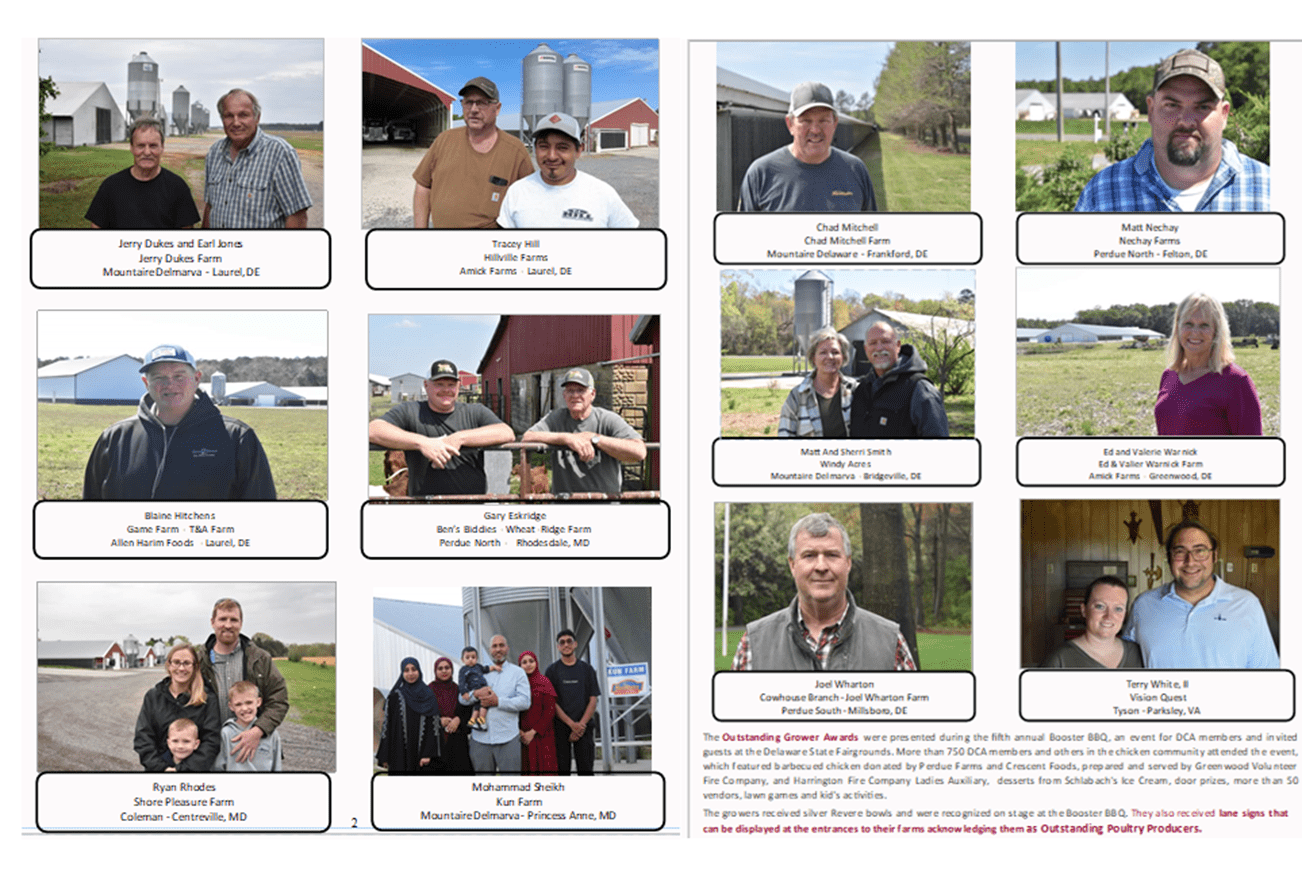
Congratulations to This Year's Outstanding Chicken Growers!
__________________________________________________________________________________________________________________________________________
Maryland’s New Heat Illness Prevention Standard
By Nicole Cook, College of Agriculture & Natural Resources, UMD
This article is not a substitute for legal advice. See here for the site’s reposting policy.
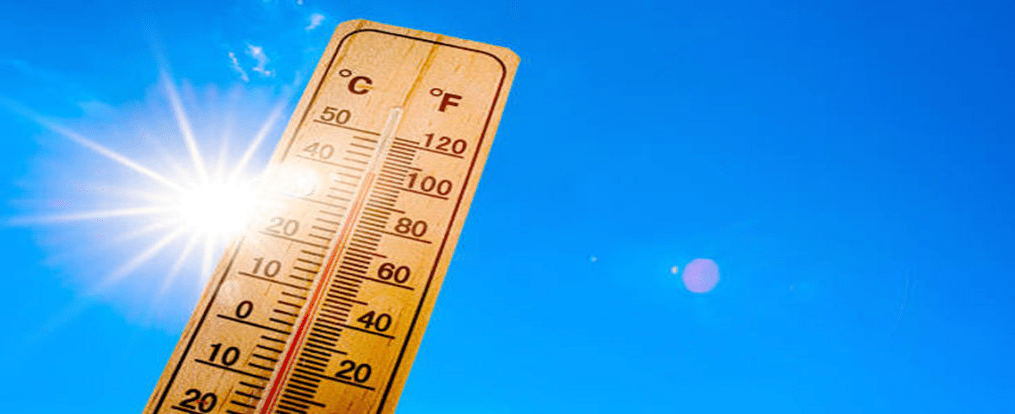
The Maryland Occupational Safety and Health (MOSH) Division of Labor and Industry published its new Heat Illness Prevention Standard as a final regulation on September 20, 2024. This new workplace safety regulation went into effect just 10 days later, on September 30, 2024. The new standard—found in COMAR 09.12.32—applies to all workplaces where the heat index reaches 80 degrees Fahrenheit or higher, regardless of whether the work is indoors or outdoors. This includes farms. Keep reading for an overview of the new requirements and what steps employers need to take to ensure compliance.
Who Must Comply?
The regulation covers most Maryland employers, including those in agriculture. The rule does not apply to emergency operations (e.g., first responders or utility providers), incidental heat exposures of less than 15 consecutive minutes per hour, or situations where mechanical ventilation or fans keep the heat index below 80 degrees Fahrenheit.
What Must Employers Do?
Employers whose workers are regularly exposed to heat must now monitor the heat index throughout the work shift using approved methods. In buildings or structures without mechanical ventilation, employers must measure both temperature and humidity at the actual worksite to calculate the heat index accurately. Read more>>
______________________________________________________________________________________________________________________________________________________________
Can Chickens be Conditioned to Tolerate the Heat?
Jennifer Timmons, Associate Professor, University of Maryland Eastern Shore
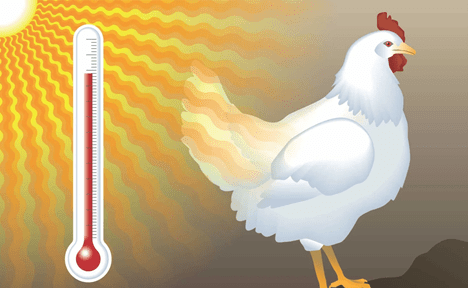
Although the spring temperatures this year have been mild, early summer temperatures have been very warm with some days reaching near record highs. Broiler producers worked during the spring to prepare their houses and equipment so that it is working properly during the summer months. Throughout the summer, growers are always inspecting fans, cool pads, drinkers, bird distribution, generators, etc. to ensure it is all working properly when needed to keep birds comfortable. In addition to these proactive steps, what if chickens could be “conditioned” to tolerate higher temperatures? Researchers are evaluating the efficacy of early life heat conditioning to reduce the negative effects of heat stress in broiler chickens.
Birds, like mammals are warm blooded and must maintain a fairly constant internal temperature around their core or internal organs. The optimal temperature range for most market age broilers is between 65-71 degrees Fahrenheit. This is also referred to the birds’ thermoneutral zone. When birds are kept within their thermoneutral zone, they do not use energy to maintain their body temperature. Birds are heat stressed when they are not able to maintain a balance between body heat production and body heat loss. Heat stress related annual losses are estimated to be around $160 million for the U.S poultry industry.
Environmental stress such as heat stress can not only impact performance parameters for broilers, but it is also a bird welfare concern. When birds are exposed to high environmental temperatures, they display behavior responses such as less time feeding, more time drinking and panting and resting and, display extended wings. Read more>>
___________________________________________________________________________________________________________________________________________________
___________________________________________________________________________________________________________________________
Avoiding Fires in Poultry Litter Dry Stack Sheds
By Drs. Tom Tabler and Jonathan Moyle, University of Maryland
In today’s commercial poultry industry, dry stack litter sheds are important components of a waste management program. When litter is periodically removed from poultry houses, it must be handled in an environmentally sound manner. To obtain the most value from poultry litter, producers store it until the appropriate application time for ideal plant nutrient uptake and reduced environmental impact (Nottingham, 2012). Therefore, a litter storage structure becomes critical to a poultry operation’s nutrient management program. When properly managed, a storage facility protects litter from the elements, preserves nutrients in the litter, lessens the threat of runoff and water pollution, and allows for proper timing of land application to meet crop and forage needs.
Fire Danger
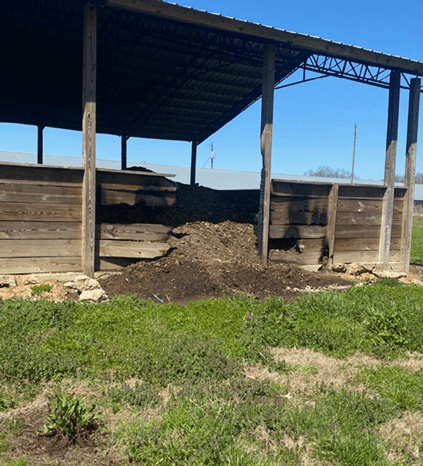
Producers should be aware, however, of the fire danger associated with storing poultry litter (Figure 1). As microbial activity occurs within the litter, heat and methane gas are produced. Heat is also produced at the boundary layer between moist and dry litter in the storage pile. Spontaneous combustion (self-ignition) in a litter pile can occur from this buildup of heat and methane. Fires may also occur if litter is stacked too closely to the wooden walls of the shed, which can ignite if the temperature in the litter reaches the wood’s flash point. The process is similar to spontaneous combustion of hay bales or silage stored in barns or silos, respectively. Read more>>
________________________________________________________________________________________________________________________________________________________________________________________________________

Coming Commercial Poultry Events
Save the Date: September 3, 2025 - Commercial Poultry Expo!
Somerset County Civic Center, Princess Anne, MD - 9 am - 2 pm
* Sponsorship Opportunity: Commercial Poultry Expo - Sponsors or email jmoyle@umd.edu
* Registration for Attendees: https://forms.gle/7JBfLfZFhvaaMgsn8
Follow us on Facebook at UMD-Lower Eastern Shore REC
And join our mailing list HERE
More information coming soon on our website: extension.umd.edu/poultry
------------------------------------------------------------
Maryland Education Risk Management Education Blog - https://agrisk.umd.edu/
· Farmer Saved Seed--What is Legal and What is Not - Updated
· Don’t Lose the Land: Learn About Heirs’ Property in Our Free Online Series
· Ongoing Debates: Review of Legislation Before Many States
· Understanding Agricultural Liability: General liability Insurance
· And Much More!
---------------------------------------------------------------
DCA National Meeting and Golf Tournament Sponsorship Opportunities
The Delmarva Chicken Association (DCA) is excited to once again be holding our National Meeting on Poultry Health, Processing and Live Production as well as our Scholarship Golf Tournament in the same week, Sept. 29 – Oct. 1, 2025. That’s twice the opportunity to have your name seen by nearly 2,000 DCA members and other chicken community stakeholders.
The National Meeting welcomes more than 450 attendees from across the United States, including poultry company representatives, government officials, university extension and research faculty and other business members of the poultry community. The meeting features speakers addressing topics such as poultry industry issues, government policy changes, various poultry disease updates, animal welfare, managing bird health and more.
National Meeting Sponsorship
(https://www.dcachicken.com/nationalmeeting/sponsorship.cfm)
The Golf Tournament returns to the Man O’ War golf course in Berlin, MD, with registration at 8 a.m., a shotgun start at 9 a.m., and lunch to follow. This exciting and fun tournament always fills up quickly – as do sponsorship spots – so don’t delay in registering for your team.
------------------------------------------
Please practice Biosecurity when attending anything with growers!