periodical cicada

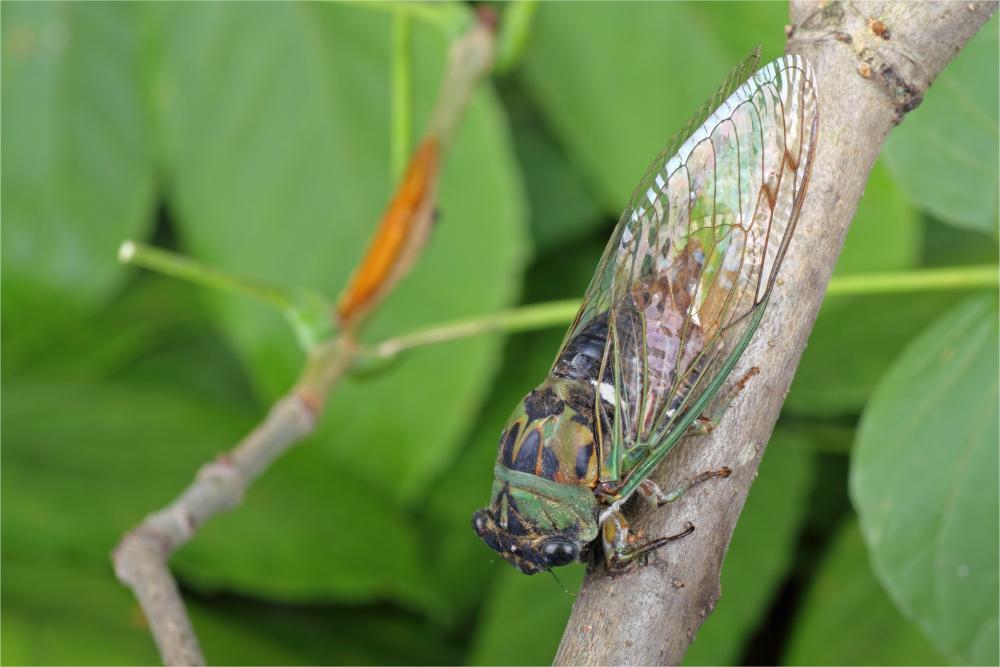
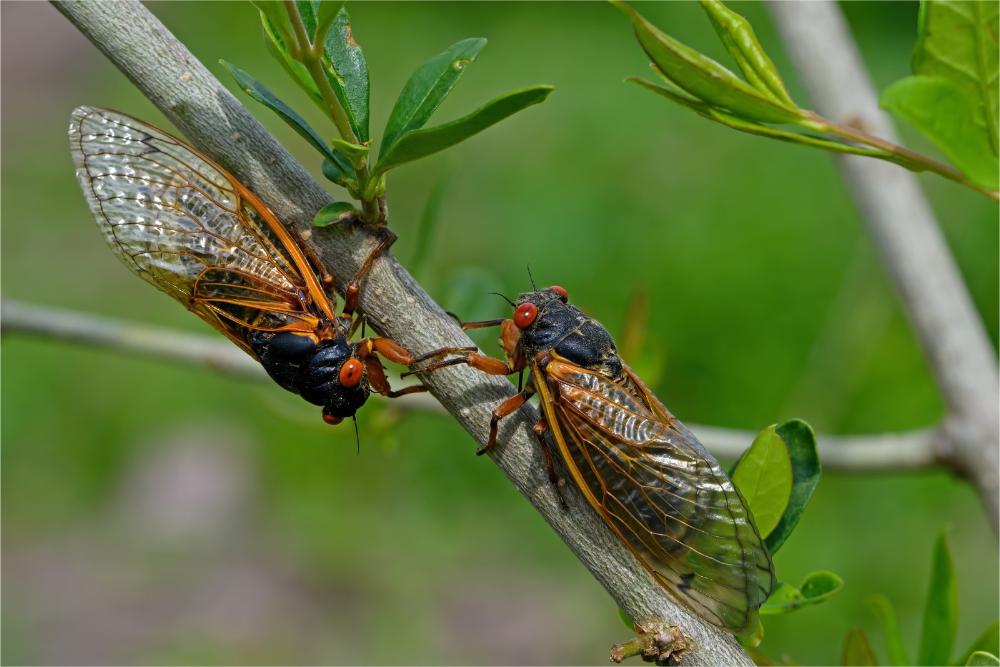
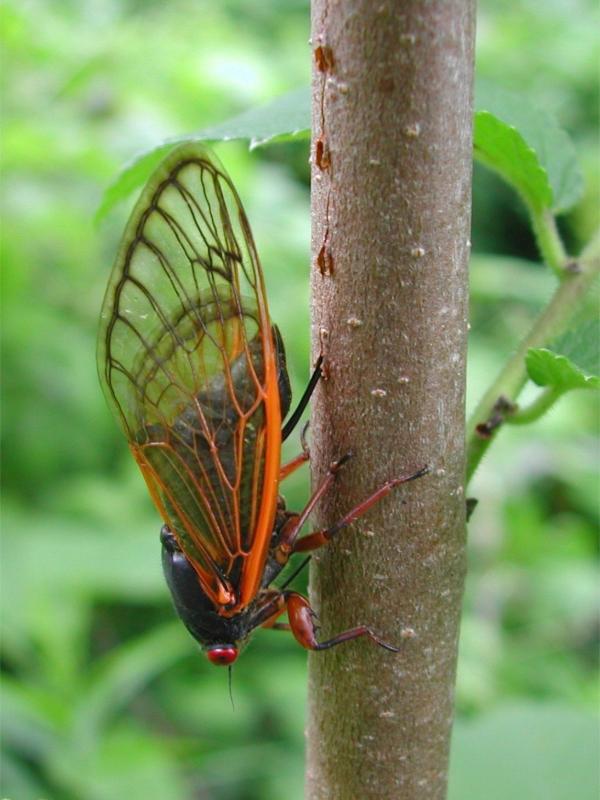
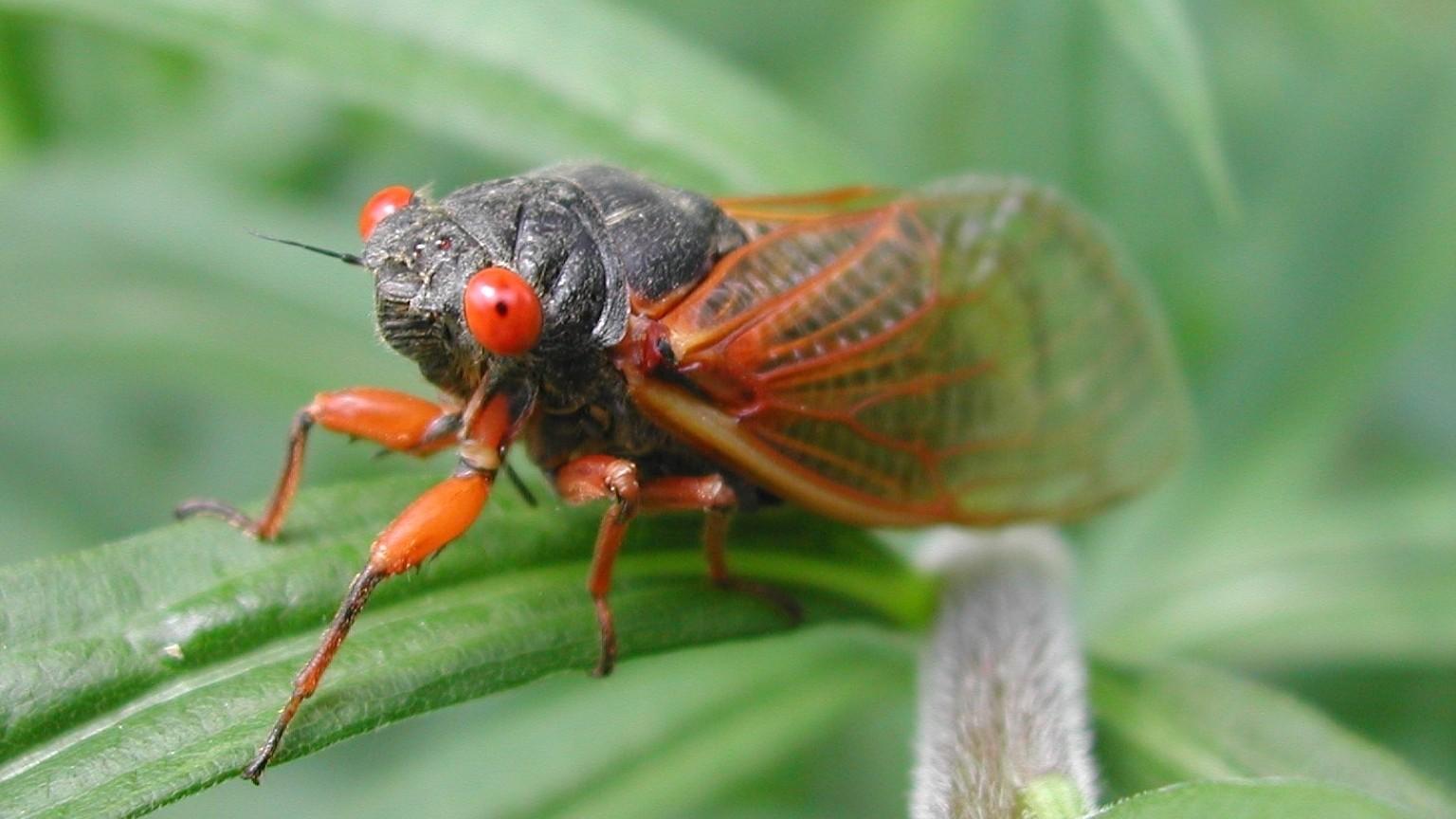
Periodical cicada (Magicicada species). Photo: Pennsylvania Department of Conservation and Natural Resources - Forestry , Bugwood.org

Updated: September 23, 2026

Key points about cicadas

  • Cicadas are large, thick-bodied, charismatic insects in the order Hemiptera (true bugs). They have sucking mouthparts which they use to feed from the xylem (water- and mineral-transporting tissue) of trees and shrubs.
  • There are two groups of cicadas commonly found in the eastern United States:
    • dog-day or annual cicadas (mostly in the genus Neotibicen), which emerge every summer (June through August, the "dog days" of summer)
    • periodical cicadas (genus Magicicada), which emerge in late spring in large numbers every 13 or 17 years, depending on the species
  • Cicada nymphs (juveniles) feed and grow underground for multiple years until they emerge from the soil to molt into adults. The adults fly to nearby vertical structures, especially shrubs and trees.
  • Male cicadas use a droning mating call to attract females. The sound is produced by rapidly vibrating membranes (tymbals) located on the sides of the insect beneath the wings.

Cicada identification

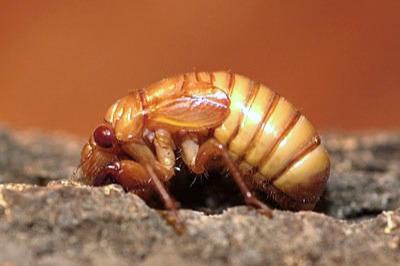
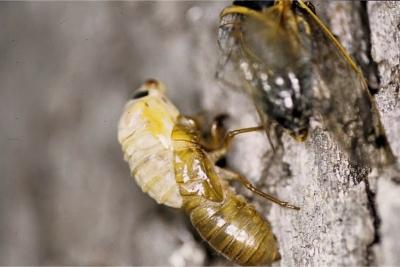
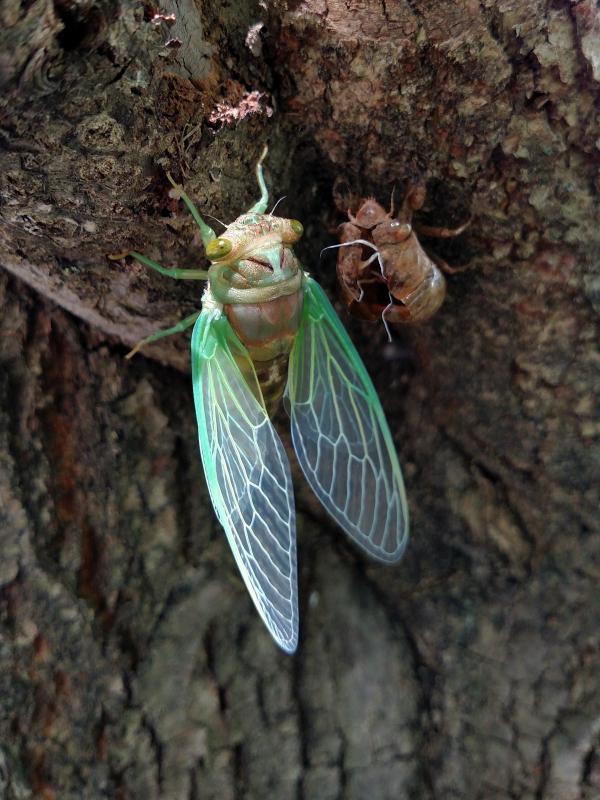
The wingless, light tan-colored nymphs are rarely seen, except when they have emerged from the soil to molt into adulthood. Periodical cicadas create a muddy turret or "chimney" above their burrow exit hole prior to emergence. Empty brown shells (the shed nymph skins, exuvia) often remain clinging to the tree or other vertical surface where the adult emerged.

Adult cicadas vary in size and color according to species. All have prominent bulging eyes on the sides of their head, a straw-like mouthpart (proboscis) tucked under the head, and transparent wings held tent-like over their large bodies.

  • Adult dog-day cicadas are about 1½ to 2 inches long with brown or green, black, and white body markings.
  • Adult periodical cicadas are slightly smaller, with black bodies, red eyes, and orange wing veins. Their front wings have a black W-shaped marking.

Life cycle and behavior

  • Adults begin to mate and females lay eggs about a week after they emerge as adults.
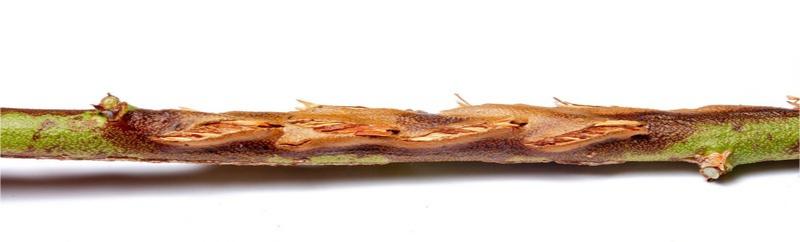
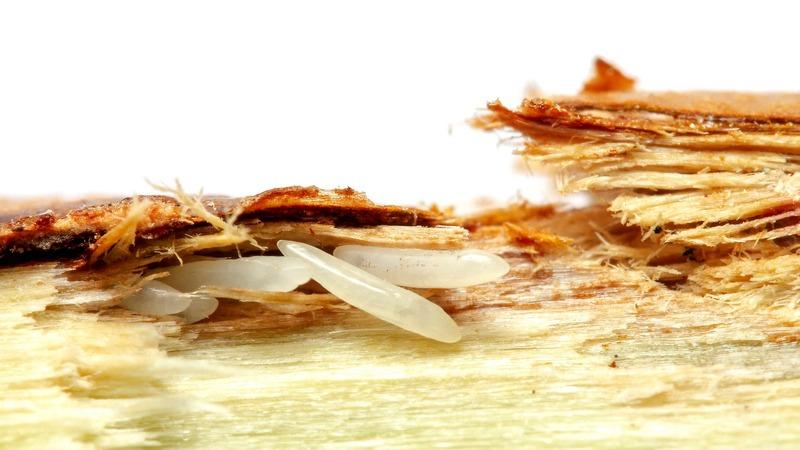
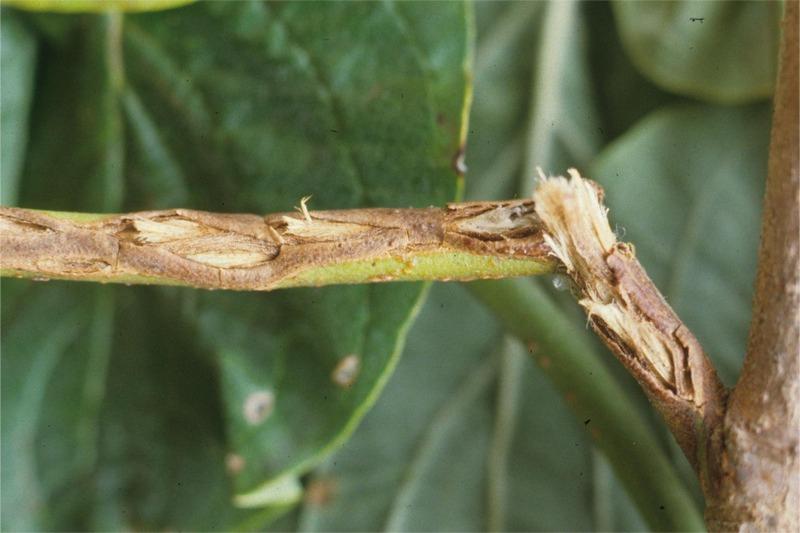
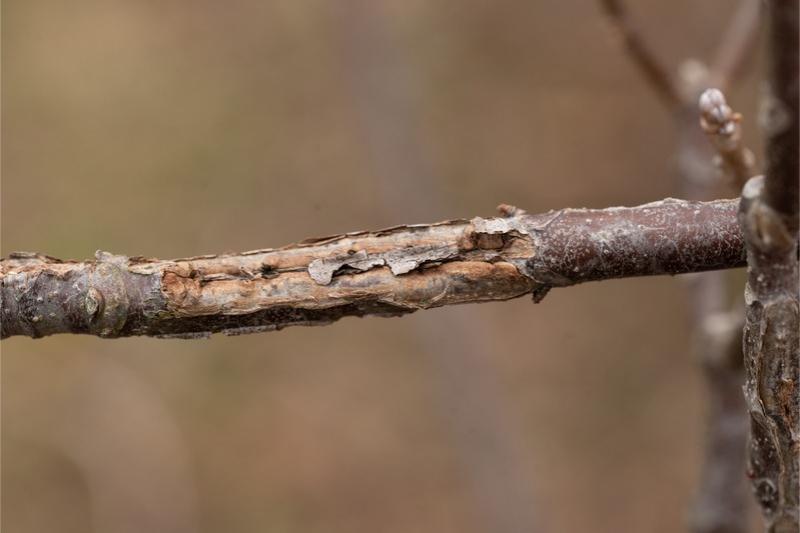
    • Females use a sword-like ovipositor to cut a slit into the wood of young branches. (More than 200 tree and shrub species can be used.) They select wood roughly the thickness of a pencil.
    • Rice-shaped white eggs are laid in the slits in batches of 20 to 30 eggs.
  • Eggs hatch about six weeks after being laid. The tiny nymphs drop to the ground, where they burrow into the soil and feed on the sap of tree roots.
  • Nymphs resemble wingless adults, with tan-brown stout bodies and strong front legs specialized for digging and tunneling in the soil. They undergo four molts (stages of growth) while underground.
    • For dog-day cicadas, the nymph maturation period will take 2 to 5 years. This species has overlapping generations that are not synchronized, unlike the life cycles of periodical cicadas.
    • For periodical cicadas, the nymph maturation period will take 13 or 17 years, depending on the species.
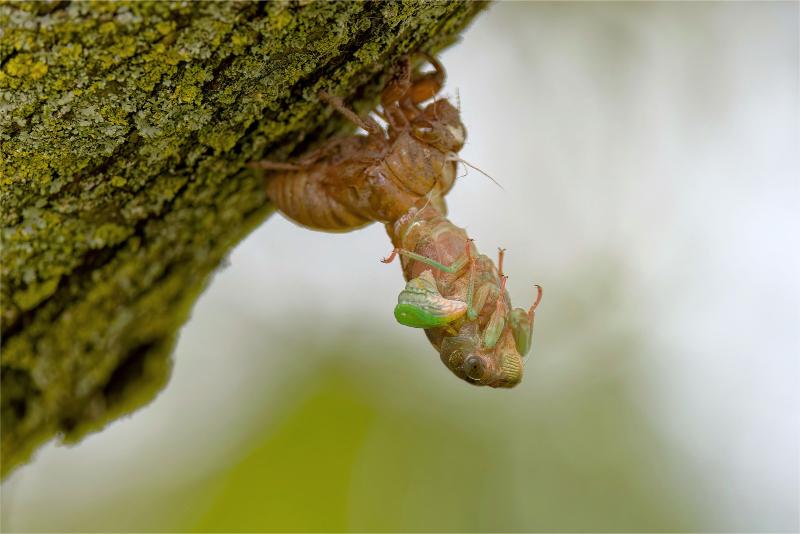
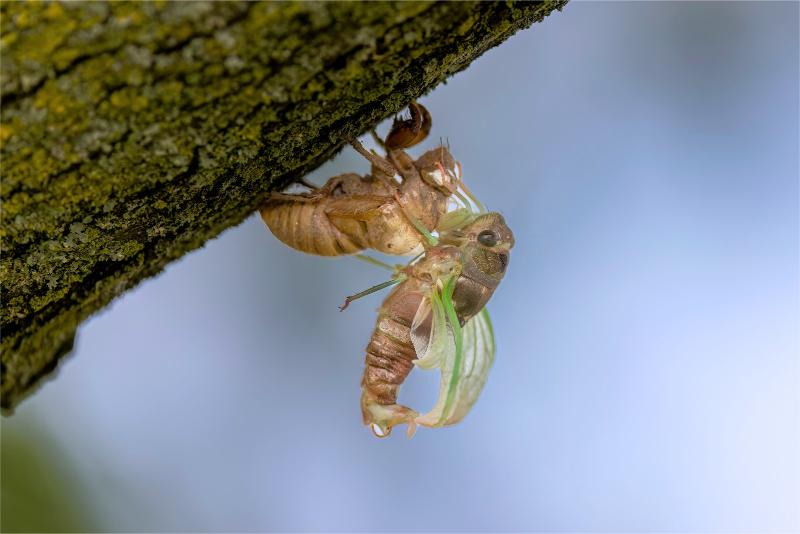
  • Mature cicada nymphs will tunnel to the soil surface and crawl out of dime-sized holes. They climb onto tree trunks, fence posts, or other vertical structures. After a short period of time, the nymphs molt (shed their “skin” or exoskeleton) to become winged adults. The empty exoskeletons are left clinging to objects.

Periodical cicada broods

Periodical cicadas emerge in massive numbers known as broods. To avoid confusion with the species' life cycle type (13-year and 17-year), each brood is given a Roman numeral identification. Broods II, V, X, and XIX are found in Maryland.

  • Brood II (17-year species) emerged in 2013 and will emerge again in 2030.
  • Brood X (17-year species) emerged in Maryland in 2021 and will emerge again in 2038.
  • Brood XIX (13-year species) may have emerged in southern St. Mary’s County in 2024 (that particular population may be in decline).

A few periodical cicada individuals may emerge a year ahead or behind the rest of its brood. These out-of-sync individuals are called "stragglers," and they will not be able to breed with the rest of their brood.

Egg-laying damage

The only damage cicadas cause to plants results from egg laying (oviposition). Female cicadas use a sword-like appendage, called an ovipositor, to cut longitudinal slits in twigs into which they deposit eggs. If a female cicada is handled, the ovipositor cannot harm people.

Cicadas do not feed on leaves. If they feed at all, it is by sucking plant fluid from tender young twigs, which doesn't cause the plant serious harm.

Cicadas pose no health threat to people or pets, although consumption of large numbers of cicada adults by pets should be discouraged to avoid an upset stomach or digestive issues.

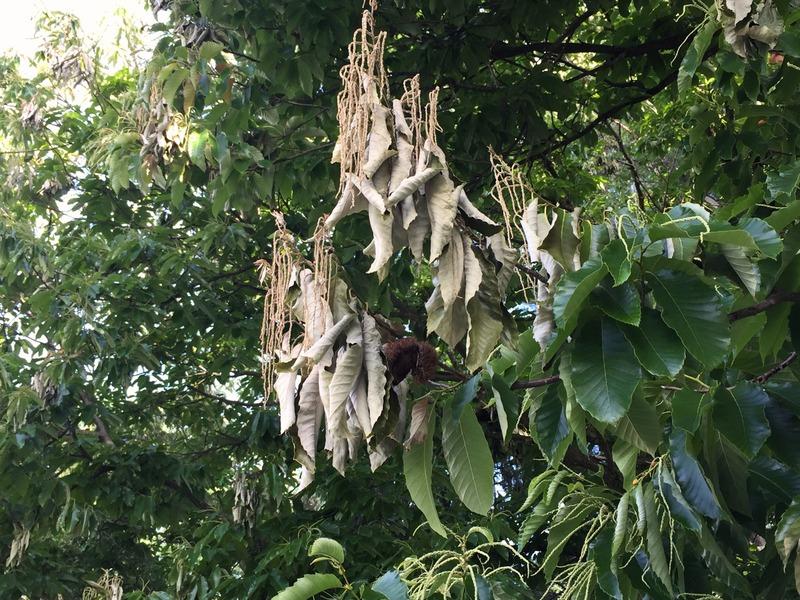
Twigs with many oviposition slits or scars often break and fall off, or snap and dangle from the tree. This condition is known as "flagging," since the leaves on the broken end wither and droop like a flag not being held up by a breeze. This damage may look drastic as the dying leaves dry out and turn brown, but it is a form of natural pruning for trees and is not serious for mature trees, and a healthy plant will easily replace lost growth.

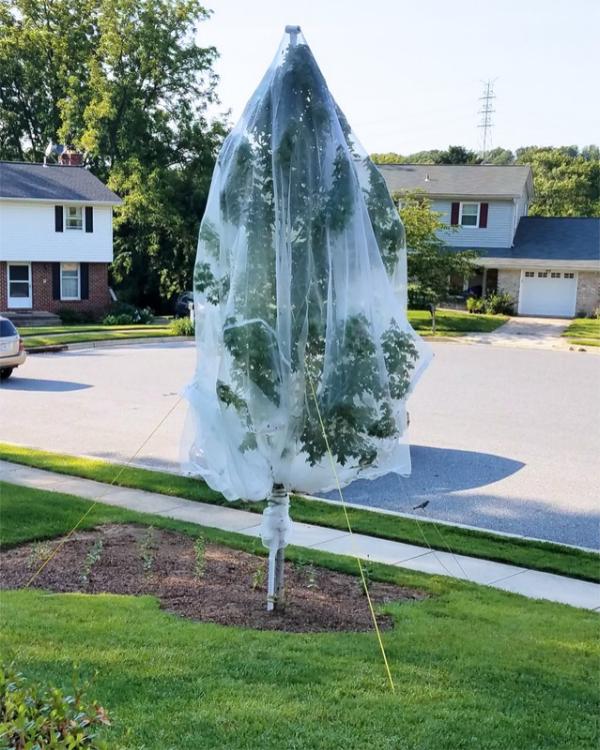
Young or newly-planted trees may be killed or their growth stunted if oviposition flagging is extensive during large periodical cicada brood emergence years. Shrubs and small trees can be protected by covering them with insect mesh netting or a breathable fabric.

Cicadas have been known to lay eggs to some extent in over 200 species of trees. Some common tree species that can be favored by female cicadas include oaks (Quercus), maples (Acer), cherry (Prunus) and other fruit trees, hawthorn (Crataegus), and redbud (Cercis).

Soil emergence holes

cicada emergence holes in lawn
Cicada exit/emergence holes in the soil.
Photo: Mary Kay Malinoski, University of Maryland Extension

When large numbers of nymphs emerge from the soil, exit holes may be noticeable in a lawn. Several weeks before emergence, some nymphs construct mud tubes ("chimneys" or "turrets") over the emergence hole. These mounds may be 2 to 3 inches high and 1 to 2 inches wide, with a hole approximately ½ inch wide in the center.

Emergence activity may be unsightly but does not permanently harm turfgrass or any other roots of established plants in the area.

Two short pieces of dried mud cylinders with a hole in one end.
Two mud chimneys made by cicada nymphs preparing to emerge. The holes in the end were where the chimney covered the nymph's burrow in the ground. Photo: HGIC

Cicada management

Control is not necessary or recommended for established mature trees. Insecticides are ineffective for significantly reducing cicada abundance and damage. Insecticides also pose a risk to people, pets, and other organisms like beneficial insects and birds.

If you intend to plant trees or shrubs in a year when periodical cicadas will be emerging, consider delaying planting until early autumn when the cicadas are gone.

Block cicada access with netting

A small tree about 12 feet tall covered in a fine white mesh that is tied to the trunk below the lowermost branches.
A young tree covered in a fine mesh to exclude cicadas during a periodical cicada brood emergence year. The base of the cover is secured to the trunk. Photo: Ask Extension

Shrubs and small trees may be protected by covering them with insect mesh netting, which can be found in garden centers/nurseries and online. As an alternative to netting, tulle or another breathable fabric can be draped over vulnerable plants.

  • Observations in 2004 found that insect netting with openings ranging from ¼-inch to 3/8-inch (0.6 cm to 1 cm) prevented injury to the covered plants.
  • The openings in bird netting are too large to exclude cicadas.
  • Secure the edges of netting or fabric to the ground with landscaping pins/staples, or weigh them down with rocks or bricks. Alternatively, tie the material (not too tightly) to the base of the trunk to prevent cicadas and other wildlife from becoming trapped under the netting.
  • The plants should be protected from the time cicadas emerge until they are gone 6 to 8 weeks later. If left on too long, a cover may impede new growth (causing distorted stems or stunted leaves), reduce air circulation (which can promote fungal infections), and shade leaves which will later become sunburned when their sunnier exposure is resumed. Netting and fabric barriers may also prevent pollination, depending on plant flowering times.

Herbaceous plants (annuals and perennials, including vegetables and herbs) do not need to be covered — they are not used by cicadas for feeding or egg-laying. Adult cicadas or molting nymphs may climb onto them for support, but won't harm them. Covering vegetable plants with netting to exclude other insects, however, is an effective pest management technique. Learn more in: Vegetable Garden Weather and Pest Protection

Organic (biodegradable) mulch used around garden and landscape plants, up to a 3-inch depth, will not interfere with the cicada life cycle.

Water features

Decorative fish ponds or aquatic gardens should be covered with screening or mesh to prevent cicadas from accumulating, since large numbers of decomposing cicadas could cause problems with oxygen depletion in the water. Clean pool skimmers/filters frequently during cicada emergence to keep them from getting clogged.

How to Net a Small Tree to Exclude Cicadas

Common questions about periodical cicadas

Where are periodical cicadas found in North America?

Periodical cicadas are found in eastern North America. Periodical cicada emergences are geographically distinct; the ones that emerge in the same area and year (13- or 17-year cycles) are known as a brood. Broods II, V, X, and XIX are found in Maryland, with Brood X having the largest range and concentration of any of the broods.

How long will periodical cicadas be out?

Adult periodical cicadas live between 2 and 6 weeks after they emerge from the ground. Adults will begin emerging around April and will be active through mid-June.

How are periodical cicadas different from the cicadas I see every summer?

Periodical cicadas are smaller and have much more red-orange coloring than the common, large, green-colored “dog-day” cicadas (genus Neotibicen) that we see and hear later every summer. Dog-day cicadas are not periodical. Although their life cycle is typically 2 to 5 years long, some emerge every summer since their generations overlap, which is why they are seen yearly.

How many cicadas were expected in 2024?

Cicada emergence density can be as high as 1 million per acre. (An acre is a little smaller than a football field.) However, how many would have been seen in southern St. Mary’s County depends greatly on the amount of urbanization, deforestation, or fire that has occurred within the last 13 years.

Will periodical cicadas eat or damage my flowers, shrubs, or trees?

Periodical cicadas do not damage flowers, but they may damage newly-planted or young trees and some shrubs. The damage results from female cicadas laying eggs in small twigs and branches (resulting in small slits in the wood), not from adult feeding.

Do cicadas bite or sting?

No. Female cicadas have an organ called an ovipositor that they use just for laying eggs in twigs. It may resemble a stinger since the ovipositor is slender and near the end of their abdomen, but they cannot sting. Adult cicadas may make a loud buzzing sound if handled, but cannot bite.

Why do periodical cicada broods only emerge in 13- or 17-year cycles?

This is still somewhat of a mystery. There are several hypotheses for this, centered around reducing their vulnerability to predators. In order to overwhelm their predators with high numbers and survive to reproduce (predator satiation), periodical cicadas must emerge at the same time. Mathematically, 13- and 17-year brood emergences only overlap once every 221 years! This prevents hybridization between broods, which could interfere with the timing of their emergence, reducing populations and making them much more susceptible to being wiped-out by predators.

Additional resources

Some of the following content refers to the most recent periodical cicada brood emergences.

Double Cicada Mania Approaches—But Seeing Them Calls for a Road Trip | Maryland Today (April 4, 2024)

Sorry DC and Baltimore, no Periodical Cicadas for You this Year, Unless you Take a Road Trip: Brood XIII (13) and Brood XIX (19), Magicicada spp. | Dr. Michael Raupp, University of Maryland (January 2024)

UMD Entomology Department Set to Study Rare Cicada Emergence | The Diamondback, University of Maryland

General Periodical Cicada Information | University of Connecticut

Cicada Crew UMD | FAQs, information, and resources on periodical cicadas and specifically Brood X from the University of Maryland Entomology Department

Cicada Mania | A website dedicated to cicada education and tracking

Cicada Safari | Community Science project mapping periodical cicada emergences

Adapted from publication HG-43 "Periodical Cicadas" by M.R. Raupp, F.E. Wood, J.A. Davidson, & J.L. Hellman, Department of Entomology, University of Maryland.

Revised: H. Menninger, & S. Frank, Dept. of Biology & Entomology, University of Maryland.
Updated by Emily Zobel (2020) and Madeline Potter (2024), University of Maryland Extension.

Still have a question? Contact us at Ask Extension.