

FS-2025-0777 | June 2026
Blueberry Cultivars for Maryland and the Greater Mid-Atlantic Region
By Haley Sater, Ph.D., Agriculture Educator, University of Maryland Extension-Wicomico County, and Bryan Butler, Agriculture Educator, Carroll County
Introduction
Blueberries are native to North America. Wild blueberries were growing in Maryland when European settlers arrived. Although wild plants can still be found in the state, they are generally confined to organic matter soil at the edge of hardwood forests. Their need for acidic soils with high organic matter limits where blueberries can grow successfully. Plants take several years to bear fruit but once established can live for 30+ years if maintained properly.
Today, blueberries are classified as either “lowbush” or “highbush.” The lowbush blueberry, Vaccinium angustifolium, grows wild in northern New England and Eastern Canada and is harvested commercially. Nearly all commercially grown highbush blueberry cultivars or varieties are related to the wild species Vaccinium cormbosum commonly found in the Mid- Atlantic and first cultivated for production in New Jersey. The primary commercial species grown in the U.S. is northern and southern highbush discussed below.
The rabbiteye, Vaccinium virgatum, species, is grown commercially mostly in Georgia, and a few parts of Florida, and South Carolina and can successfully be grown in Maryland. However, most production in the southern U.S. is now southern highbush because it fruits earlier than rabbiteye and has superior fruit quality.
Considerations for Choosing a Cultivar
Before planting blueberries, it’s important to understand their specific growing and management requirements (see UME FS-2025-0766), particularly their need for low pH and high organic matter soils. There are many cultivars available, and we recommended planting two or more cultivars because blueberries require cross pollination for adequate fruit set. In the Mid-Atlantic region, and Maryland specifically, consider the following factors when selecting cultivars:
- Ripening Season: Choose cultivars that collectively span the length of the whole season to ensure a continuous harvest.
- Yield: Select cultivars known for their high yield potential to maximize productivity and economic return.
- Chilling Hour Requirements: Match cultivars to your local climate’s typical “chilling hours.” See the following section for more on chilling hours.
- End Use: Decide if you intend to grow the berries for fresh consumption or for commercial purposes, such as U-pick, direct farm market sales, farmers market, processing, or wholesale. Some cultivars with novel traits or with softer fruit make more sense in U-picks or home gardens, whereas commercial and wholesale producers should focus on choosing high yielding cultivars, with disease resistance and firm fruit that has good cold storage potential.
- Disease Resistance: Research diseases specific to your considered cultivars. Some cultivars have improved resistance to common diseases like mummy berry or anthracnose.
- Fruit Quality Traits: Consider berry size, flavor, firmness, shelf life, and scar quality. In wholesale markets, especially those competing with imports from Canada and South America, fruit brokers often require high standards for quality.
- Soil Suitability: All blueberries need acidic soil. While most blueberry cultivars do poorly in heavy or poorly drained soils, a few are more tolerant. However, all blueberries are vulnerable to root rot when exposed to standing water for extended periods.
Chilling Hours
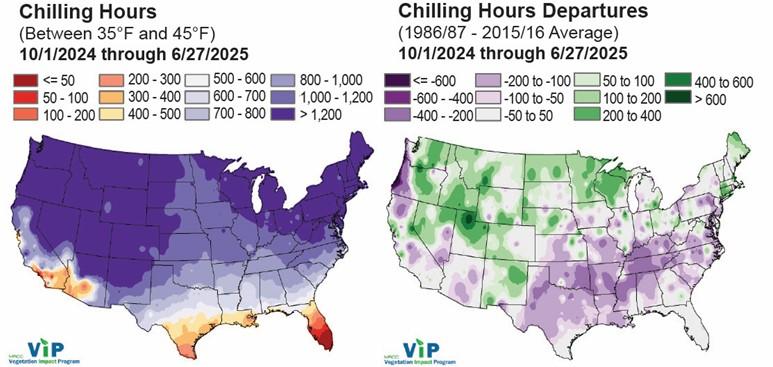
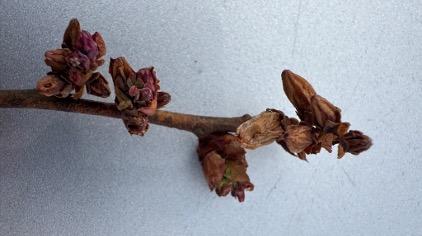
Chilling hour requirements are a key factor in determining which blueberry cultivars are suitable for your location. Chilling hours refer to the number of hours during which temperatures remain between 32°F and 45°F, which is necessary for blueberry plants to break dormancy and resume growth in the spring. The Mid-Atlantic region typically receives between 800 - 1,200 chilling hours (see maps in Figure 1 below), making it suitable for most northern highbush or high-chill cultivars. However, some mid-chill and even southern highbush or low-chill cultivars can also be grown in Maryland, particularly in warmer microclimates, such as the Lower Eastern Shore along the Chesapeake Bay. It’s important to note that low-chill cultivars may bloom too early in a warm winter and suffer damage on developing flowers or fruit from late frosts, while high-chill cultivars may have delayed or uneven flowering in years with unusually warm winters. When selecting cultivars, growers should consider both the average chilling hours for their site and the potential for late spring frosts.
For more information about cultivars that are appropriate for Maryland and the Mid-Atlantic region, consult
Table 1, “Highbush blueberry cultivars for Maryland and the Mid-Atlantic Region,” found below.
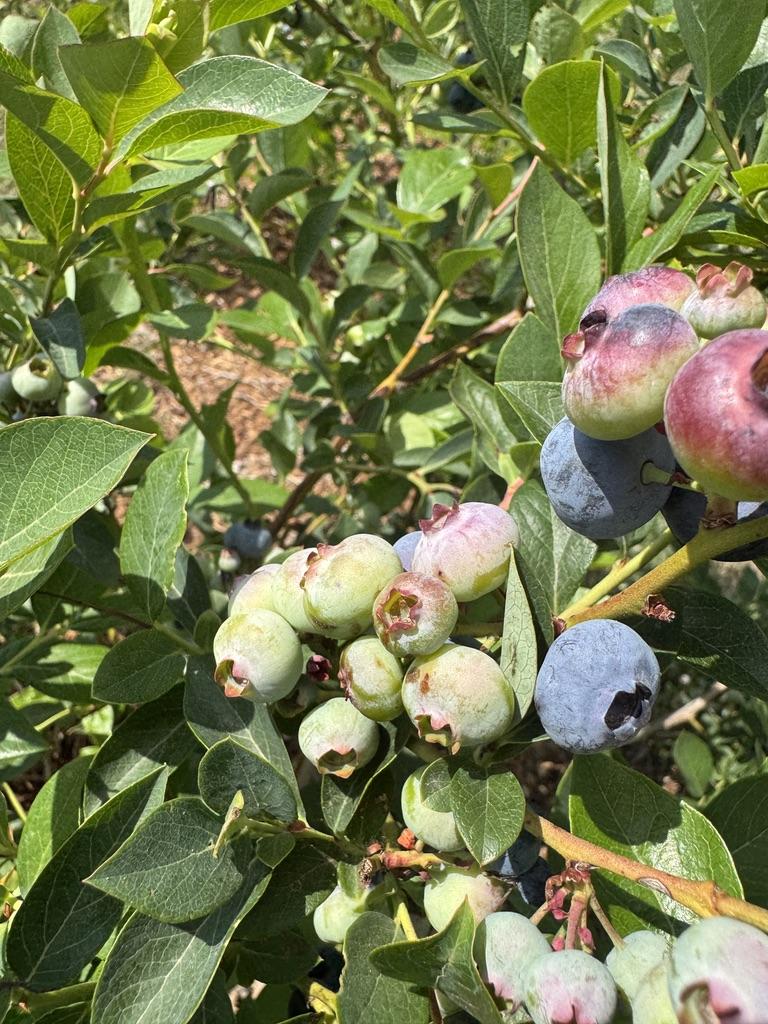
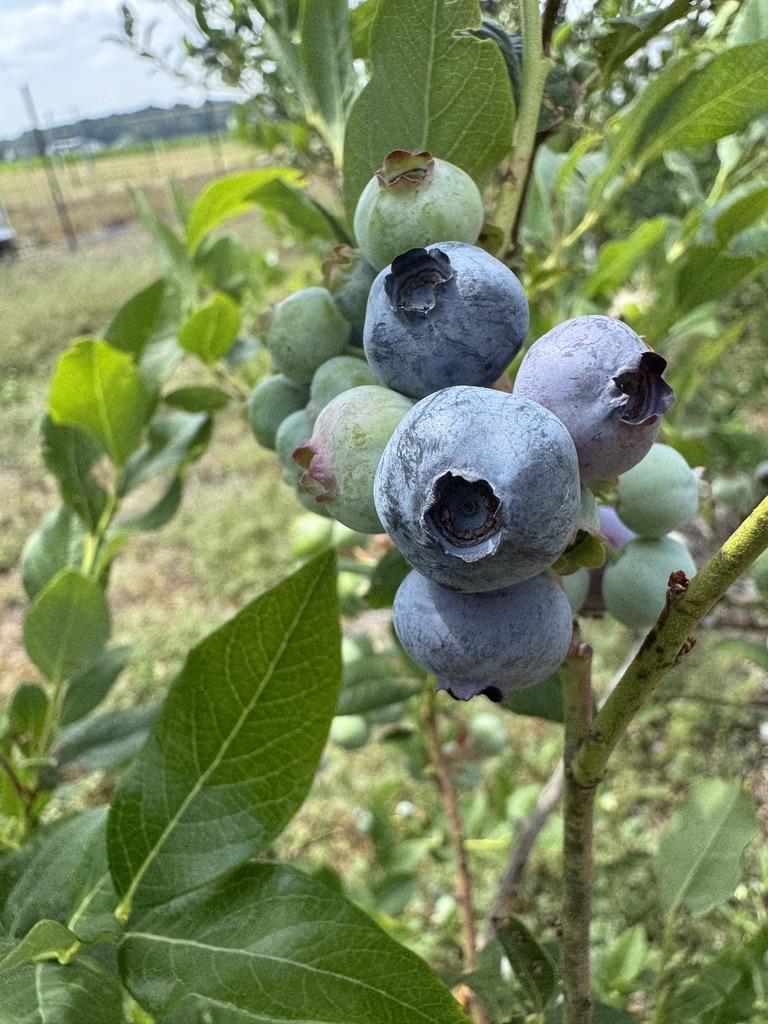
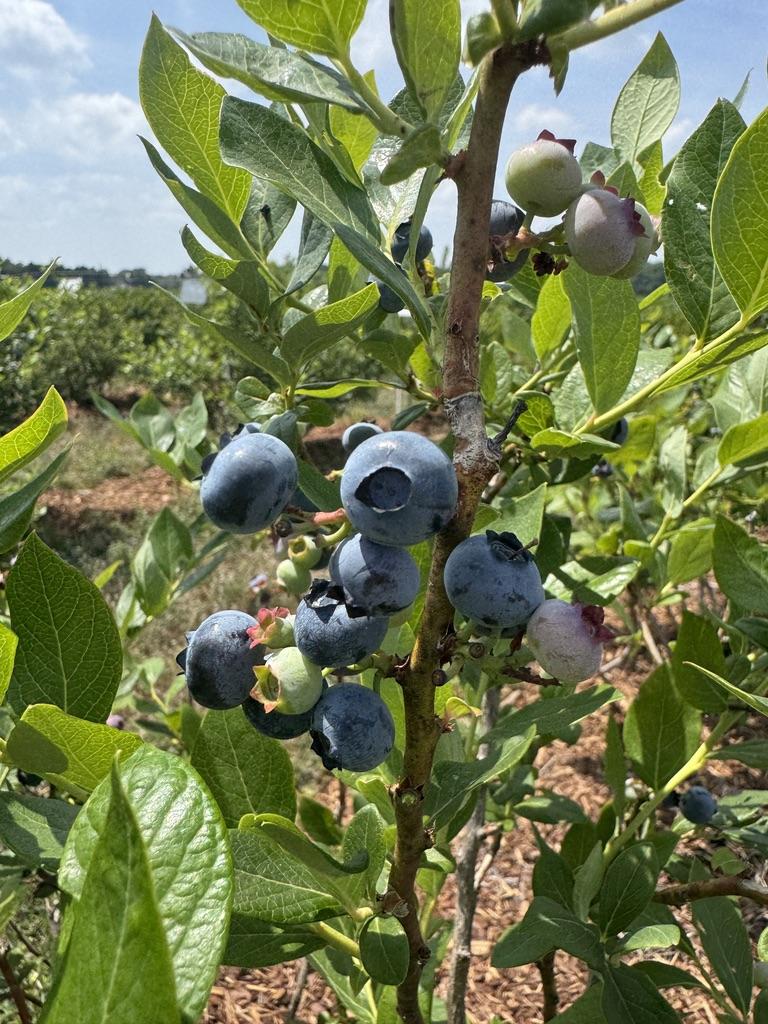
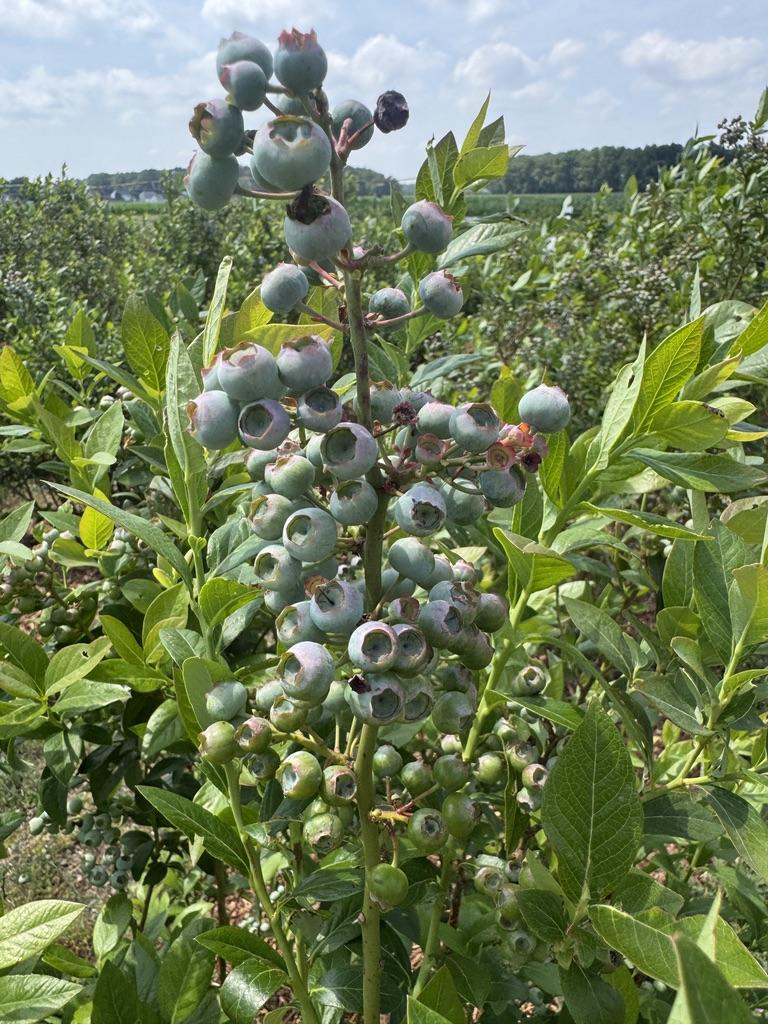
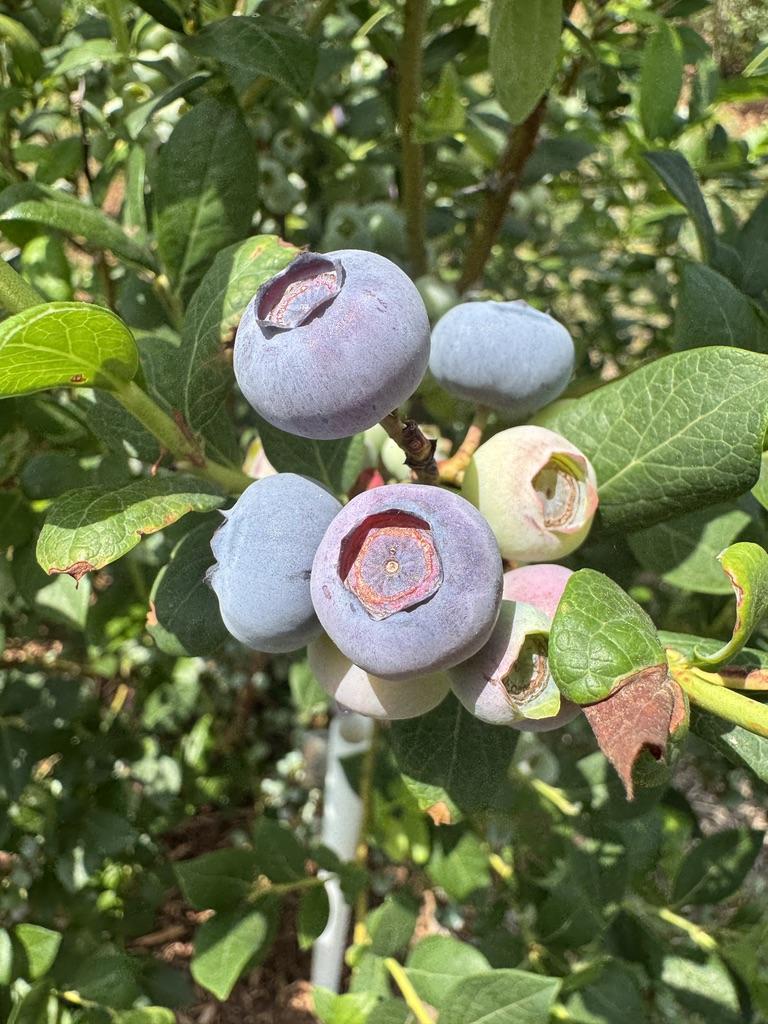
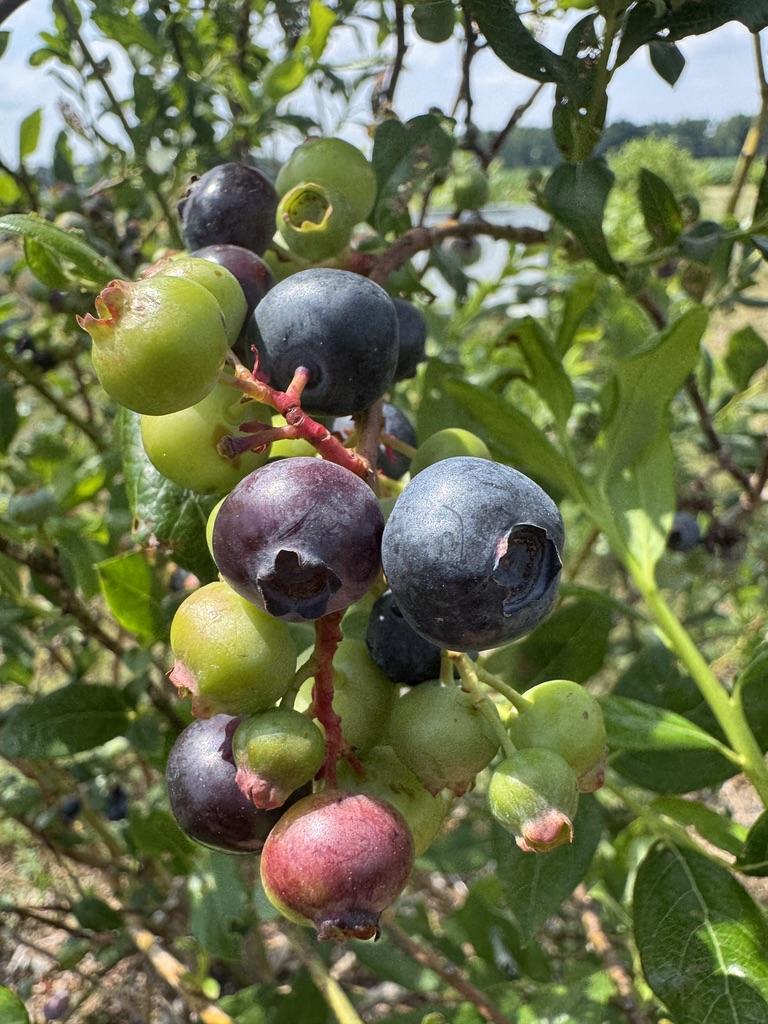
Figure 3: Images of Blue Ribbon, Bluecrop, Duke, Last Call, Legacy, and Valor cultivars grown in Wye Mills, Maryland at the University of Maryland Wye Research and Extension Center. Photo Credit: Haley Sater.
Conclusion
Selecting appropriate cultivars is one of the most important decisions when establishing a blueberry planting. Cultivars differ in ripening season, yield potential, chilling hour requirements, fruit quality, disease resistance, and suitability for different markets. In Maryland and the greater Mid-Atlantic region, growers and homeowners can benefit from planting multiple cultivars with overlapping bloom periods to improve cross-pollination and extend the harvest season. By matching cultivar characteristics to site conditions, climate, and intended use, growers can improve productivity, fruit quality, and long-term planting success.
Further Resources
Ehlenfeldt, M. (n.d.). Blueberry Cultivars. USDA-ARS Marucci Center for Blueberry & Cranberry Research & Extension.
Ernest, E. (2016). Comments on Cultivars in University of Delaware’s Georgetown Blueberry Trial. Weekly Crop Update. Volume 24, issue 3. https://sites.udel.edu/weeklycropupdate/?p=8951
Fall Creek. (n.d.). Commercial Fruit Growers Blueberry Varieties. https://www.fallcreeknursery.com/commercial-fruit-growers/varieties
Midwestern Regional Climate Center. (2025). Vegetated Impact Program (VIP) chilling hours maps. https://mrcc.purdue.edu/VIP/
Pavlis, G. (2005). Selecting Blueberry Varieties for the Home Garden. Rutgers University, Fact Sheet FS 419. https://njaes.rutgers.edu/fs419/
Penn State Extension. (2023). Blueberry variety selection in the home fruit planting. https://extension.psu.edu/blueberry-variety-selection-in-the-homefruit- planting
Sater, H. & Butler, B. (2026). Growing Blueberries in the Mid-Atlantic (FS- 2025-0766). University of Maryland. go.umd.edu/FS-2025-0766.
Vander Weide, J., Isaacs, R., Miles, T., Edger, P., Sloan, C., & Garcia-Salazar, C. (2024). Blueberry varieties for Michigan (E3490). Michigan State University Extension. https://www.canr.msu.edu/blueberries/uploads/files/ E3490_Blueberry_Varieties_MI_AA.pdf
HALEY SATER
hsater@umd.edu
BRYAN BUTLER
bbutlers@umd.edu
This publication, Blueberry Cultivars for Maryland and the Greater Mid-Atlantic Region (FS-2025-0777) , is a part of a collection produced by the University of Maryland Extension within the College of Agriculture and Natural Resources.
The information presented has met UME peer-review standards, including internal and external technical review. For help accessing this or any UME publication contact: itaccessibility@umd.edu
For more information on this and other topics, visit the University of Maryland Extension website at extension.umd.edu
University programs, activities, and facilities are available to all without regard to race, color, sex, gender identity or expression, sexual orientation, marital status, age, national origin, political affiliation, physical or mental disability, religion, protected veteran status, genetic information, personal appearance, or any other legally protected class.
When citing this publication, please use the suggested format:
Sater, H., & Butler, B. (2003, updated 2026). Blueberry Cultivars for Maryland and the Greater Mid-Atlantic Region (FS-2025-0777). University of Maryland Extension. go.umd.edu/EBR-2025-0777.
Additional Resources on Growing Blueberries
-
Growing Blueberries in the Mid-Atlantic (FS-2025-0766) >
Growing Blueberries in the Mid-Atlantic (FS-2025-0766) >