

EB-2025-0771 | March 2026
Birds and Other Wildlife Need Small Trees, Shrubs, and Early Successional Habitat
Daniel F. Pratson, University of Maryland Extension; Luke T. Macaulay, University of Maryland Extension;
Kyle Magdziuk, Tall Timbers; Ben Larson, Ruffed Grouse Society and American Woodcock Society
Introduction
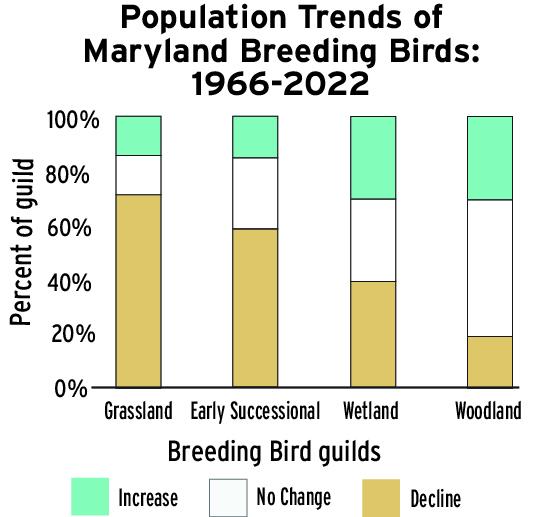
Maryland’s wildlife depends on a range of terrestrial habitat types. Early successional habitat is characterized by grasses, forbs (broadleaved, nonwoody plants, like wildflowers), young trees, and shrubs. This habitat type is critical for many of Maryland’s native birds, mammals, and reptiles (Greenberg et al., 2011). However, early successional habitat accounts for only a small proportion of the terrestrial habitat in the state and has declined in area over time. USDA Forest Service Forest Inventory and Analysis data estimates a total of 118,022 acres of young forest (i.e., early successional habitat) is present in Maryland as of 2024, a 48% decrease from the estimated 224,608 acres in 2013.
Before European colonists cleared land for settlements and agriculture across Maryland, early successional habitat was primarily created and maintained through a combination of sporadic natural disturbances (e.g., flooding, herbivory, fires started by lightning strikes, storms) and intentional fire management from Indigenous communities (Maryland State Wildlife Action Plan, 2016). The ecological compositions of landscapes across Maryland have undergone many changes since the early colonial period, and these changes have largely been driven by shifting economic priorities. Since early successional habitat represents the ecological transition from one economically valuable land use (i.e., farmland) to another (i.e., timberland), many landowners and managers have chosen not to intentionally create and sustain this habitat (Askins, 2001; Harper, 2007). More recently, widespread interest in wildlife has spurred landowners and managers to consider intentionally establishing and maintaining areas of early successional habitat.
Decreases in the extent of early successional habitat have coincided with population decreases of native wildlife species dependent upon open areas featuring shrubs and small trees. These include the goldenwinged warbler (Vermivora chrysoptera), northern bobwhite quail (Colinus virginianus) and American woodcock (Scolopax minor), three bird species of high conservation interest. North American Breeding Bird Survey data from 1966 to 2022 indicates that around 75% of grassland species and 58% of successional/scrub species have declined across Maryland since 1966. The survey data also indicates that 30% of woodland species have increased since 1966, which suggests that mature forest habitat has increased and plays a more dominant role as viable habitat across the landscape compared to open grassland or early successional habitat (Sauer & Hines, 2022).
Institutions across Maryland have spearheaded several tree planting campaigns including the 5 Million Trees initiative, a project that aims to plant and maintain five million trees in the state by 2031. The strong incentives for tree planting, combined with the significant decline in early successional habitat, marks a unique opportunity for participants in these programs to consider intentionally planting small-statured trees and shrubs (hereafter referred to as “small tree species”) to pre-emptively establish early successional habitat conditions. Small tree species are defined here as those that grow to 25 feet or less in height after 20 years of growth. Planting small tree species, when planned in conjunction with other parcels intentionally managed to maintain early successional cover, can help to increase the amount of early successional habitat in Maryland and support declining populations of native wildlife dependent upon this habitat type.
This publication identifies a list of small tree species and shrubs native to Maryland; the species listed are also commonly available for purchase at nurseries across the state. It also provides recommendations for establishing and managing early successional habitats. We note that letting a parcel naturally progress through early successional stages requires less upfront management than a planting project; this publication aims to equip landowners and technical service providers with information on plantings to supplement other areas of natural succession. Additionally, the intentional planting and establishment of early successional habitat allows landowners to incorporate desired plant species that correspond to their ownership goals, such as planting fruit- and nut-bearing species that attract wildlife.
Recommended Short Trees and Shrubs
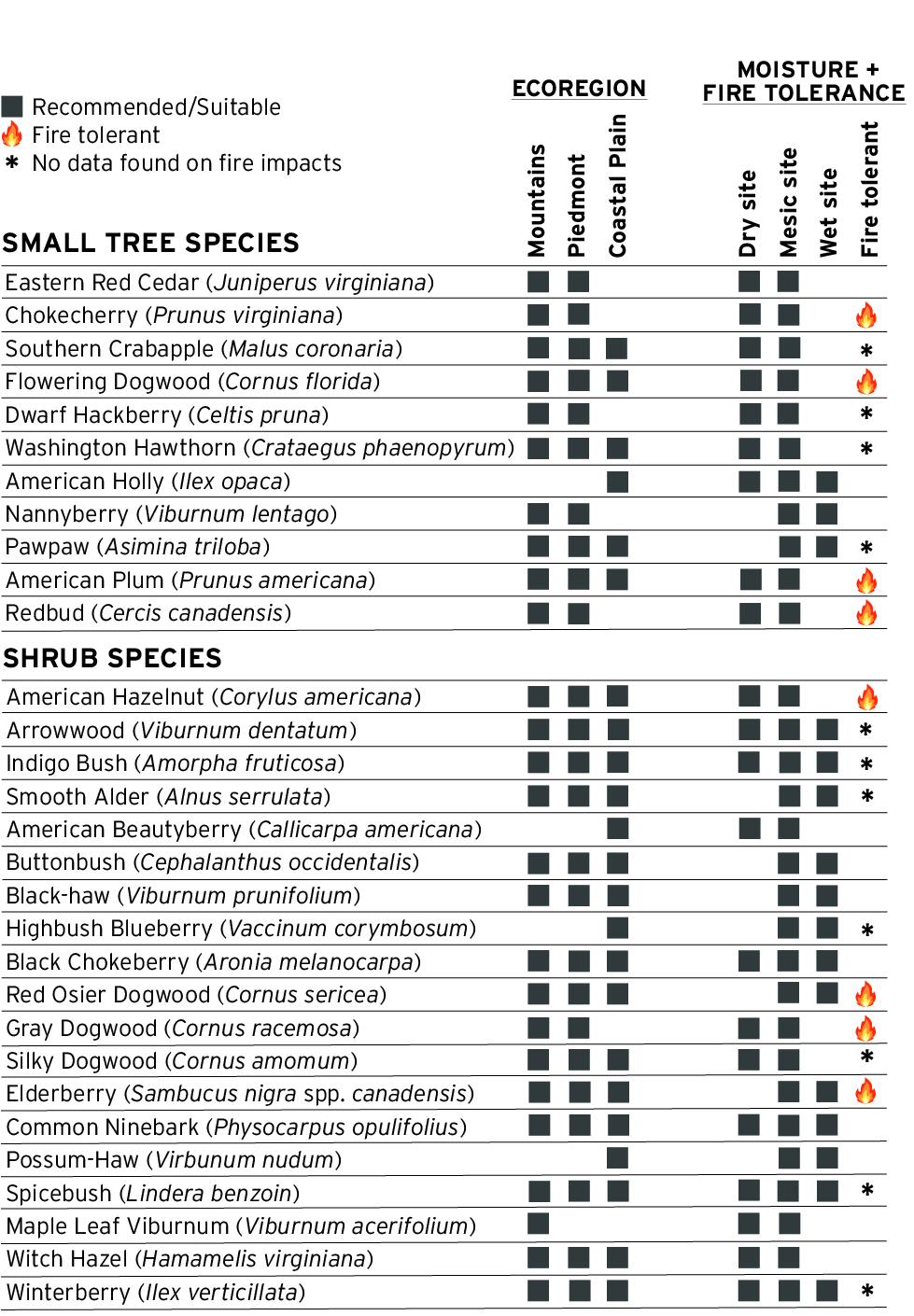
There are more than 120 tree species and over 80 shrub species that are native to Maryland (Kundt & Baker, 1970). Trees generally differ from shrubs in that they are often taller with fewer stems. Native tree and shrub communities vary in composition across Maryland’s Mountain, Piedmont, and Coastal Plain ecoregions, as the soils and growing conditions can influence which plants grow best. Figure 2 provides a select list of small tree and shrub species that correspond to different growing conditions and native plant communities found in each of Maryland’s ecoregions. The list is limited to small trees and shrubs that are readily available for purchase in regional nurseries.
All the species listed in Figure 2 produce mast and cover important for wildlife ranging from songbirds, quail (Colinus spp.), and turkey (Meleagris spp.), to squirrels (Sciurus spp.), deer (Odocoileus spp.), and rabbits (Sylvilagus spp.). Landowners and managers should consider how each species addresses landscape-scale goals (e.g., attracting wildlife, remediating soil nutrients, hunting opportunities) and specific site conditions (e.g., soil moisture and pH, light conditions, browse pressure). For instance, Eastern red cedar (Juniperus virginiana) plantings may help to address landowner desires for privacy or windbreaks but can aggressively spread across parcels, and if planted near apple (Malus spp.) trees, can spread cedar-apple rust (Gymnosporangium juniperi-virginianae). Refer to tables 4.1 - 4.6 in the Maryland Conservation Planting Guide (2017) for more detailed species-specific information to guide planting decision-making.
Planting Recommendations: Structural Characteristics and Spacing
There are several site characteristics that should be considered when planning to establish early successional habitat, including the parcel’s land use history and the surrounding parcels’ land use configurations. In Maryland, USDA-NRCS (2022) notes that abandoned mining sites, pastures, and crop fields are all uniquely suited to host native, early successional species. The makeup of adjacent lands can also influence wildlife on the site; grasshopper sparrows (Ammodramus savannarum), northern bobwhite quail, and rabbits prefer areas composed mostly of early successional habitat, compared to patches of early successional habitat surrounded by forest or perennial, non-native cool-season grasses (Harper, 2007).
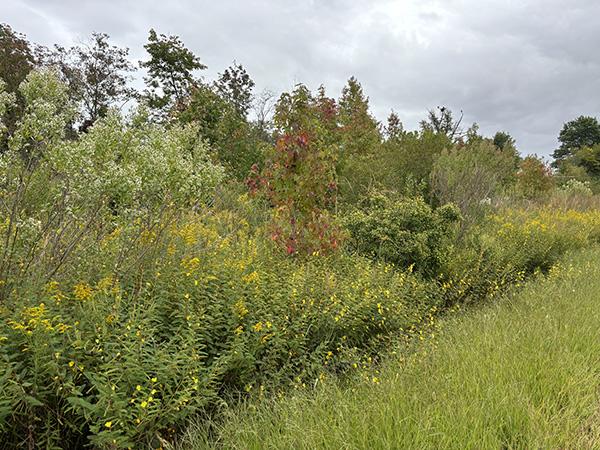
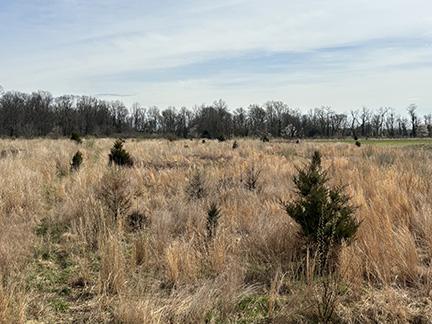
Once managers identify land as suitable for establishing and supporting early successional habitat, they need to consider several structural and spacing considerations. In general, about 1/3 of the total vegetation cover in a designated early successional area should consist of small trees and/ or shrubs (Figure 3). Optimum basal area for early successional species such as quail range from 30 to 60 ft.2 per acre (Keyser, 2018). Before planting, the site should have open or absent canopy cover, accompanied by a robust ground cover of forbs and grasses, as well as scattered trees and shrubs (Greenberg et al., 2011; Harper, 2007; Figure 4). Refer to Table 2.2 in Maryland Conservation Planting Guide (2017) for detailed regional recommendations on specific seed mixes of native herbaceous cover species. Generally, plantings should feature two or more species of trees and shrubs to provide vegetative, habitat, and food source diversity (Harper, 2007).
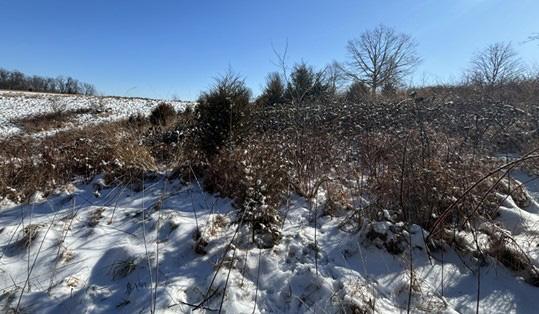
Maintaining open areas of grasses and forbs among woody species is important for wildlife habitat. When intentionally creating early successional habitat, planting shrubs and trees in clustered “islands” can provide adequate protection from predation and thermal refuge from weather extremes for species such as northern bobwhite quail and American woodcock (Figure 5) (Macaulay, 2024). These clusters should be established a minimum of 100 yards apart from one another and randomly arranged across the landscape, surrounded by areas of native herbaceous vegetation (Harper, 2007). Habitat islands that are not connected to each other by herbaceous cover can lead to high predation, as wildlife will be exposed without this continuous cover. Refer to Table 4.7 in Maryland Conservation Planting Guide (2017) for detailed information on spacing recommendations for both bare-root seedlings and containerized planting stock. Note that planting considerations for bare-root seedlings differ considerably from considerations for balled-andburlapped trees. Bare-root seedlings are generally sold in high quantities in specialized nurseries and are appropriate for larger-scale habitat conservation or landscape restoration purposes; balled-and-burlapped trees are primarily bred and sold for ornamental or landscaping purposes.
Planting in action: Chapel Point State Park
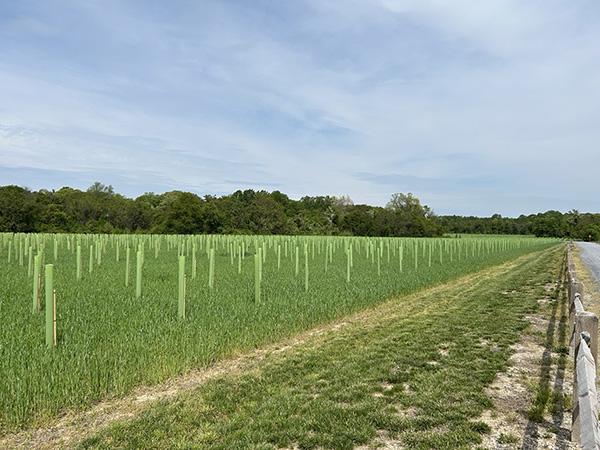
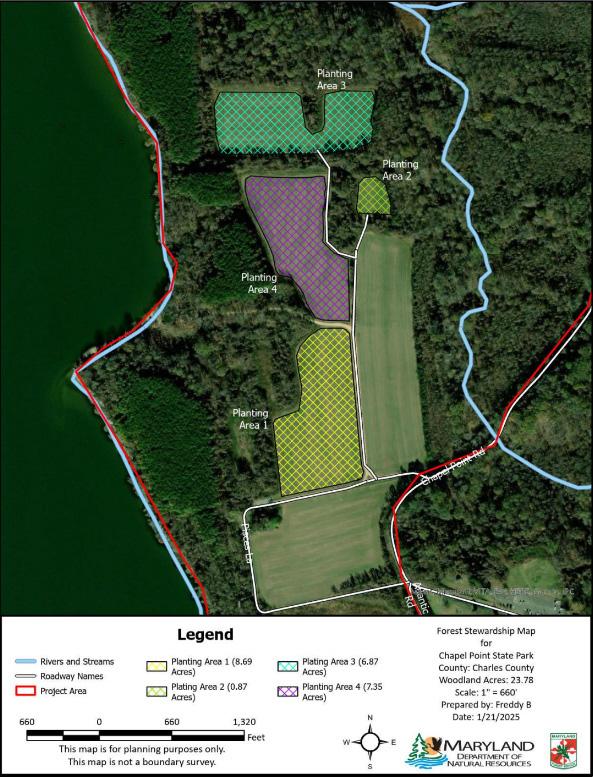
In Spring 2025, afforestation took place at Chapel Point State Park in Port Tobacco, Maryland (Charles County), across four retired corn and soybean fields. Two fields received plantings of mostly small tree species, including eastern red cedar, flowering dogwood, American plum, and pawpaw. The other two fields received plantings of mostly shrub species, including hazel alder, serviceberry (Amelanchier spp.), red osier dogwood, gray dogwood, beautyberry, and possum-haw. The fields are large, contiguous tracts of land adjacent to existing agricultural leases; the locations of these plantings will enhance the site for wildlife dependent on grasslands, meadows, and early successional habitat.
Management Considerations
The success of planting projects depends, in part, on careful planning for management before, during, and after planting. The following section outlines high-level considerations for proper site preparation, appropriate management timing intervals, and specific management approaches such as prescribed fire, grazing, chemical control, and mechanical control.
Site Preparation and Establishment
It is critical for managers to conduct an initial vegetation inventory on a site before planting any trees or shrubs, to determine pre-existing plant communities. Managers can use the results of the inventory to prepare sites accordingly, to ensure the planted species can compete against existing vegetation. Site preparation may include prescribed fire, mechanical disturbance, and targeted herbicide application to manage competing vegetation, particularly invasive species.
After thorough site preparation and planting, managers should consider implementing strategies to assist species throughout their establishment and growth. One effective strategy is to protect deciduous seedlings and saplings with tree shelters, to mitigate browse pressure from deer and other herbivores. Heavy browse pressure can negatively impact tree survival and growth. However, browsing can keep hardy, tall tree species, such as oaks (Acer spp.), short and shrub-like. Refer to this guide (Shelter and Seedling Maintenance) from Maryland’s DNR Forest Service for tips on how to maintain and recycle shelters after planting trees and shrubs.
Habitat Restoration Successes: A Landowner’s Perspective
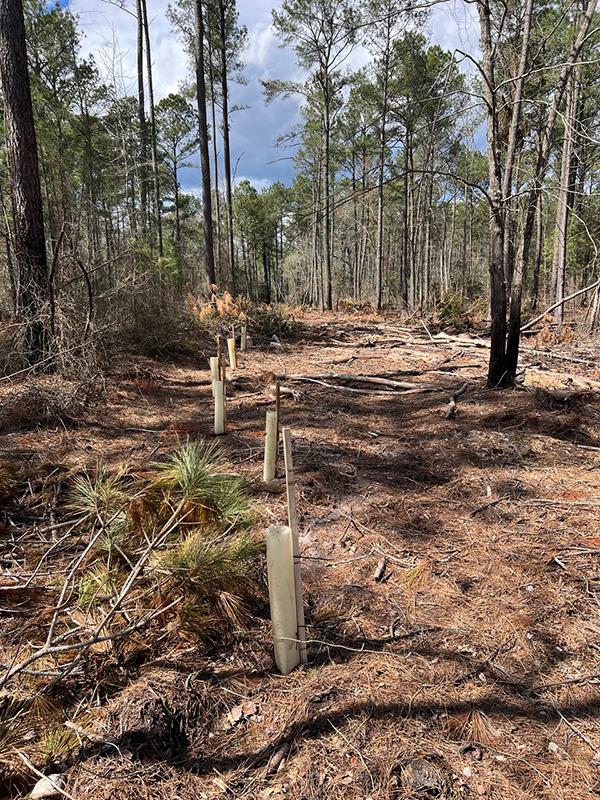
Experiences from a landowner in Snow Hill, Maryland (Worcester County), highlight a compelling case for intentionally establishing early successional habitat conditions on his property. He planted 13,000+ trees and shrubs within clearcut sections of his forested property, utilizing different combinations of species to address his various goals:
- Promote deer browse: Silky dogwood; red osier dogwood; American hazelnut
- Create cover and seed sources for quail: Indigo bush, possum-haw, northern bayberry (Myrica pensylvanica)
- Create cover and soft mast for deer, turkey, rabbit, and quail: Chickasaw plum (Prunus angustfolia), persimmon (Diospyros virginiana), pawpaw
Both the plantings and the forest management planning were supported in part by partner organizations and with cost-share funding. The landowner noted that “we have in just two short years established bobwhite quail numbers not seen in decades.” When discussing the key aspects that led to success, he expressed the importance of setting clear, achievable goals: “…the landowner must clearly define their own goals. It is simply not possible to develop a good plan when the landowner’s goals are undetermined.”
Management timing and approaches
Fast-growing, shade-intolerant plant species dominate most of the plant biomass in unmanaged, early successional habitat. Since these plants expend significant energy to grow and compete with one another for available resources, early successional habitats can quickly progress into closed canopy conditions after 10 to 20 years (Maryland State Wildlife Action Plan, 2016). To maintain desired early successional conditions over longer periods of time, managers should control the vegetation every two to four years. This will reset the habitat conditions, and allow the shade intolerant grasses, forbs, and woody species to rebound (Harper, 2007). Managers can choose from several approaches, including prescribed fire, livestock grazing, bush hogging (rotary mowers that can clear woody stems), coppicing and thinning, and herbicide, depending on the site conditions and management goals. Ideally, many of these approaches should be carried out in early spring months (March to early April) to avoid direct wildlife mortality in the summer and to leave protective cover for wildlife in the winter. These approaches emulate natural disturbances that have historically created and perpetuated early successional habitat in the Eastern United States.
Prescribed fire
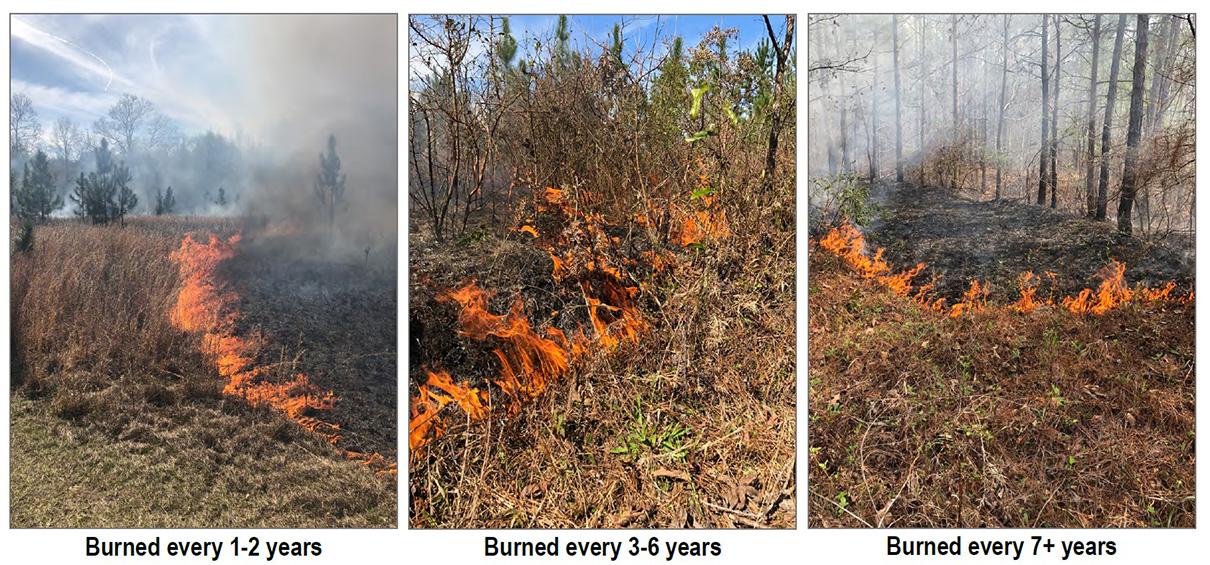
Managers can arrange prescribed burns on properties to prepare sites for planting, to re-establish early successional conditions, and to favor regeneration from fire-adapted species (Regumi et al. 2023).When managers implement a prescribed fire program, it is important to consider the fire frequency, or how often fire will be used (or has been used in the past) to reset succession, and the fire season, the time of year the burn is applied. Figure 9 depicts the impacts of different fire frequencies. Higher fire frequency corresponds to higher growth rates of grasses and other herbaceous vegetation. Lower fire frequency allows vegetation to grow taller and form closed canopy conditions. Managers that implement fire every three to six years will encourage high stem densities from woody plants. Generally, dormant season or early growing season burns will top-kill (i.e., burn the above-ground portion of a plant while leaving the below-ground roots intact) and encourage new growth from shrubs and trees. Alternatively, late growing season burns can top-kill shrubs as they begin to die-back in the dormant season. This can limit resource availability, increase tree mortality over time, and reduce stem density.
Grazing, mechanical controls, and chemical controls
Landowners who manage livestock can graze herds in areas to maintain early successional conditions, but certain livestock species such as goats (Capra spp.) may consume most of the plant matter, including the desired trees and shrubs, unless they are rotated to other grazing areas. Short rotation tree coppice involves purposely cutting trees down to their stump and allowing them to re-establish many smaller sprouts to form a bushy figure. Once the sprouts grow back into larger poles, managers cut them again - normally in late winter or early spring, when carbohydrates are stored in the plant’s root system - so that they will eventually regrow. Managers most often choose willow (Salix spp.) and Hazel (Corylus spp.) trees to coppice, but other species that regenerate by stump sprouting can be selected. This practice is not common across properties in the Eastern United States and has been historically most utilized for sustained firewood or wicker fiber production in temperate Europe. However, recent research has identified economically sustainable approaches to coppicing American sycamore (Platanus occidentalis) in retired agricultural lands in the Southeast US (Domec et al., 2017; Ile et al., 2021).
Thinning planted stands involves cutting and removing several trees to provide space and light to shrubs, grasses, and forbs otherwise shaded by tree canopies. Thinning recommendations, which reflect both the amount of woody biomass to remove and the projected final conditions, are informed by target basal area considerations and the regeneration potential of a forested stand. Landowners and managers can also utilize herbicides to chemically manage undesirable tree encroachment or invasive vegetation that may propagate in an open area. Invasive vegetation often outcompetes native plant species, and seeds from invasive vegetation can be broadcast through animal droppings, assisting in their spread (Levine et al., 2012). Further details on the different management techniques listed above are discussed in Macaulay (2024) and the Maryland Conservation Planting Guide (2017). University extension agents and natural resource technical service providers can assist with identifying management techniques that are most appropriate for the property.
Conclusions
Although early successional habitat conditions naturally persist for short periods of time, they play an important role in sustaining wildlife. Planting small trees and shrubs in marginal, open land can work to increase the prevalence of early successional habitat and can contribute to various tree planting initiatives across Maryland. These small trees and shrubs can provide valuable ecosystem services that benefit our communities (e.g., sequestering atmospheric carbon, filtering water, providing fruits and nuts) and can “ensure that every habitat type is well enough represented to sustain viable populations of all native species” (Askins, 2001, p. 410).
Key resources
Marylanders plant trees – Maryland’s Department of Natural Resources Forest Service has compiled a short list of native trees (both large and small) and shrubs, along with planting tips. https://mde.maryland.gov/programs/air/Climate-in-md/Documents/5%20Million%20Trees/Native%20Tree%20Species.pdf
Maryland Plant Atlas - This site contains an exhaustive record of native and naturalized plants in Maryland and features distribution maps. https://www.marylandplantatlas.org/
Certified growers and retailers – University of Maryland Extension’s Native Plant Program maintains a list of growers and retailers who are “certified,” i.e., native plant species make up a significant proportion of the retailers’ inventory. https://extension.umd.edu/programs/environment-natural-resources/program-areas/maryland-native-plants-program/find-certified-retailers/
Native plant nurseries and vendors – Maryland Native Plant Society maintains a list of nurseries and vendors that sell native plant species. https://mdflora.org/nurseries.html
Where to buy native plants – This site maintains a sizeable list of retailers that offer native plants and offers tips on what to look for when purchasing plants. https://www.nutsfornatives.com/where-to-buy-native-plants
John S. Ayton State Tree Nursery – This site provides information on Maryland’s state-run seedling nursery, which sells its seedlings to the public. https://nursery.dnr.maryland.gov/
References
- 2020 Forest Action Plan Part I: Forest Resource Assessment. (2020). Maryland Department of Natural Resources.
- Askins, R. (2001). Sustaining biological diversity in early successional communities: The challenge of managing unpopular habitats. Wildlife Society Bulletin, 29(2), 407–412.
- Conservation Programs & Practices for: Early Successional Wildlife Habitat. (2022). US Department of Agriculture: Natural Resources Conservation Service. https://www.nrcs.usda.gov/sites/default/files/2022-10/Early%20Successional%20Habitat.pdf
- Domec, J.-C., Ashley, E., Fischer, M., Noormets, A., Boone, J., Williamson, J. C., & King, J. S. (2017). Productivity, Biomass Partitioning, and Energy Yield of Low-Input Short-Rotation American Sycamore (Platanus occidentalis L.) Grown on Marginal Land: Effects of Planting Density and Simulated Drought. BioEnergy Research, 10(3), 903–914. https://doi.org/10.1007/s12155-017-9852-5
- Fire Effects Information System, [Online]. U.S. Department of Agriculture, Forest Service, Rocky Mountain Research Station, Missoula Fire Sciences Laboratory (Producer). Available: www.fs.usda.gov/database/feis/plants/fern/polmun/all.html
- Greenberg, C., Collins, B., Thompson, F., & McNab, W. (2011). Introduction: What Are Early Successional Habitats, Why Are They Important, and How Can They Be Sustained? In C. Greenberg, B. Collins, & F. Thompson III (Eds.), Sustaining Young Forest Communities (Vol. 21, pp. 1–10). Springer Netherlands. https://doi.org/10.1007/978-94-007-1620-9_1
- Harper, C. (2007). Strategies for Managing Early Succession Habitat for Wildlife. Weed Technology, 21(4), 932–937. https://doi.org/10.1614/WT-07-024.1
- Ile, O., Aguilos, M., Morkoc, S., Minick, K., Domec, J.-C., & King, J. (2021). Productivity of low-input short-rotation coppice American sycamore (Platanus occidentalis L.) grown at different planting densities as a bioenergy feedstock over two rotation cycles. Biomass and Bioenergy, 146, 105983. https://doi.org/10.1016/j.biombioe.2021.105983
- Keyser, P. (2018). Savannah and Woodland Management of Shortleaf Pine (No. Circular 1134 (SP-10)). University of Georgia Cooperative Extension. https://fieldreport.caes.uga.edu/wpcontent/uploads/2025/08/C-1134_1.pdf
- Kundt, J., & Baker, R. (1970). Leaf Key to Common Trees in Maryland (Extension Bulletin No. 238). University of Maryland Extension. https://drive.google.com/file/d/1USoLFd_MsfFoGKjwFwYOVp21HlQgwzh4/view
- Levine, C., Winchcombe, R., Canham, C., Christenson, L., & Ronsheim, M. (2012). Deer Impacts on Seed Banks and Saplings in Eastern New York. Northeastern Naturalist, 19(1), 49–66.
- Macaulay, L. (2024). Recovering Northern Bobwhite Quail: A Guide to Habitat Management (Extension Fact Sheet No. FS-2023-0683). University of Maryland Extension. go.umd.edu/FS-2023-0683
- Maryland Conservation Planting Guide. (2017). [Technical Report]. US Department of Agriculture: Natural Resources Conservation Service. https://efotg.sc.egov.usda.gov/references/Delete/2017-1-21/MD_Cons_Planting_Guide_1_13_17_2-sided-print.pdf
- Maryland State Wildlife Action Plan. (2016). Maryland Department of Natural Resources.
- Regumi, A., Siefert, J., Incollingo, T., & Houston, E. (2023). Prescribed Fire: Does it Have a Place on My Land? Penn State Extension. https://extension.psu.edu/prescribed-fire-does-it-have-a-place-on-my-land
- Sauer, J., & Hines, J. (2022). North American Breeding Bird Survey: Species Group Summaries for Bird Conservation Regions (Version 2022.0) [Dataset]. https://eesc.usgs.gov/MBR/bbs/guild22js.shtml
- Shelter and Seedling Maintenance. (n.d.). Department of Natural Resources - Forest Service. https://dnr.maryland.gov/forests/Documents/Shelter-Maintenance.pdf
DANIEL F. PRATSON
dpratson@umd.edu
LUKE T. MACAULAY
lukemac@umd.edu
KYLE MAGDZIUK
kmagdziuk@talltimbers.org
BEN LARSON
benl@ruffedgrousesociety.org
This publication, Birds and Other Wildlife Need Small Trees, Shrubs, and Early Successional Habitat (EB-2025-0771), is a part of a collection produced by the University of Maryland Extension within the College of Agriculture and Natural Resources.
The information presented has met UME peer-review standards, including internal and external technical review. For help accessing this or any UME publication contact: itaccessibility@umd.edu
For more information on this and other topics, visit the University of Maryland Extension website at extension.umd.edu
University programs, activities, and facilities are available to all without regard to race, color, sex, gender identity or expression, sexual orientation, marital status, age, national origin, political affiliation, physical or mental disability, religion, protected veteran status, genetic information, personal appearance, or any other legally protected class.
When citing this publication, please use the suggested format:
Pratson, D.F., Macaulay, L.T., Magdziuk, K., & Larson, B. (2026). Birds and Other Wildlife Need Small Trees, Shrubs, and Early Successional Habitat (EB-2025-0771). University of Maryland Extension. go.umd.edu/EB-2025-0771