Skip to main content
Menu
Get Involved
Give
Contact
Ask Extension
About
Leadership
UMD Extension Impact
Careers
Directory
Civil Rights Compliance
Extension Advisory Council and Committees
Program and Organizational Development
Resources
Animal Agriculture
Plant Agriculture
Yard & Garden
Pests
Natural Resources
Environment & Energy
Agribusiness Management
Food & Nutrition
Health & Well-Being
4-H & Youth Education
Programs
4-H Youth Development
Family & Consumer Sciences
Agriculture & Food Systems
Environment & Natural Resources
Home & Garden Information Center
Locations
Publications
News & Events
All News
Events
Small Flock
Home
Resources
Small Flock
For full functionality of this site it is necessary to enable JavaScript. Here are
instructions for how to enable JavaScript in your web browser
.
Sort by:
Date
Title
Updated: May 11, 2022
Economics of Small Poultry Flocks
Whether you view your small poultry flock as a hobby or a significant contribution to the family diet, it is useful to estimate the costs of maintaining the flock.
Updated: May 11, 2022
Housing Requirements
Housing should provide protection from all kinds of weather, predators, injury, and theft. Consider the location of your poultry house on your property. Locate the building in a well drained area, with access to water and electricity. Your job is to keep the birds comfortable at all times.
Updated: May 11, 2022
What Kind of Chickens?
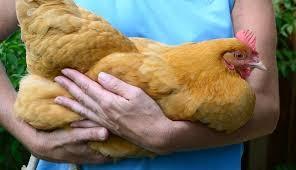
There are three basic choices in the types of poultry to purchase; a breed primarily for egg production, a breed for showing or exhibiting, or one that is bred for meat production. Care and feed requirements will vary for each type of breed.
Updated: May 11, 2022
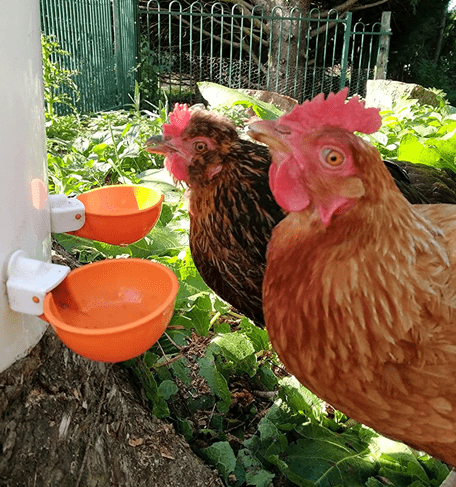
Water - "The Forgotten Nutrient"
Adequate availability of water to birds is critical to bird health and performance. Water is sometimes referred to as the forgotten nutrient. It is considered one of the most important nutrients ingested and although it is inexpensive to provide, it is often the most neglected nutrient.
Updated: April 29, 2022
Vitamins and Minerals
Vitamins are trace organic nutrients which occur in feedstuffs in varying quantities and different combinations. Vitamins are required for growth, reproduction, and the maintenance of health.
Updated: April 29, 2022
Fats: A Concentrated Energy Source
Animal and vegetable fats serve as a concentrated energy source and are the highest energy sources in feedstuffs.
Updated: April 29, 2022
Protein: Built by Amino Acids
Proteins are a large complex class of nutrients made up of smaller compounds known as amino acids. In nutrition, amino acids are grouped into two categories depending on their requirement in the diet. Non-dispensable (or essential) amino acids are required in the diet because the body cannot make them at all or the body cannot make them at a fast enough rate for maximum performance.
Updated: April 29, 2022
Carbohydrates: Inexpensive Sources of Energy
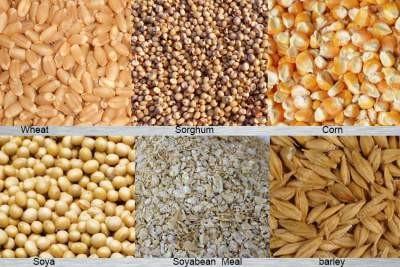
Carbohydrates in feed are composed of sugars, starches and cellulose. Cellulose (classified as crude fiber) is the insoluble portion of carbohydrates and cannot be utilized efficiently by birds.
Updated: April 29, 2022
Feeding the Right Ration
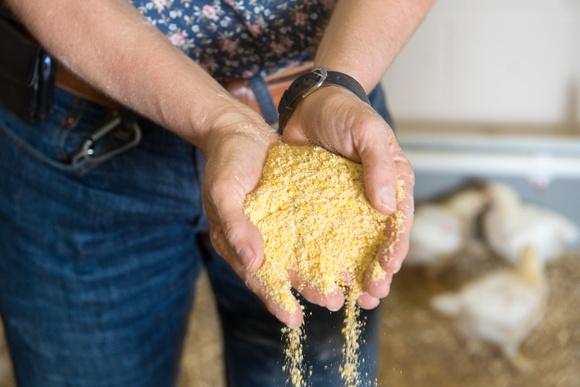
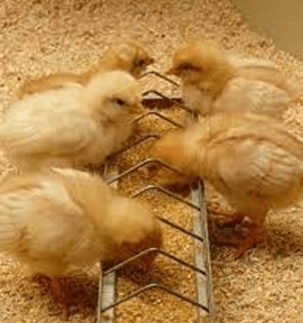
Nutrition is one of the most important aspects of production. Sixty to seventy percent of the cost of raising poultry is feed. A wide range of high quality commercially prepared feed is available from many sources. Birds must be fed diets that meet their nutritional requirements to achieve maximum production.
Updated: April 7, 2022
Disinfectants and Sanitation
Disinfectants are agents applied to non-living objects to reduce the number of unwanted microorganisms to a safe level. Using disinfectants should be a routine part of daily farm sanitation. Sanitation includes the substances or methods used to destroy microorganisms in order to maintain a healthy, disease-free environment. Sanitation methods prevent unwanted organisms from coming back after disinfectants have been applied.
First
Previous
…
Page
2
Page
3
Page
4
Page
5
Current page
6
Page
7
Page
8
Page
9
Page
10
Next
Last