
Two nearly-identical species of low-growing lespedeza are widespread lawn weeds in Maryland: Japanese clover, also called common lespedeza (Kummerowia striata, formerly Lespedeza striata); and Korean clover, also called Korean lespedeza (Kummerowia stipulacea, formerly Lespedeza stipulacea).
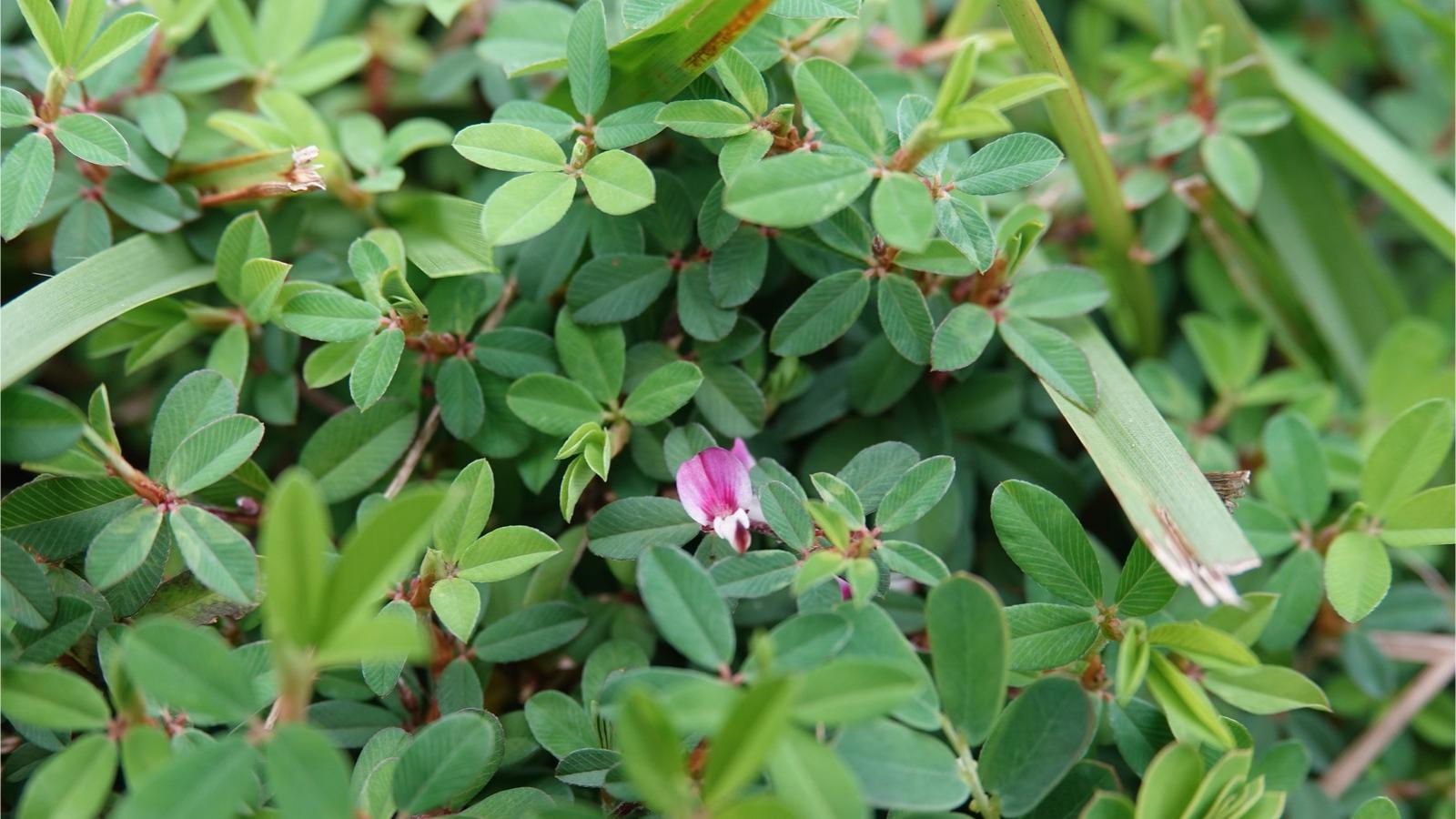
Common lespedeza flower and foliage in a lawn. Photo: Rebekah D. Wallace, University of Georgia, Bugwood.org
Identification
- Growth habit: prostrate, with branched stems spanning at least 15 to 18 inches across
- Flowers: pinkish-purple and white; pea-shaped, growing singly or in small groups out of the leaf axils
- Leaves: trifoliate (divided into 3 leaflets); alternate leaf arrangement
- leaflets are oblong, with smooth margins
- leaflets have a short stalk connecting them to the main petiole or may be sessile (stalkless)
- leaflets have noticeably paler veins arranged parallel to each other at about a 45° angle from the central leaflet midvein
- Stems: hairy on their surface; the stems become wiry and tough as they age
- hairs point up (towards the stem tip) in Korean clover
- hairs point down (towards the stem base) in Japanese clover
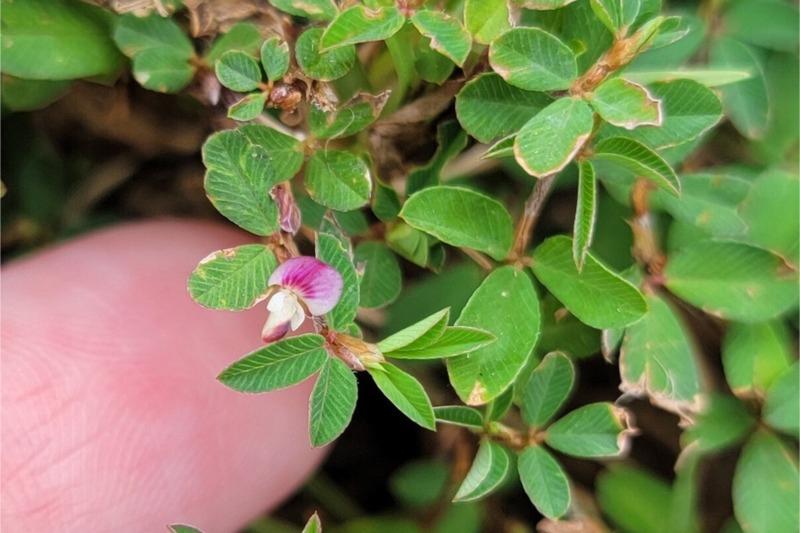
Photo: Rebekah D. Wallace, University of Georgia, Bugwood.org
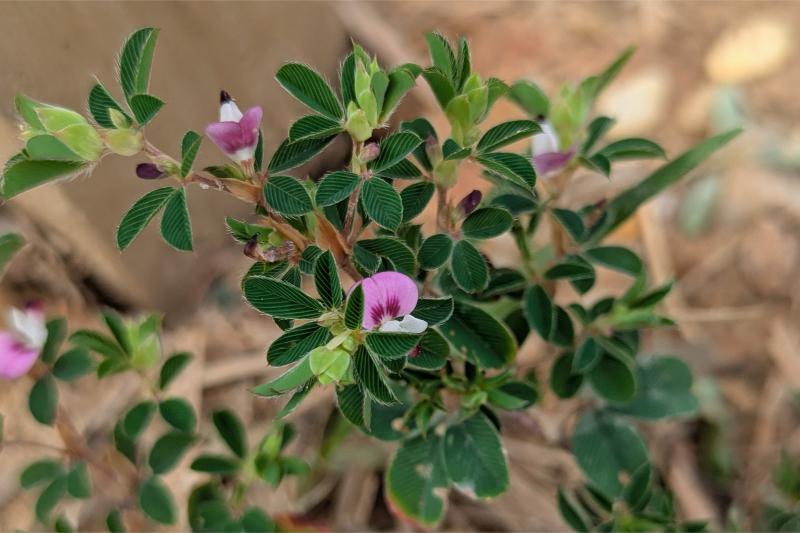
Photo: Miri Talabac, University of Maryland Extension
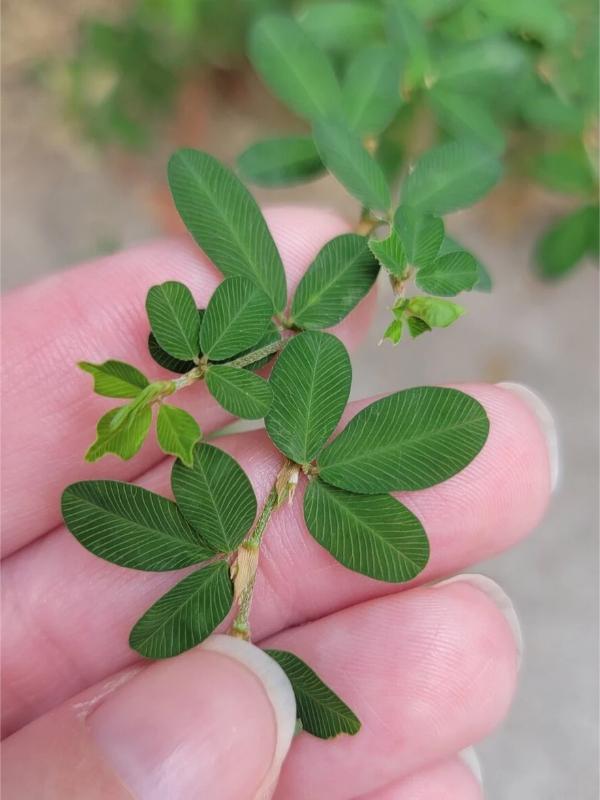
Photo: Rebekah D. Wallace, University of Georgia, Bugwood.org
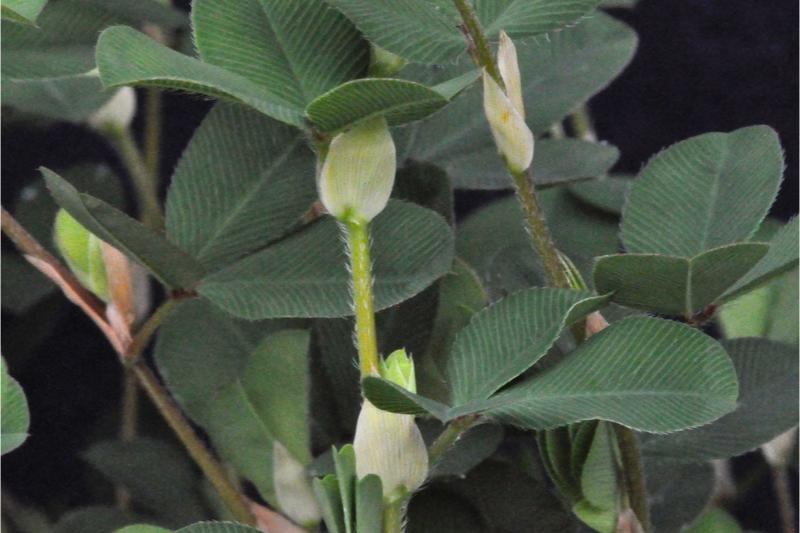
Photo: Bruce Ackley, The Ohio State University, Bugwood.org
Similar species
Several other weedy lawn legumes have trifoliate (3-part) leaves. In bloom, all of them have different flower shapes and colors. When not in bloom, the parallel leaf venation of lespedeza is distinctive, and its leaflets are not evenly spaced around the stem the way the more rounded leaflets of white clover (Trifolium repens) tend to be. Black medic leaves look superficially similar to those of lespedeza, but black medic's center leaflet has a noticeable stalk (the other 2 are not stalked) whereas all 3 leaflets of lespedeza attach similarly to the petiole.
Life cycle and reproduction
Japanese and Korean clover are summer annuals: seeds germinate in spring, the plants grow and bloom in late summer, and ripen seeds prior to dying by the end of autumn. Annual plants have a one-year life cycle.
Both species of lespedeza spread by seed.
Conditions that favor growth
Lespedeza grows in areas of sparse, under-fertilized (nitrogen-deficient) turf in poor, dry soil. It handles drought well and prefers full sun but will tolerate some shade.
Lespedeza management in lawns
General lawn care practices that discourage weeds
Maintain healthy, dense turf that can compete with weeds and prevent weed germination and establishment. Fertilize the lawn as recommended (based on season and turf type), mow high, and overseed cool-season lawns each autumn to keep the lawn dense and better able to crowd-out seedling weeds. Core-aerate to reduce soil compaction. Learn about fertilizing, mowing, overseeding, and aeration in the resource: Maintaining an Established Lawn.
Mechanical management
Remove lespedeza plants (including the central root system) by hand or with a manual weeding tool. Doing this when the soil is moist makes the task easier. Pulling up or digging out individual plants is a viable option at the beginning of an infestation (when the plants are not yet abundant) and for young lespedeza plants.
Manage Weeds Without Chemicals
Chemical management
Herbicide use should always be a last resort when managing weeds. Check for any local pesticide restrictions before buying and applying a product. For example, the Montgomery County pesticide law does not allow most synthetic pesticides (which includes herbicides) to be used on lawns. The active ingredient glyphosate is also prohibited on lawns in Baltimore City.
Learn about herbicide classifications and terminology:
Herbicide Options for Managing Common Lawn Weeds
Post-emergent herbicide
Spot-treat individual lespedeza plants or infested areas with a liquid broadleaf herbicide applied when the weeds are actively growing. Look for a product with one or more of the following active ingredients: 2,4-D, MCPP (mecoprop), dicamba, or triclopyr. An application of non-selective herbicide may work, but would also damage any turfgrass exposed to the herbicide.
CAUTION: Do not spray herbicides containing dicamba over the root zone of desirable trees and shrubs. Roots or leaves may absorb this ingredient and be substantially damaged. Refer to the product label for other precautions.
Reference
Neal, J.C., Uva, R.H., et. al. (2023). Weeds of the Northeast. (Second edition.) Comstock Publishing Associates.
Still have a question? Contact us at Ask Extension.