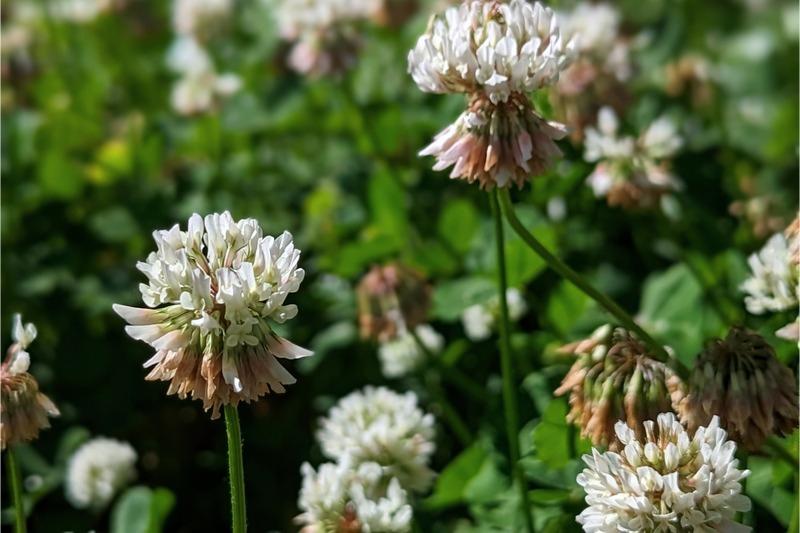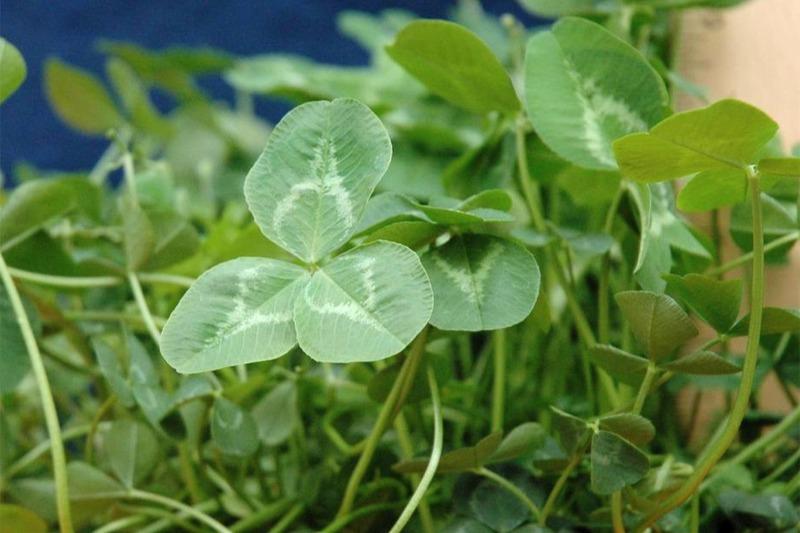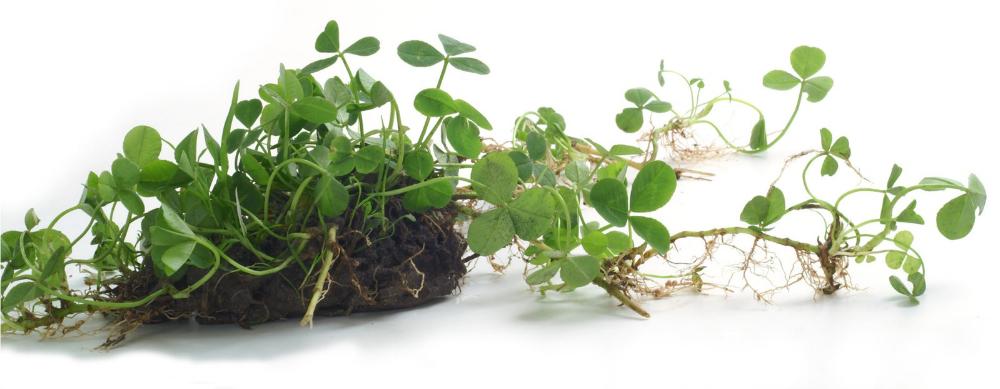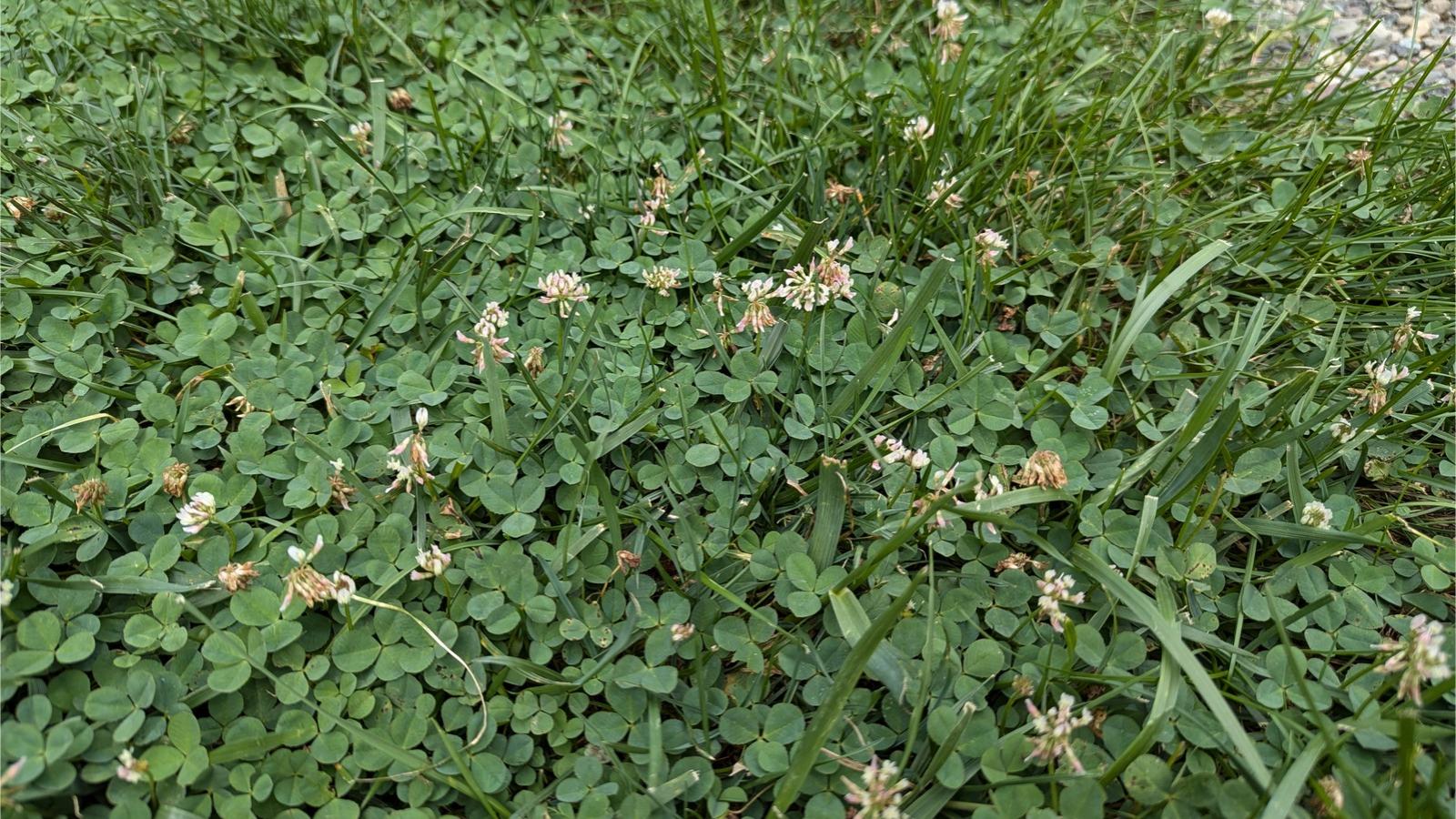
White clover (Trifolium repens), also called Dutch white clover, is a non-native species that is common in lawns (and sometimes also in garden beds, especially those bordered by lawn). Its vigorous growth can overwhelm portions of a lawn and contribute to the decline of the grass if the turf is already struggling from other stresses. Areas of pure clover "lawn" are not ideal because the soil where the clover is growing will be exposed in the winter and vulnerable to erosion and colonization by weed seeds.
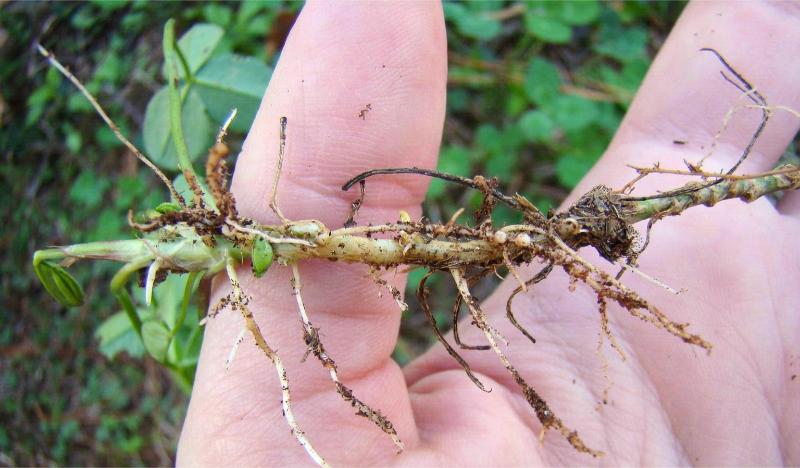
White clover used to be deliberately included in turfgrass seed mixes to provide a natural fertilizer source for the grass. As a nitrogen-fixing legume, white clover houses beneficial bacteria in its roots which absorb nitrogen from the air and convert it to a form that plants can use. When that form of nitrogen is released into the soil, it reduces the need for supplemental fertilizer.
Clover's flowers attract some pollinators, although it is not as supportive to the ecosystem as growing native plants that specialist bees and other species need as a food source.
If clover is already growing in a lawn, its complete eradication is not practical, so you can either tolerate it or try to limit its spread. When clover is deliberately added to a lawn, use "microclover" (dwarf varieties) so it does not compete too aggressively with the grass.