
Carpetweed (Mollugo verticillata) is a non-native species found across Maryland. Its tiny flowers are produced from summer into early autumn.
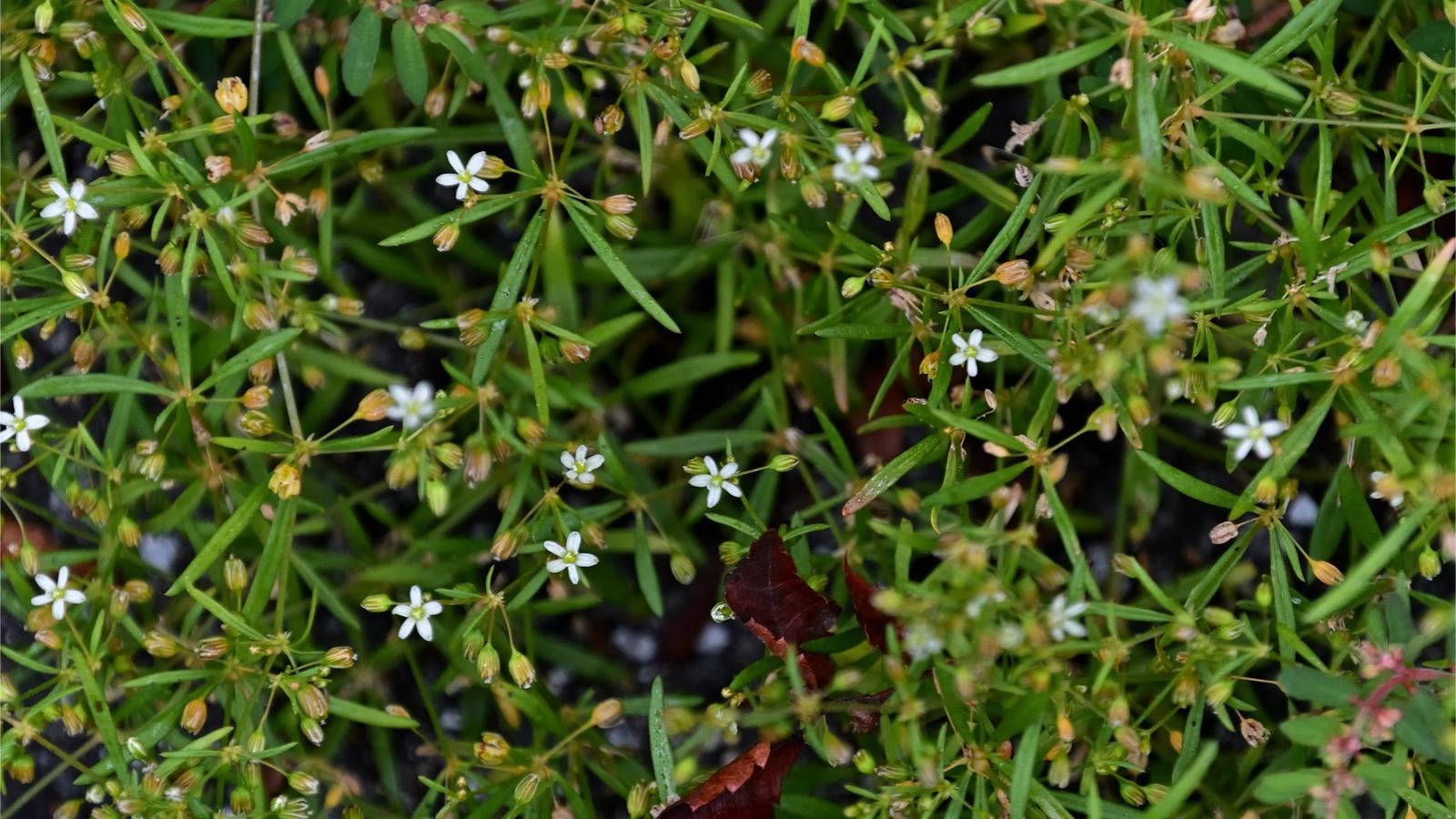
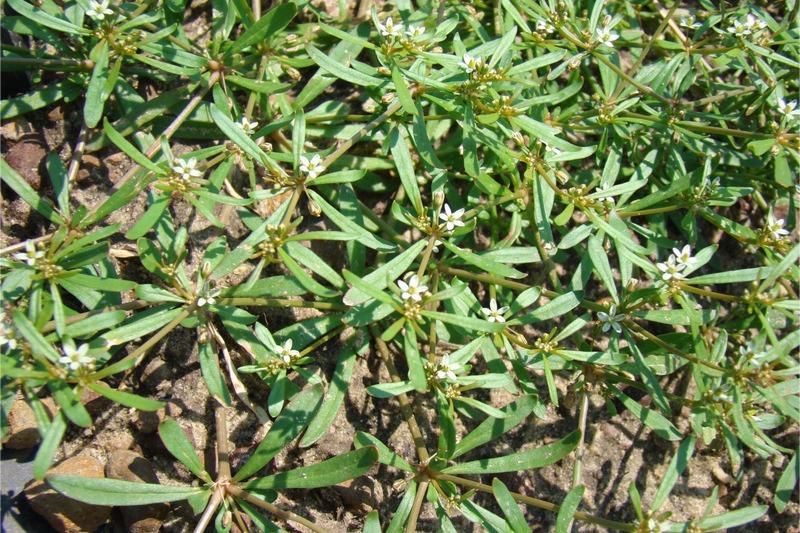
Carpetweed in bloom. Photo via Adobe Stock.
Identification
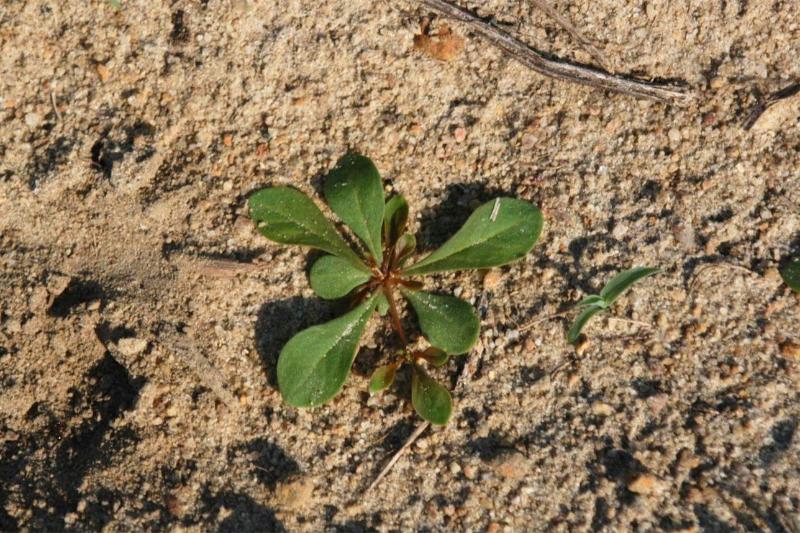
- Growth habit: prostrate, with sprawling stems radiating around the main taproot
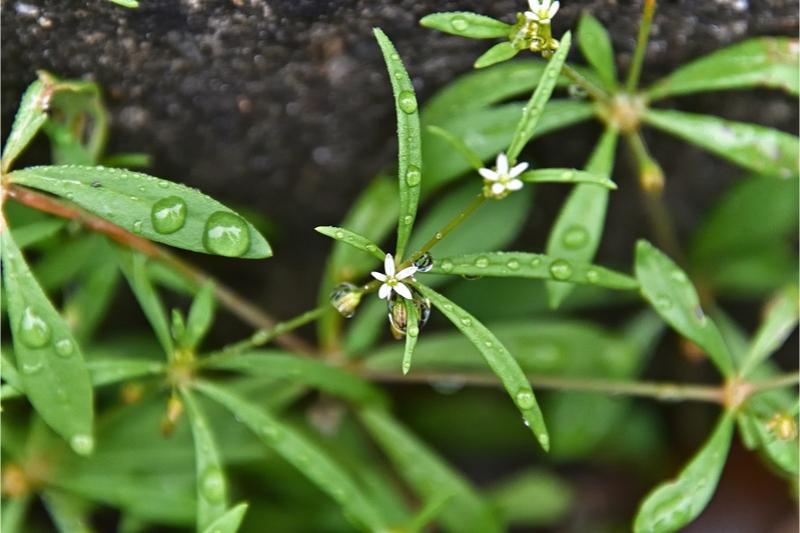
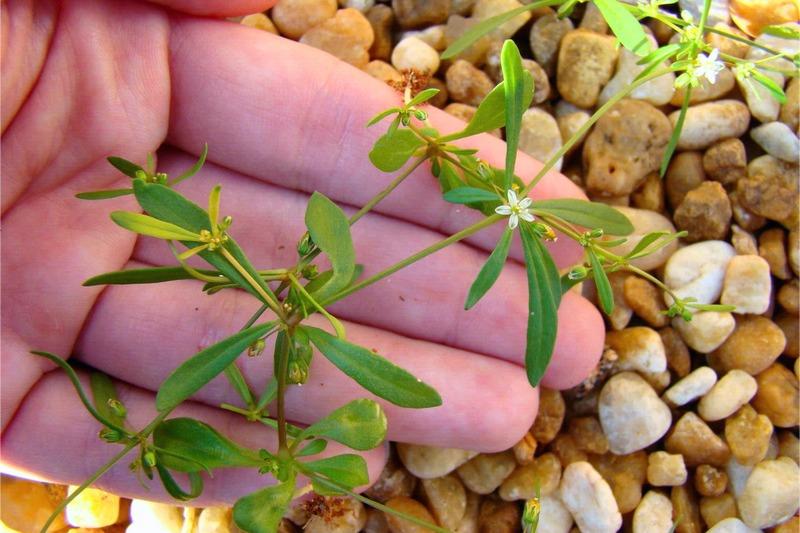
- Flowers: white, star-shaped with 5 petals, less than ¼ inch wide; produced in pairs or small clusters in leaf axils
- Leaves:
- simple, with entire margins (they do not have lobes, serrations, or scallops along their edges)
- smooth-textured, oblong shape
- sessile (stalkless, connected directly to the stem)
- whorled leaf arrangement (3 to 8 leaves per stem node)
- Stems: smooth
Similar species
Bedstraw (Galium) species have whorled, slender leaves and a low-growing habit. However, its leaves are grouped in a minimum of 6 at the nodes (carpetweed can have as few as 3 leaves per node), and the bedstraw stems in cross-section are square, while cut stems of carpetweed are round.
Life cycle and reproduction
Carpetweed is a summer annual: seeds germinate in spring, the plants grow and bloom in summer, and ripen seeds prior to dying by autumn. Annual plants have a one-year life cycle.
This species spreads by seed. Germination can begin later in the growing season than other summer annual weeds and continue into the summer, although seedlings mature quickly.
Conditions that favor growth
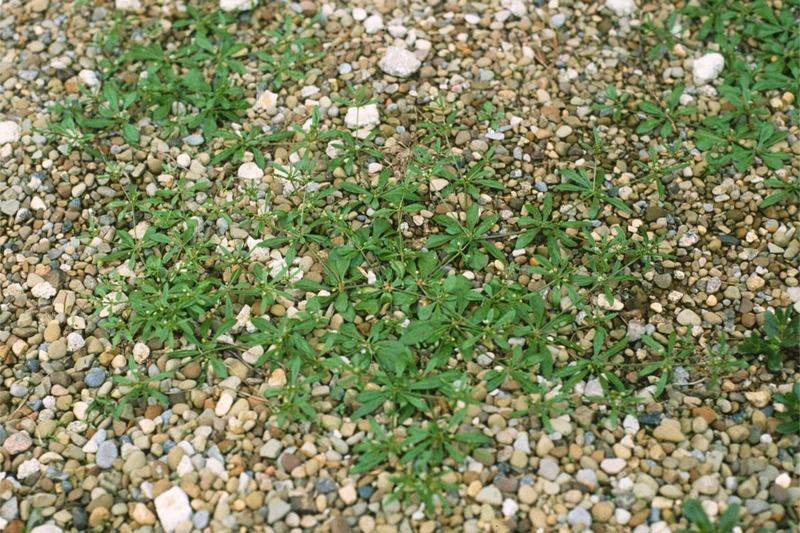
Carpetweed prefers a sunny exposure in moist, rich soil, but can also grow in drier sites with sandy or rocky soils or a gravel mulch.
Carpetweed management in lawns
General lawn care practices that discourage weeds
Maintain healthy, dense turf that can compete with weeds and prevent weed germination and establishment. Fertilize the lawn as recommended (based on season and turf type), mow high, and overseed cool-season lawns each autumn to keep the lawn dense and better able to crowd-out seedling weeds. Core-aerate to reduce soil compaction. Learn about fertilizing, mowing, overseeding, and aeration in the resource: Maintaining an Established Lawn.
Lawn care and maintenance
Mechanical management
Remove carpetweed plants by hand or with a manual weeding tool. Doing this when the soil is moist makes the task easier.
Manage Weeds Without Chemicals
Chemical management
Herbicide use should always be a last resort when managing weeds. Check for any local pesticide restrictions before buying and applying a product. For example, the Montgomery County pesticide law does not allow most synthetic pesticides (which includes herbicides) to be used on lawns. The active ingredient glyphosate is also prohibited on lawns in Baltimore City.
Learn about herbicide classifications and terminology:
Herbicide Options for Managing Common Lawn Weeds
Post-emergent herbicide
Spot-treat individual carpetweed plants or infested areas with a liquid, broadleaf, post-emergent weed killer product applied when the weeds are actively growing. Look for a product with one or more of the following active ingredients: 2, 4-D, MCPP (mecoprop), dicamba, or triclopyr. An application of non-selective herbicide may work, but would also damage any turfgrass exposed to the herbicide.
CAUTION: Do not spray herbicides containing dicamba over the root zone of desirable trees and shrubs. Roots or leaves may absorb this ingredient and be substantially damaged. Refer to the product label for other precautions.
Additional resource
Carpetweed, Mollugo verticillata | University of Wisconsin Extension
Reference
Neal, J.C., Uva, R.H., et. al. (2023). Weeds of the Northeast. (Second edition.) Comstock Publishing Associates.
Still have a question? Contact us at Ask Extension.