
Asparagus Beetles
Veronica Yurchak, University of Maryland Extension, Vegetable Specialist
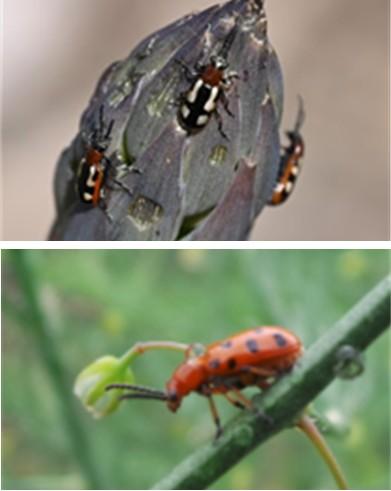
adult spotted asparagus beetle, Photo: (top) V. Yurchak; (bottom) U. Wisconsin
Recent warm temperatures across the state have initiated spring asparagus growth and, with that, the activity of asparagus beetles. Two species of asparagus beetles are found in Maryland: the ‘common asparagus beetle’ (Crioceris asparagi) and the ‘spotted asparagus beetle’ (Crioceris duodecimpunctata). While they share a name and a host plant, their appearances are quite different. Adult common asparagus beetles are about ¼ inch long with metallic blue to black wing covers containing with four white spots and reddish margins (Figure 1, top) while adult spotted asparagus beetles are slightly larger, about 1/3 inch long, and are orange with 12 black spots (Figure 1, bottom).
Pro tip: Don’t let the spots and orange color fool you! While they may resemble lady beetles at first glance, you can distinguish the spotted asparagus beetle by its more elongated, oval body shape compared to the typically rounder silhouette of a lady beetle.
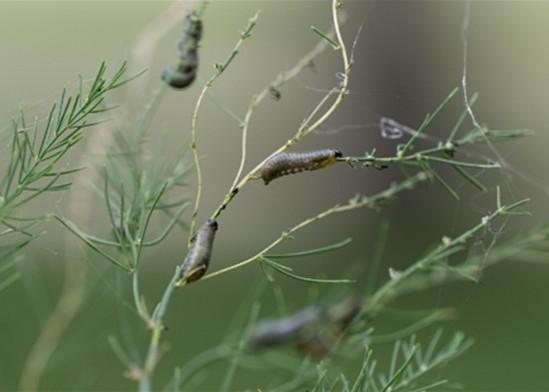
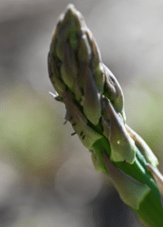
Larvae of both asparagus beetle species are grayish green with black heads and legs (Figure 2). Look for tiny, 1 mm long, oblong eggs. They are shiny, black, and uniquely attached by one end to the asparagus spears (Figure 3). Initial signs of asparagus beetles in Spring include observations of beetles on newly emerged spears, as well as the presence of eggs. The eggs themselves do not cause any damage; however, their presence may be unacceptable for some consumers.
Life Cycle
Asparagus beetles overwinter as adults in plant debris. As temperatures rise in the spring, beetles emerge to feed on new spears and bud tips before depositing their eggs directly onto the crop. Eggs hatch in about one week, depending on temperature. Developing larvae also feed on the spears and ferns (Figure 2). After the larvae mature, they drop to the ground and burrow into the soil to pupate. In five to ten days, they will emerge as adult beetles. There are two generations per year in Maryland.
Cultural and Physical Controls
Harvest spears as early as possible to reduce the likelihood of damage or egg deposition. Beetles are attracted to plants with an abundance of foliage. Leaving a small area unharvested to produce early ferns results in a type of trap-crop where beetles will preferentially gather and lay eggs. Insecticide control can be used target beetles in this area to reduce applications on spears intended for harvest. This method also facilitates the use of products otherwise not feasible due to longer PHIs. Thoroughly remove all plant debris from the garden and surrounding areas after harvest to eliminate beetle overwintering sites.
Biological Control
Nature provides several allies in the fight against asparagus beetles. Tetrastichus asparagi is a tiny parasitic wasp that specifically attacks asparagus beetle eggs. Additionally, several species of lady beetles, as well as some other generalist predators, feed on eggs and small larvae. Keep in mind that most insecticides labeled for use in asparagus are broad spectrum and may reduce the contribution that natural enemies can provide to your pest management.
Chemical Control
Insecticide treatment may be justified when 10% of spears are infested with beetles or when 1-2% have eggs present. Remember that since asparagus spears are harvested almost daily, it is important to use insecticides with minimal residual activity. Be sure to follow the necessary PHI between insecticide application and harvest. Pay special attention to newly planted asparagus beds and consider treating more frequently to promote vigorous establishment.