
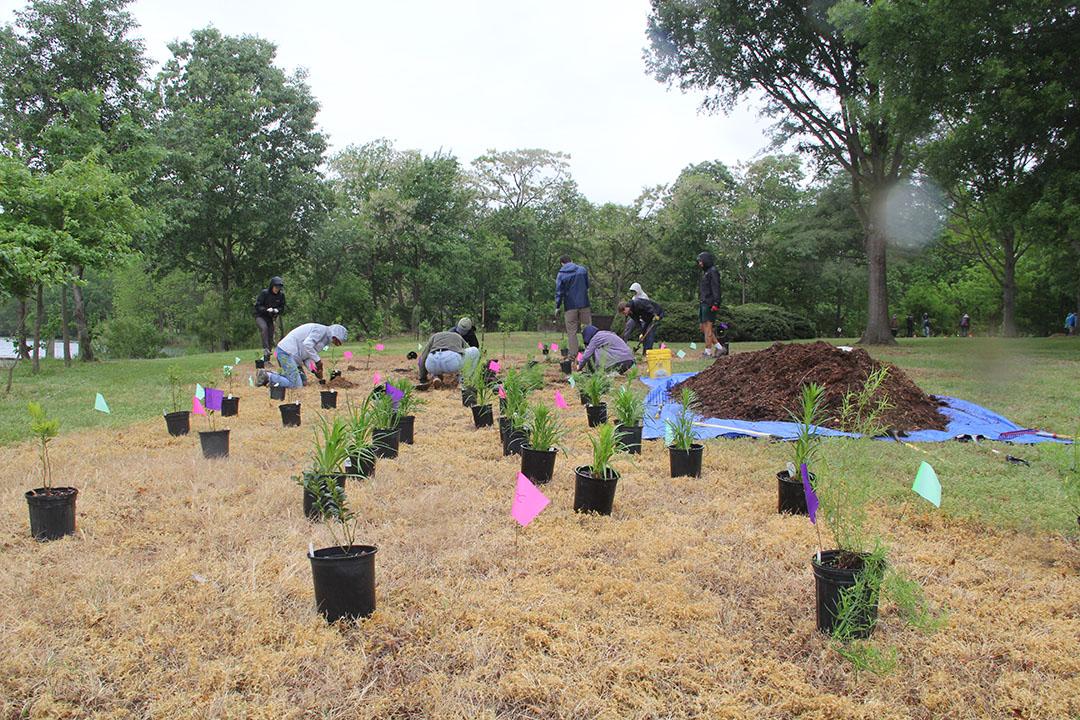
This past May, Chesapeake Conservation and Climate Corps members joined Extension faculty and helped plant two native plant beds at the Wye Research and Education Center as part of a broader demonstration project to educate landowners who live in the “Critical Area,” the 1,000-foot buffer that surrounds tidal portions of the Chesapeake Bay in Maryland. In all, 150 native trees, shrubs, and perennial wildflowers were planted, creating a pollinator-friendly plant bed and a shoreline buffer. Although late spring is not the best time to plant, you take the hand you were dealt and move on.
Now that the surviving plants have established over their first full summer, we have reflected on what strategies we would employ if it were done again; in other words, here is the autopsy on our project:
- Maintenance! Maintenance! Maintenance! - excuses are plentiful (vacation, meetings, out-of-sight out-of-mind, etc.), but undesirable plants or “weeds” as most people call them, got the upper hand. Playing catch-up to control them was not easy and seemed like twice the work. Take-away message: allocate time for regular maintenance.
- Site prep is key - had we prepped the bed earlier with tillage and more weed control, we would have spent less time fighting weeds and had better survival of some plants. Take-away message: prepare the site well in advance of your planting day.
- Question your soils - Web Soil Survey indicated a well-drained soil and a good site for most of the pollinator species on the list, but some areas did not drain and there was standing water. Take-away message: dig a few holes beforehand to identify drainage or soil-quality problems. If you are not familiar with the site, talk to the owner. We later learned that years before, fill-soil had been spread in that area and vehicles may have compacted the soil.
Overall, the shoreline buffer plants did extremely well but the pollinator bed will require some replanting with species that can handle the unique soil situation there.