

FS-2026-0821 | November 2026
Record Keeping for Estate Planning: Protecting Your Financial Legacy
By Troy Anthony Anderson, ED.D., and Miguel Quinones, Ph.D., University of Maryland Extension Educators, Family and Consumer Sciences

Estate planning is the process of arranging the management and disposal of a person’s estate during their life and after death. A crucial component of this process is record-keeping, which involves maintaining organized, accessible documentation related to one’s assets, liabilities, and personal affairs. Estate planning is often misunderstood as something only wealthy individuals need. In reality, estate planning is an essential process for anyone who wishes to protect their assets, provide for loved ones, and ensure their personal and financial wishes are carried out in the event of incapacity or death (Nathanson et al., 2021). A well-designed estate plan provides peace of mind by addressing how property will be managed, how health care decisions will be made, and how financial resources will be transferred to future generations. By incorporating tools such as wills and trusts, beneficiary designations, health care directives, and asset protection strategies, individuals can create a comprehensive framework that safeguards both their family and their legacy.
Tool #1: A Will or a Living Trust
At the very least, everyone ought to have a Last Will and Testament, commonly referred to as a “will.” Even if you are single, a will can ensure that your assets are distributed as you wish. If you are married and have no children, do not assume that your surviving spouse will inherit your estate. Creating a will allows you to specify exactly how you want your assets distributed, potentially avoiding outcomes that state laws would impose. A will ensures your wishes are carried out and can prevent family disputes and confusion during the estate settlement process. An alternative to a will is a revocable living trust.
A living trust is a legal arrangement in which an individual, known as the grantor, transfers ownership of assets into a trust while maintaining full control over those assets during their lifetime (Pareja, 2023). Because the trust is revocable, the grantor can amend, modify, or terminate it at any time. Upon the grantor’s death, the assets held in the trust are managed and distributed by a successor trustee in accordance with the trust’s terms.
Consider a situation in which a family’s parents wish to leave a house to a family member. Consulting an estate planning attorney will help them determine the best approach for their specific situation and decide between a will and a living trust based on their personal circumstances and goals. Larger and more complex estates may benefit more from the streamlined process of a living trust. If privacy and minimizing family disputes are priorities, a living trust could be advantageous. If a family member may need immediate access to the property or other assets, a living trust can facilitate this action. By carefully planning, they can ensure that their assets, including the house, are transferred smoothly and in accordance with their wishes.
Choosing Between a Will and a Living Trust
Parents should consider their personal circumstances and goals when deciding between a will and a living trust:
- Estate Size and Complexity: Larger and more complex estates may benefit more from the streamlined process of a living trust.
- Family Dynamics: If privacy and minimizing family disputes are priorities, a living trust could be advantageous.
- Immediate Access: If a family member may need immediate access to the property or other assets, a living trust can provide a clear structure for managing and accessing those assets when needed.
Importance of a Will, Its Benefits and Summary
Creating a will allows you to clearly state how you want your assets distributed and who you want to receive them. Without a will, the distribution of your assets may be determined by state law rather than by your personal wishes. A will can help provide clarity for your family by identifying your beneficiaries, naming an executor to manage your estate, and documenting your wishes for your property and other assets. It can also help reduce confusion and disagreements among family members during the estate settlement process. When planning what will happen to a home or other significant assets, families may consider whether a will or living trust better fits their circumstances.
Benefits of a Living Trust
Families may consider a living trust when they want additional structure and control over how certain assets are managed and distributed. A living trust provides several advantages over a traditional will:
- Clear Instructions: A living trust allows you to provide specific instructions for managing and distributing your assets.
- Continued Management: A living trust designates a successor trustee to manage the trust’s assets according to your instructions if you become unable to manage them yourself.
- Privacy: A living trust generally keeps the terms of the trust private rather than making them part of a public court record.
- Flexibility and Control: A living trust enables you to establish instructions regarding when and how beneficiaries receive assets, which may be particularly helpful when beneficiaries are minors, have special circumstances, or may need assistance managing an inheritance.
- Planning for the Future: A living trust can be one component of a broader estate plan that helps ensure your property and other assets are managed according to your wishes.
A will and a living trust serve different purposes, and neither is automatically the right choice for every family. The best approach depends on the type and value of your assets, your family circumstances, and how you want your property managed and distributed. The most important step is to put your wishes in writing and keep your estate-planning documents current. An estate-planning attorney or qualified professional can help you determine which tools are appropriate for your circumstances and ensure that your documents work together as intended.
Tool #2: Beneficiary Designations
Retirement accounts represent a significant portion of many individuals’ wealth and require careful consideration within an estate plan. Accounts such as Individual Retirement Accounts (IRAs), 401(k)s, 403(b)s, and pension benefits often pass directly to designated beneficiaries. As a result, beneficiary designations are among the most important aspects of estate planning (Nathanson et al., 2021). Many estate planning mistakes occur when individuals fail to update beneficiaries following major life events such as marriage, divorce, the birth of a child, or the death of a loved one. Because beneficiary designations typically supersede instructions contained in a will, outdated designations can lead to unintended consequences, as a result assets may pass to an ex-spouse or a deceased individual if records are not kept current.
Effective retirement benefit planning also requires consideration of tax implications (Pareja, 2023). Beneficiaries may face income tax obligations when withdrawing inherited retirement funds, and the timing of distributions can significantly impact tax liability. In some situations, trusts may be named as beneficiaries to provide additional control over distributions, particularly when beneficiaries are minors, have special needs, or require assistance with asset management. Coordinating retirement assets with an overall estate plan ensures that these valuable resources are transferred in accordance with the individual’s wishes while minimizing administrative complications.
Tool #3: Health Care Directives
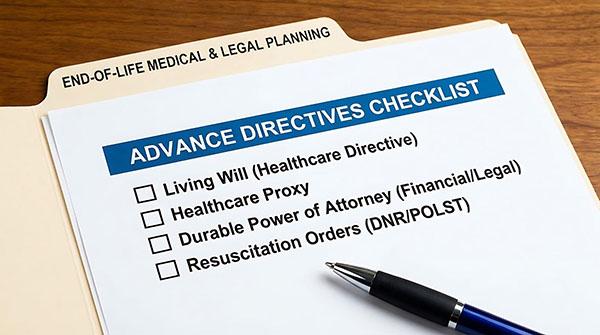
Estate planning extends beyond financial matters and addresses critical health care decisions. Two key documents form the foundation of health care planning: the health care proxy and the advance health care directive.
A health care proxy, sometimes called a medical power of attorney, allows an individual to designate a trusted person to make medical decisions on their behalf if they become unable to communicate or make decisions independently. This document ensures that someone familiar with the individual’s values, beliefs, and preferences can advocate for appropriate medical care during times of incapacity. Shepherd et al. (2021) explain that without a health care proxy, family members may face uncertainty, disagreement, or court intervention when attempting to make important health care decisions on a loved one’s behalf. Selecting a health care agent should involve careful consideration, as this individual may be responsible for making difficult, emotionally challenging decisions regarding treatment options, hospitalization, long-term care, and end-of-life care.
Closely related to the health care proxy is the advance health care directive, often referred to as a living will. This document outlines an individual’s preferences regarding medical treatment under specific circumstances, particularly those involving serious illness, permanent unconsciousness, or end-of-life care. Advance directives may address topics such as life-sustaining treatment, artificial nutrition and hydration, resuscitation efforts, ventilator support, and pain management preferences. By clearly documenting these wishes, individuals reduce uncertainty for loved ones and health care providers while ensuring their values guide future medical decisions. Advance directives also relieve family members from the burden of guessing what their loved one would have wanted during emotionally stressful situations.
Together, health care proxies and advance health care directives create a comprehensive framework for managing health care decisions when individuals are unable to speak for themselves.
Is a Letter of Last Instruction or Five Wishes right for me?
Two additional documents can complement your formal health care directives: Five Wishes and a Letter of Last Instruction.
Five Wishes is a legally binding advance directive (living will) that addresses medical, personal, and spiritual care in the event you become incapacitated. It covers five specific areas: choice of healthcare agent, treatment desires, comfort needs, personal treatment preferences, and messages to loved ones. It is legally valid in most U.S. states and addresses specific life-support scenarios and pain management. A Letter of Last Instruction, by contrast, is a non-legally binding, informal document that provides practical, step-by-step guidance for heirs after you pass away. It covers the location of important documents (such as your will and insurance policies), passwords, a list of assets, funeral and burial requests, and a list of people to notify. While it carries no legal weight, it helps heirs manage affairs quickly and with less confusion. Using both documents, along with a Last Will and Testament, is recommended to ensure all medical and logistical wishes are clearly communicated and covered.
| Feature | Five Wishes | Letter of Last Instruction |
|---|---|---|
| Legality | Is a legal document | Is not |
| Timing | Is for before you pass (incapacity) | Is for after you pass. |
| Content | Is about care | Is about logistics. |
Tool #4: Asset Protection Strategies
Another important component of comprehensive estate planning is asset protection planning. Asset protection involves arranging ownership structures and legal safeguards to protect assets from future creditors, lawsuits, and financial risks (Crandall, 2026). While no strategy can eliminate all risks, proactive planning can significantly reduce potential exposure.
Common asset protection tools include:
- Adequate liability insurance and umbrella insurance policies
- Limited liability companies (LLCs)
- Certain trust arrangements
- Maximizing the protections available for qualified retirement accounts
According to Pineda (2022), many retirement plans receive substantial creditor protection under federal and state laws, making them valuable components of an asset protection strategy. Business owners, professionals, and individuals with substantial assets often benefit from evaluating their risk exposure and implementing protective measures before problems arise.
Asset protection planning is most effective when conducted proactively and ethically. Courts may invalidate transfers made with the intent of hindering, delay, or defraud existing creditors. Therefore, individuals should work with qualified legal and financial professionals to develop strategies that comply with applicable laws while safeguarding their financial future.
Asset protection planning is most effective when conducted proactively and ethically. Courts may invalidate transfers made with the intent of hindering, delay, or defraud existing creditors. Therefore, individuals should work with qualified legal and financial professionals to develop strategies that comply with applicable laws while safeguarding their financial future.
The Role of Probate

One of the most important concepts in estate planning is understanding the probate process. Probate is the legal procedure through which a deceased person’s assets are administered and distributed under court supervision. During probate, Jackson (2024) demonstrates that the court validates the will and, appoints an executor or personal representative. Note that these roles can differ; if a will names multiple executors, the court may appoint only one or may appoint an independent representative entirely when heirs are in conflict. The court then identifies and values assets, pays outstanding debts and taxes, and ultimately distributes the remaining property to beneficiaries.
While probate serves an important legal function, it can be time-consuming, costly, and demoralizing for your survivors. Depending on the complexity of the estate, probate proceedings may take several months or even years to complete. Court fees, attorney costs, and administrative expenses can reduce the value of the estate passed to heirs. Furthermore, because probate records are generally public, family financial matters may become accessible to others. For these reasons, many individuals seek strategies that minimize or avoid probate whenever possible.
Having a living trust can enable your heirs to bypass the probate process entirely. This often results in a more efficient and private transfer of assets to beneficiaries. In addition to avoiding probate, revocable trusts can provide continuity of asset management if the grantor becomes incapacitated. Rather than requiring court-appointed guardianship or conservatorship proceedings, the successor trustee can seamlessly step in to manage financial affairs (McCouch, 2021). Although revocable trusts offer considerable estate-planning and administrative advantages, they are typically not intended as a creditor-protection mechanism during the grantor’s lifetime. Given that the grantor holds control over the trust assets and can often rescind the trust, the assets usually remain accessible to the grantor’s personal creditors. Creditor protection available to beneficiaries following the grantor’s death is contingent upon the trust’s specific provisions and relevant state laws.
Intestate Succession in Maryland
Once the probate process is underway, the next question is: Who receives the assets if there is no will? If you pass away without a valid will in Maryland, your estate is distributed according to the state’s intestate succession laws (McFarlane, 2023). These laws dictate how your assets are allocated among your surviving relatives. Because the process varies from state to state, this is a general overview of how it works in Maryland:
Distribution of Assets, in ascending order:
- Surviving Spouse: If you have children or descendants from you and your surviving spouse, your spouse inherits the first $15,000 of your estate, plus half of the remaining balance. The rest is distributed to your descendants. If you have no surviving descendants, your spouse inherits the first $15,000 plus half of the remaining estate, with the other half going to your parents. If you have no surviving descendants or parents, your spouse inherits everything.
- Children and Descendants: If there is no surviving spouse, your children inherit the entire estate. If a child has predeceased you, their share is divided among their descendants.
- Parents: If you have no surviving spouse or descendants, your parents inherit your estate.
- Siblings and Their Descendants: If you have no surviving spouse, descendants, or parents, your estate is distributed to your siblings or their descendants.
- More Distant Relatives: If none of the above relatives are alive, your estate may go to more distant relatives, such as grandparents, aunts, uncles, or cousins.
- State of Maryland: If no relatives can be found, your estate will escheat to the state.
Ultimately, effective estate planning is about much more than distributing property after death. It is a proactive process that provides financial security, preserves family harmony, protects personal autonomy, and ensures that important decisions are made in accordance with one’s wishes. By understanding the probate process, utilizing revocable trusts when appropriate, coordinating retirement benefits, implementing asset protection strategies, and establishing health care decision-making documents, individuals can create a comprehensive estate plan that addresses both present and future needs. Regular review of estate planning documents is equally important, as changes in family circumstances, financial situations, and laws can affect the effectiveness of an existing plan. Through thoughtful planning and professional guidance, individuals can protect what they have built, support those they care about most, and leave a lasting legacy for future generations.
References
Crandall, T., Joseph, M., & McCoy, M. (2026). Personal finance ethics. In Research Handbook on Personal Finance (pp. 124-144). Edward Elgar Publishing.
Jackson, T. (2024). An Examination of the Probate Process and Alternative Estate Distribution Mechanisms. Available at SSRN 5049911.
McCouch, G. M. (2021). Custodianships, Trusts, and Guardianships. Virginia Tax Review, 40(3), 475-512.
Macfarlane, B. E. (2023). Major Reforms to Probate in Maryland: Modernizing Laws of Intestacy and Establishing Registered Domestic Partnerships. In University of Baltimore Law Forum (Vol. 54, No. 1, p. 2).
Nathanson, M. J., Craig, J. T., Geoghegan, J. A., Lee, N. G., Haber, M. A., Haspel, M. B., & Stelljes, S. R. (2021). Estate Planning and Why It’s Really So Important. In Personal Financial Planning for Executives and Entrepreneurs: The Path to Financial Peace of Mind (pp. 133-156). Cham: Springer International Publishing.
Pareja, S. (2023). The Incapacitated Grantor and the Revocable Trust: Unnecessary Tax Complexity and a Reform Proposal. Tax Lawyer, 76(3), 487- 535.
Pineda, M. D. (2022). Eye on the “Eye” Ball: An Overview of Asset Protection Strategies for Ophthalmologists. International Ophthalmology Clinics, 62(3), 181-191.
Shepherd, V., Sheehan, M., Hood, K., Griffith, R., & Wood, F. (2021). Constructing authentic decisions: proxy decision making for research involving adults who lack capacity to consent. Journal of medical ethics, 47(12), e42-e42.
Appendix A: Record-Keeping Tips
By maintaining organized records, you enhance your estate planning process, ensuring a seamless transition of assets and clarity for your loved ones.
Importance of Keeping Records
Keeping thorough and accurate records is vital for several reasons:
- Legal Compliance: Proper documentation ensures compliance with legal requirements and helps avoid potential disputes.
- Efficient Estate Settlement: Well-organized records facilitate a smoother estate settlement process for executors and beneficiaries.
- Financial Clarity: Records provide a clear picture of one’s financial situation, aiding informed decision-making.
- Tax Purposes: Accurate records are essential for preparing tax returns and defending against audits.
- Family Peace: Organized records can prevent misunderstandings and disputes among family members.
Types of Records to Keep
When planning an estate, it is essential to keep the following records:
- Personal Records: Birth certificates, marriage certificates, social security cards, copy of driver’s license, and passports.
- Legal Documents: Wills, trusts, powers of attorney, and health care directives.
- Financial Records: Bank statements, investment accounts, retirement accounts, and insurance policies.
- Property Records: Deeds, titles, and mortgage information.
- Tax Records: Tax returns and supporting documents.
Specific Records to Keep
Here are some specific records you should prioritize:
- Will and Trust Documents: Ensure they are up to date and reflect your wishes.
- Insurance Policies: Keep updated copies of all insurance policies.
- Medical Directives: Maintain any living wills or health care proxies.
- Beneficiary Designations: Regularly review and update as necessary.
- Loan Documents: Retain until the loan is paid off and for a few years after.
Setting Up a Business Center to Keep Records
Creating a dedicated space for record-keeping can enhance organization and efficiency. Consider setting up a business center in your home or office with:
- Filing Cabinets: Label and categorize files for easy access.
- Secure Digital Systems: Use encrypted cloud services or external hard drives for digital records and ensure that you have informed your beneficiaries or financial/legal team how to gain access.
- Office Supplies: Stock up on essentials like folders, labels, and a shredder for disposing of old documents.
- Paper Shredder: Sensitive documents containing personally identifiable information (PII), financial information, or consumer-report information should be securely destroyed before disposal to reduce the risk of identity theft and unauthorized access. Certain businesses and organizations are legally required to securely dispose of specific types of consumer information, including information covered by the FTC’s Disposal Rule.
Where to Keep Your Records
The location where you store your records is crucial for their safety and accessibility:
- Safe Deposit Box: Ideal for storing important documents that are not needed frequently, such as wills and property deeds.
- Legal Documents: Fireproof safes are suitable for documents you might need to access more frequently, such as powers of attorney.
- Digital Storage: Scanning documents and storing them securely online can offer easy access and protection against physical damage.
- With Trusted Individuals: Consider giving copies of essential documents to trusted family members or a legal advisor.
How Long to Keep Records?
The length of time to retain records varies depending on their type:
- Tax Records: Keep tax records for at least 3 years from the date you filed t he return or 2 years from the date the tax was paid, whichever is later, to cover standard IRS audits and refund claims. However, to be safe, keeping records for 6 - 7 years is recommended for complex situations or to cover longer audit windows.
- Estate Planning Documents: Keep indefinitely, updating as necessary.
- Property Records: Retain as long as you own the property, plus an additional 3 years.
- Financial Statements: Keep for at least 3 to 7 years.
Appendix B: Glossary of Terms
| Terms | Terminology |
| Advanced Health Care Directives | A legal document that lets you explain what medical care you would want if you become too sick or unable to make decisions for yourself. |
| Asset Protection Strategies | Legal methods used to shield assets from creditors, lawsuits, or any other financial risks. These can include trusts, insurance, and ownership structures like LLCs. |
| Beneficiary | An individual or entity designated to receive assets or benefits from a trust, will, or insurance policy. |
| Executor | A person appointed to execute the instructions of a will. They are responsible for managing the estate, paying debts, and distributing assets as specified in the will. |
| Five Wishes | A simple, easy-to-understand document that helps you explain what you want to happen if you become seriously ill or unable to speak for yourself. |
| Grantor | The person who creates a trust and transfers their assets into it. They retain control over the trust during their lifetime when it is a revocable trust. |
| Health Care Proxy (Medical Power of Attorney) | This is a legal document that lets you choose someone you trust to make medical decisions for you if you cannot make or communicate those decisions yourself. |
| Intestate Succession | The legal process that determines how a deceased person’s estate is distributed when they die without a will, according to state laws. |
| Limited Liability Company (LLC) | A business structure that offers limited liability protection to its owners, separating personal assets from business liabilities. |
| Probate | The legal process of making sure the person's debts and taxes is handled, and their remaining property is transferred to the people or organizations entitled to receive it. |
| Retirement Accounts (such as Individual Retirement Accounts (IRA), 401k’s and 403b’s) | Special accounts designed to help you save money for your future after you stop working. They often provide tax advantages, meaning you may pay less tax now or later, depending on the type of account. |
| Revocable Living Trust | A legal document that lets you put certain assets, such as your home, bank accounts, or investments, into a trust while you are still alive and specify who will manage those assets and who will receive them later. |
| Successor Trustee | A person or entity named to manage a trust after the original trustee (often the grantor) is no longer able or has passed away. |
TROY ANTHONY ANDERSON, ED.D
tanders4@umd.edu
MIGUEL QUINONES, PH.D
quinones@umd.edu
This publication, Record Keeping for Estate Planning: Protecting Your Financial Legacy (FS-2026-0821), is a part of a collection produced by the University of Maryland Extension within the College of Agriculture and Natural Resources.
The information presented has met UME peer-review standards, including internal and external technical review. For help accessing this or any UME publication contact: itaccessibility@umd.edu
For more information on this and other topics, visit the University of Maryland Extension website at extension.umd.edu
University programs, activities, and facilities are available to all without regard to race, color, sex, gender identity or expression, sexual orientation, marital status, age, national origin, political affiliation, physical or mental disability, religion, protected veteran status, genetic information, personal appearance, or any other legally protected class.
When citing this publication, please use the suggested format:
Anderson, T. A. & Quinones, M. (2026). Record Keeping for Estate Planning: Protecting Your Financial Legacy (FS-2026-0821). University of Maryland Extension. go.umd.edu/FS-2026-0821.