
Two species of non-native plantain are common weeds in developed landscapes across Maryland: common or broadleaf plantain (Plantago major) and narrow-leaved or buckhorn plantain (Plantago lanceolata).

Broadleaf plantain. Photo: Betty Marose
Identification
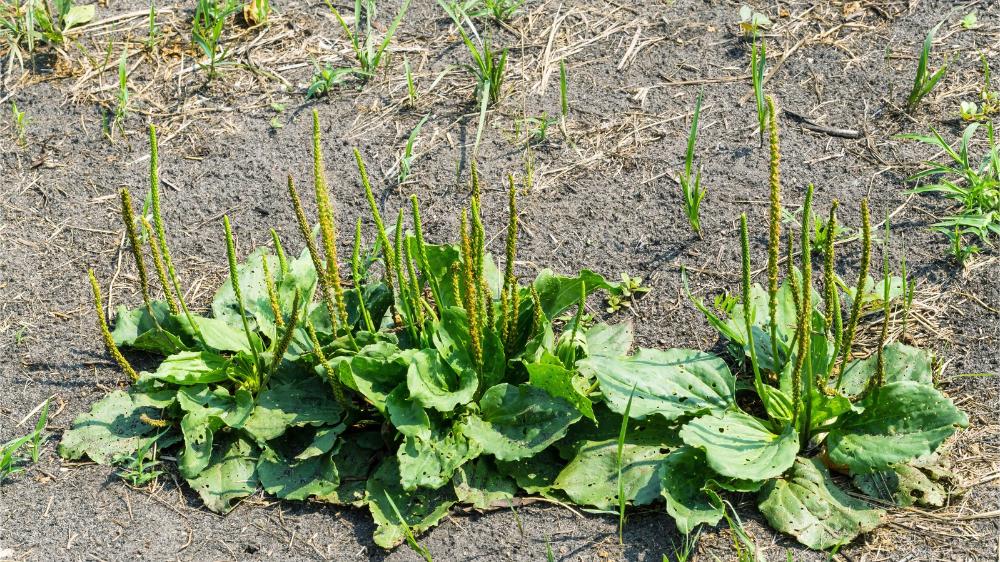
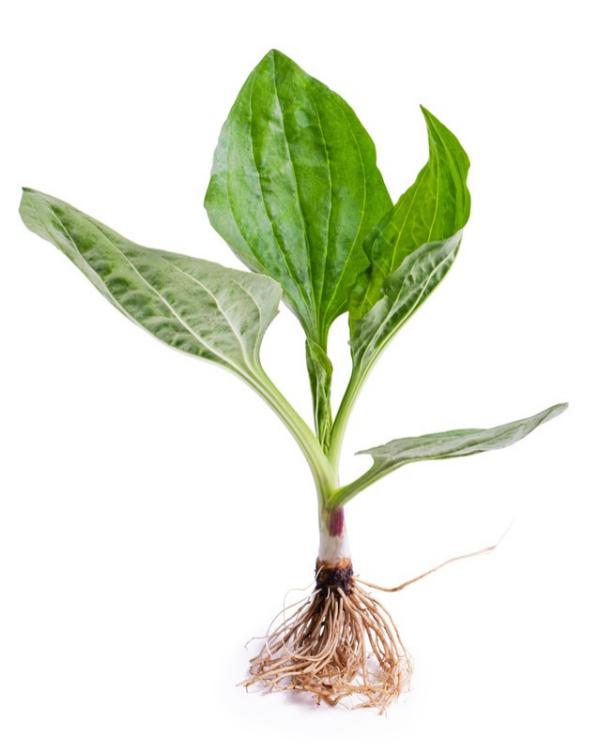
Broadleaf (common) plantain
- Growth habit: clump-forming, with a basal rosette and short taproot
- Flowers: individual blooms are miniscule, with white petals; flowers are clustered on a tan-green colored, upright, leafless cylindrical stalk up to 1 foot tall
- Leaves: oval in shape, with 3 to 5 prominent and somewhat parallel veins; wavy edges on older leaves
- smooth and waxy-textured or subtly hairy
- thick petiole (leaf stalk) that can have a reddish tinge at its base
- evergreen in mild winter weather
- alternate leaf arrangement, although this trait is hard to see since the stem is very short
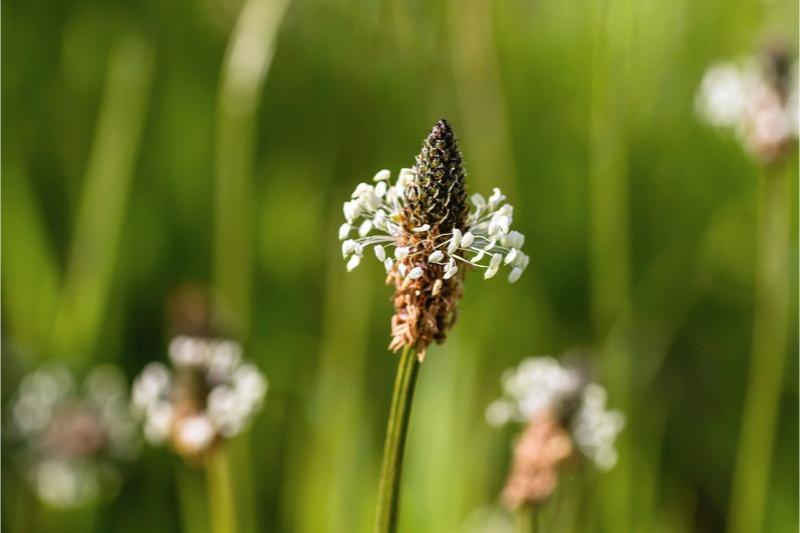
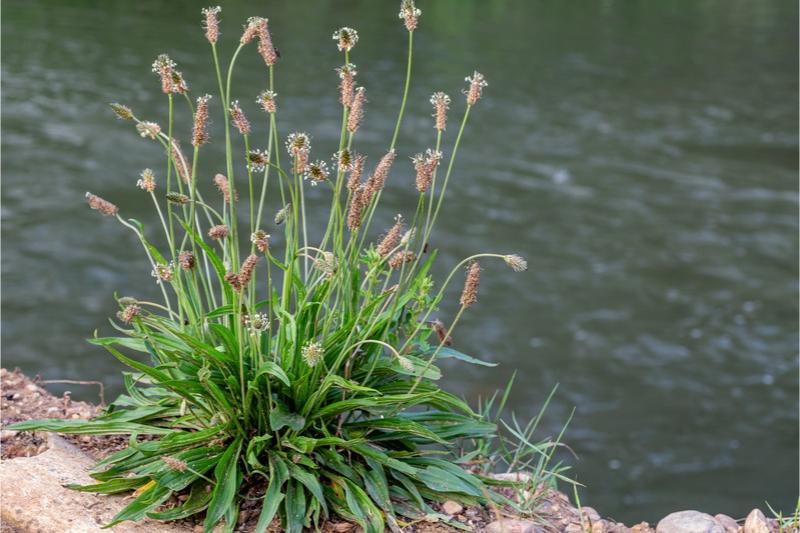
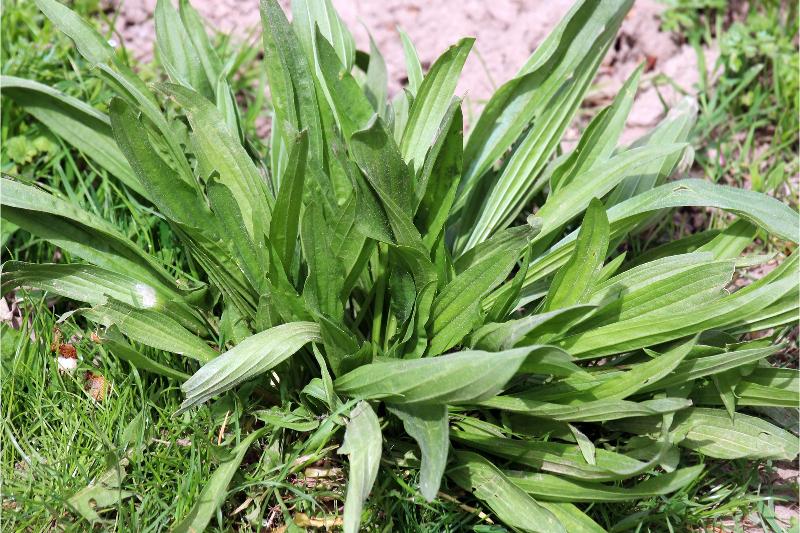
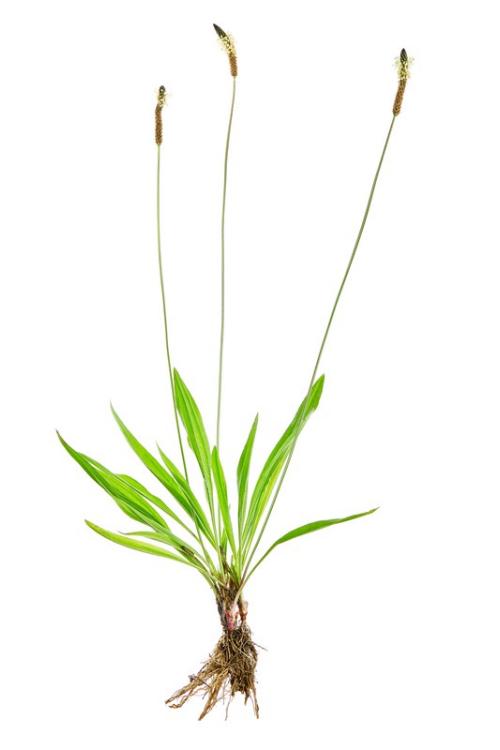
Narrowleaf (buckhorn) plantain
- Growth habit: clump-forming, with a basal rosette and short, thick caudex (similar to a taproot)
- Flowers: individual blooms are miniscule; white flowers are produced in a cylindrical or cone-shaped cluster on top of a slender, upright, leafless stalk less than 1 foot tall
- Leaves: lanceolate in shape (much longer than wide), with 3 to 5 prominent and nearly-parallel veins
- entire (smooth) margins or may have subtle teeth
- typically smooth, although may have long hairs at the base
- leaf position can be somewhat upright or lay more flat
- evergreen rosette
Common (broadleaf) plantain images
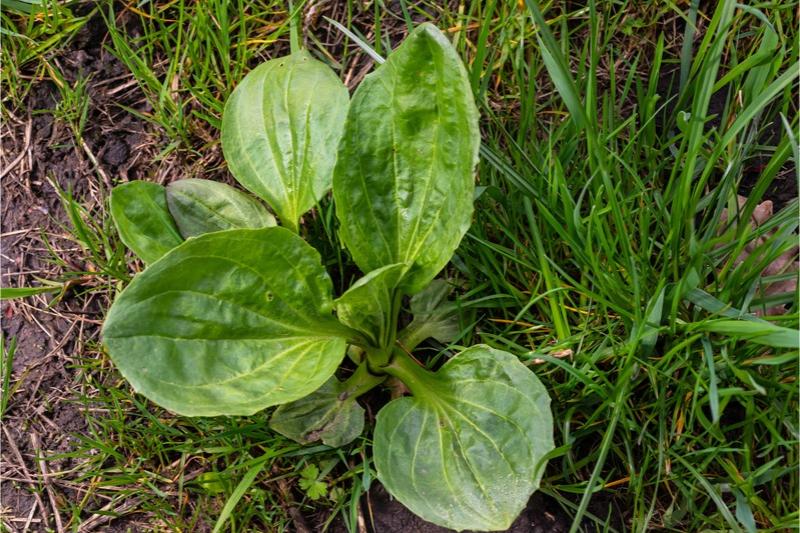
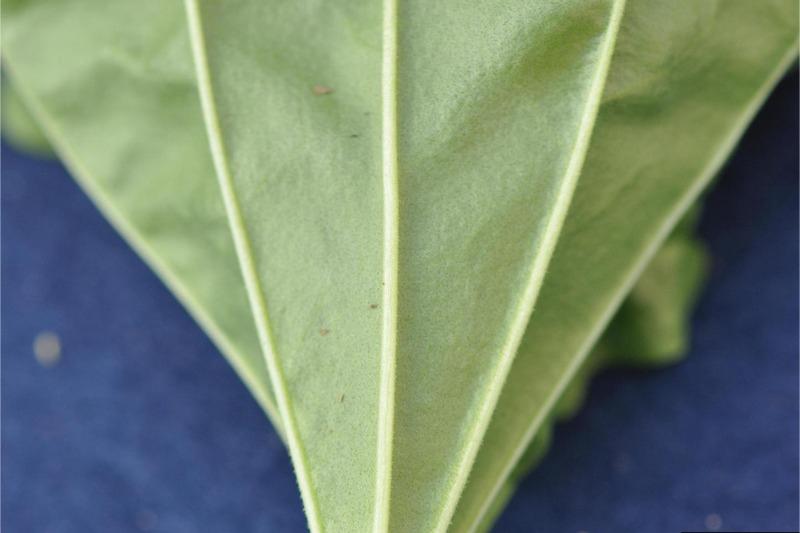
Photo: Bruce Ackley, The Ohio State University, Bugwood.org
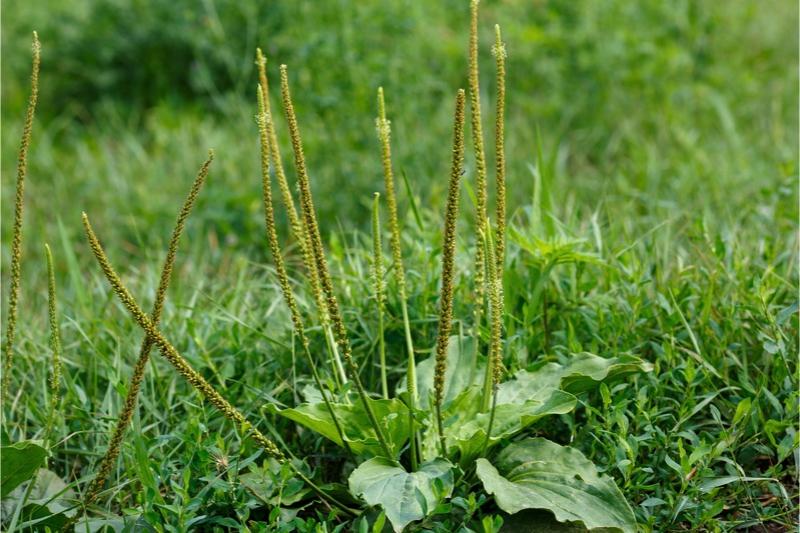
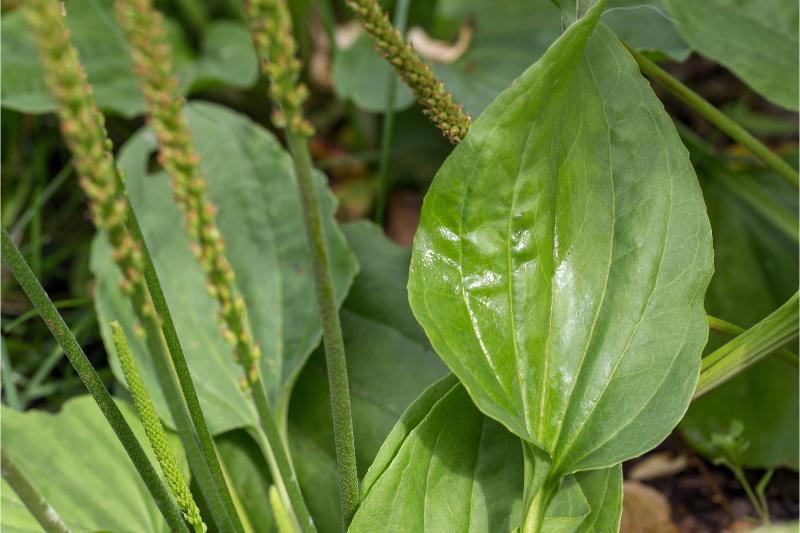
Photo via Adobe Stock.
Narrow-leaved (buckhorn) plantain images
Similar species
Blackseed plantain (Plantago rugelii), also called American plantain, is native in Maryland and similar to common plantain in its appearance and soil preferences. It is best distinguished by nuanced differences in the flower stem's bract shape and how the mature seed capsules split open, which may require magnification to see. Compared to common plantain, the leaves of blackseed plantain can be more tapered in shape, have a lighter green color and a less of a waxy texture, and a petiole (leaf stalk) that is more slender with a more reddish- or purplish-pigmented base.
Life cycle and reproduction
Plantains are perennial: they live for several years. Narrow-leaved plantain can flower almost any time during the growing season, with peak bloom typically in May and June. Common plantain has a similar flowering time frame, but might peak in July.
Both species spread by seed. Seeds disperse by attaching to passing people and animals (they get sticky when wet) so they can be carried to another location.
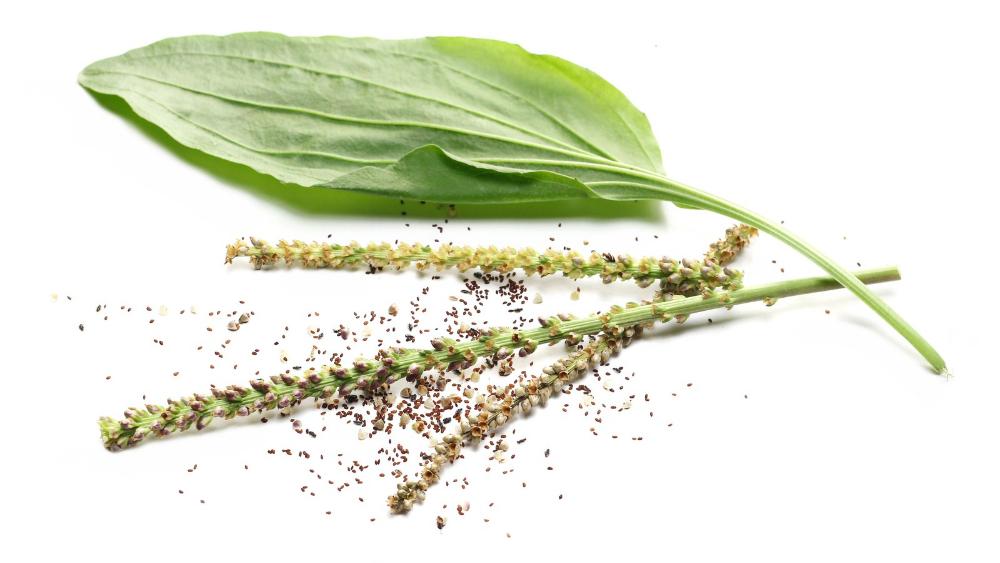
Common plantain seeds primarily germinate around late spring and early summer, but could also sprout in early autumn. Dormant seeds can remain viable in the soil for decades.
Narrow-leaved plantain seeds germinate in spring or early autumn, and young plants are capable of flowering their first year. Since seeds can germinate reduced limited light exposure, the species can colonize dense lawns where other weeds tend to get out-competed by the lush grass.
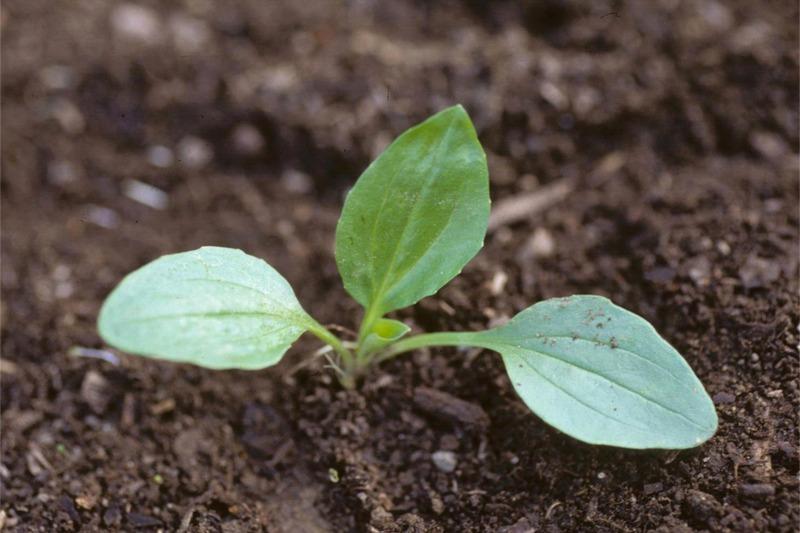
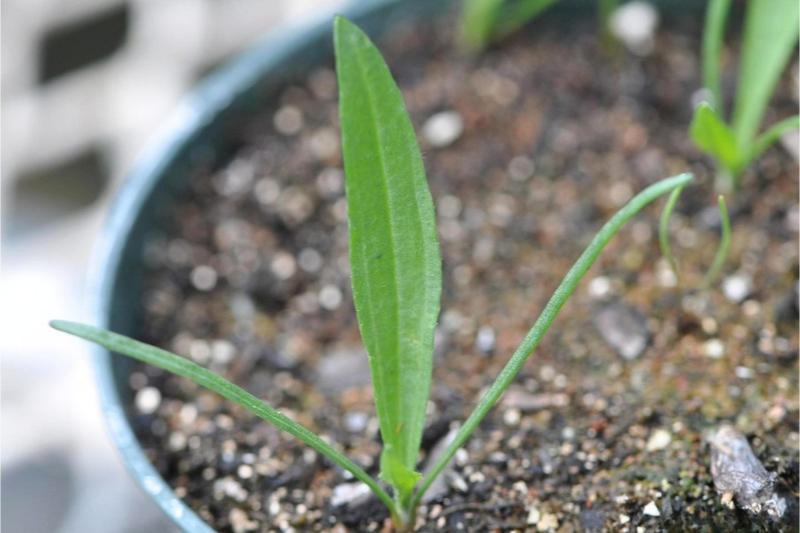
Photo: Bruce Ackley, The Ohio State University, Bugwood.org
Conditions that favor growth
Narrow-leaved plantains grow well in dry, compacted soil, and can thrive in lawns with low soil nutrient levels. They tolerate low mowing, but don't fare as well with heavy foot traffic.
Common plantain prefers soils that remain more evenly moist and have ample nutrients, although it tolerates both drought and wetter conditions, along with compacted soil.
Plantain management in lawns
General lawn care practices that discourage weeds
Maintain healthy, dense turf that can compete with weeds and prevent weed germination and establishment. Fertilize the lawn as recommended (based on season and turf type), mow high, and overseed cool-season lawns each autumn to keep the lawn dense and better able to crowd-out seedling weeds. Core-aerate to reduce soil compaction. Learn about fertilizing, mowing, overseeding, and aeration in the resource: Maintaining an Established Lawn.
Mechanical management
Remove plantain by hand or with a manual weeding tool. Doing this when the soil is moist makes the task easier. Pulling up or digging out individual plants is a viable option at the beginning of an infestation (when the plants are not yet abundant) and for young plantain plants.
Manage Weeds Without Chemicals
Chemical management
Herbicide use should always be a last resort when managing weeds. Check for any local pesticide restrictions before buying and applying a product. For example, the Montgomery County pesticide law does not allow most synthetic pesticides (which includes herbicides) to be used on lawns. The active ingredient glyphosate is also prohibited on lawns in Baltimore City.
Learn about herbicide classifications and terminology:
Herbicide Options for Managing Common Lawn Weeds
Post-emergent herbicide
Spot-treat individual plantain plants or infested areas with a liquid broadleaf herbicide; autumn applications may work best. Look for a product with one or more of the following active ingredients: 2, 4-D, MCPP (mecoprop), dicamba, or triclopyr. An application of non-selective herbicide may work, but would also damage any turfgrass exposed to the herbicide.
CAUTION: Do not spray herbicides containing dicamba over the root zone of desirable trees and shrubs. Roots or leaves may absorb this ingredient and be substantially damaged. Refer to the product label for other precautions.
References
Neal, J.C., Uva, R.H., et. al. (2023). Weeds of the Northeast. (Second edition.) Comstock Publishing Associates.
Royer, F., and Dickinson, R. (1999). Weeds of the Northern U.S. and Canada. The University of Alberta Press.
Still have a question? Contact us at Ask Extension.