

FS-2020-0565 | January 2026
A Multi-Programmatic Approach to Extension Programming
By Ashley Travis, University of Maryland Extension, 4-H Youth Development; Navonne Owen, University of Maryland Extension, 4-H Youth Development; Jesse Ketterman, University of Maryland Extension, Family and Consumer Sciences
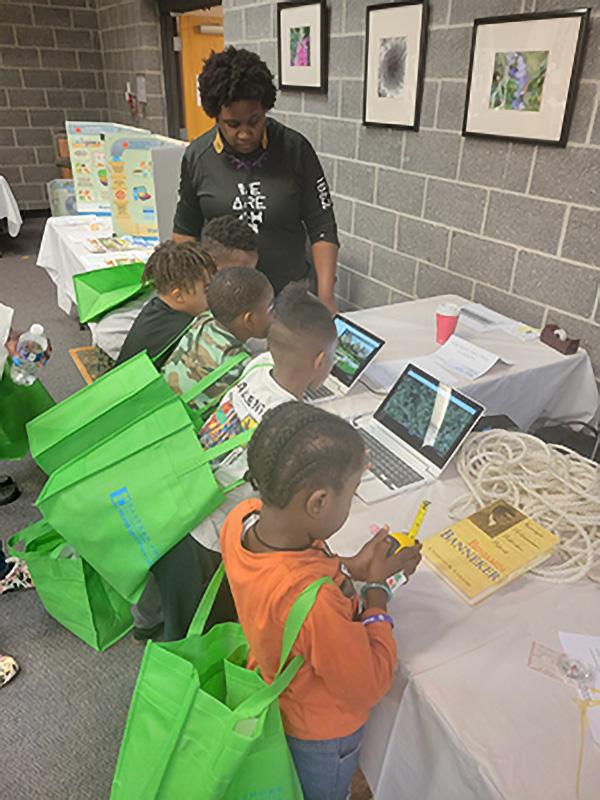
While all universities in the United States engage in research and teaching, more than 100 land-grant colleges and universities have a third, critical mission — Extension. “Through Extension, land-grant colleges and universities bring vital, practical information to agricultural producers, small business owners, consumers, families, and young people” (United States Department of Agriculture, National Institute of Food and Agriculture, n.d.).
Extension provides non-formal educational programming to people throughout the country — rural, suburban, and urban communities. One mission of Extension is to take knowledge gained through research and education and bring it directly to the people to create positive change. Through Extension, land-grant institutions reach out to offer their resources to address public needs. Extension faculty and staff address these needs through planning, conducting, and evaluating innovative programs.
Extension educators have the opportunity to work with other university researchers and educators to enhance their programming. A multi-programmatic approach, which brings together expertise from across various program areas, can help create successful, impactful, and sustainable programs.
How the Multi-Programmatic Approach Can Lead to More Effective Programming
Extension personnel often work independently to plan and facilitate a variety of programs, especially for programming in their respective area of expertise (e.g., Agriculture and Natural Resources, Family and Consumer Science, or Youth Development) and in their county or cluster. Many do not consider the possibilities of multi-programmatic collaborations and partnerships within their own offices or units.
Faculty and staff might be unsure of where to start, who to consider for collaboration, what the benefits would be, and what collaborators would bring to the program or project.
A multi-programmatic approach is one way to address public needs and better serve the intended audience. This collaborative programmatic model can easily be incorporated into any existing or new Extension program.
The multi-programmatic approach has a variety of benefits:
- Extension faculty and staff can utilize personnel that are experts in their field of study. This will ensure that the audience is receiving the most accurate and relevant information and will save other personnel the time and resources involved in researching and learning a new topic.
- Utilizing a team approach is a great time management strategy for everyone involved, especially the program coordinator. This structure can also break large and/or long running programs into smaller and more manageable parts. For example, an all-day youth field trip program can be broken into five, thirty-minute rotations, where each rotation is taught by a different Educator.
- Collaborating may lead to additional resources (supplies, funding, etc.) becoming available.
- A multi-programmatic team approach can enhance brainstorming and idea development as additional personnel bring new ideas to the table from different programmatic perspectives.
- As the program continues to develop, additional programmatic partners can provide variation in goal and objective setting. Discussions around setting goals and objectives will include multiple viewpoints and increased input.
- Multi-programmatic approaches to programming can lead to reaching larger, and more diverse audiences. Each programmatic area recruits program participants in different ways and to different audiences within the community. Each expert brings community contacts, thereby expanding programmatic advertising and marketing opportunities and reaching a wider audience.
Challenges and Solutions to the Multi-Programmatic Approach
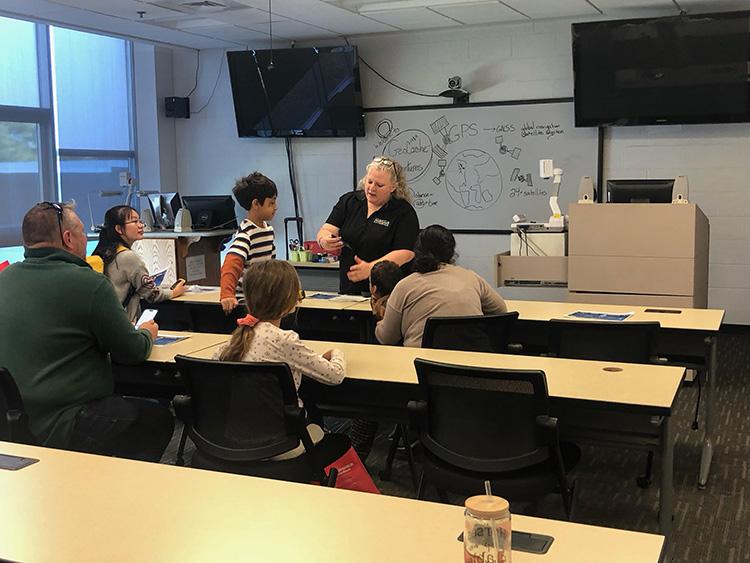
As with any program model, the multi-programmatic approach to programming presents challenges to those involved. However, diligent planning and teamwork can mediate the following challenges.
- The Multi-Programmatic Approach enlists the collaboration of many Extension personnel that all have very busy and varying schedules. Setting meeting dates and times can be challenging when coordinating with multiple people.
- Many websites and software applications enable the team leader to offer multiple dates and times through a survey poll. Team members are given multiple dates and times, and they select which suits their schedules. The team leader can then select the date and time that is the most popular among team members for the meeting.
- It is best to set meeting dates well in advance in order to get on people’s calendars before they become too busy. This also helps to ensure that team meetings are prioritized.
- Some teams find that scheduling on a consistent timeline (for example, the first and third Monday of the month at 9:00 am) helps to ensure that people will be available for the meeting.
- Many calendar applications enable the team leader to create a shared calendar event and then add other team members to the event. This ensures that the meeting date and time are written on team members’ calendars.
- As with any project, the more people who contribute to the project, the more ideas that will be generated. Typically, this is a benefit of working in teams, but multiple ideas can also lead to differences in opinions.
- The primary organizer(s) of the program should have a starting point that includes clear goals and objectives of the program.
- Team members need to remember that collaboration is all about “give and take.” Compromise is the key when working with multiple people.
- Everyone plans, organizes, and programs differently. It is important to remember this and to be respectful and inclusive of all ideas.
Above all, transparency and communication are essential to building and sustaining successful teams.
How to Identify Team Members
Identifying who to invite can be a difficult task. As the team leader, begin by thinking about your strengths and weaknesses. One of the benefits of a multidisciplinary team is bringing together the strengths from several disciplines, therefore filling the gaps in your own experience. The goal when creating a series of programs is to recruit the most qualified individuals.
Let’s use budgeting as an example. 4-H youth organizations are responsible for creating a budget. Consider inviting a Family and Consumer Sciences Educator with an emphasis on finance to teach budgeting during your programming.
Once the appropriate disciplines have been identified, consider the best individuals to fulfill team roles. Three important attributes to look for in an individual are communication, collaboration, and motivation. Communication within a team is an important element of success. This begins with the sharing of ideas all the way through the execution of the activity. Without communication, it can be difficult for teams to move forward. Team members should also have a collaborative spirit. Collaboration will bring together the strengths of team members. Motivation moves the project forward. Team members should be eager about the project and about accomplishing individual and team goals. Teams with individuals who communicate and collaborate well and are motivated achieve positive results.
How to Build a Strong Team
Strong teams are built and sustained on strong foundations. Team leaders should consider the following steps to assemble a successful team.
- Be thorough when selecting team members. This will greatly benefit the entire team and will ultimately support the sustainability of the program into the future.
- Ensure all team members understand their role and their responsibilities.
- Ensure team members are committed to the team.
- Ensure communication is frequent and clear. Communication also shows team members that you value them. Be transparent so the entire team understands decisions even if all information doesn’t directly pertain to everyone.
- Set goals and objectives, and develop logic models that all team members value. Goals should be short and long term. Within Extension it may also be helpful to develop a logic model working backwards from the impacts to the inputs.
- Celebrate successes and work on challenges. The team should not only celebrate large milestones, but also small accomplishments as both assist with moving a program towards success. Team members should discuss any challenges and should view them as constant learning experiences.
- Remember: Teams work because they “create an environment where together they can contribute far more than as individuals” (Tarricone & Luca, 2002).
Multi-Programmatic Extension Program Examples
Extension staff have used this multi-programmatic Extension program approach to create successful collaborations, and to develop impactful and sustainable programs. Two such programs are the 4-H Entrepreneurship Program and the Eastern Shore STEM Festival.
4-H Entrepreneurship Program
The 4-H Entrepreneurship Program is a collaborative, multi-programmatic program that enlists faculty from 4-H Youth Development, Family and Consumer Sciences, Agriculture, and specialists from the local Research and Education Center. This program is designed to teach youth how to write and implement a business plan, keep diligent records of income, expenses, and inventory, how to understand loans, write and implement a marketing plan, and strategically market products to customers. Youth are also exposed to career opportunities throughout the duration of the program. Youth plan their own small business around specific products that they then market and sell. For example, during the program’s first year, youth prepared sheep hides from the Western Maryland Research and Education Center lamb study for tanning and selling.
The program is headed by a 4-H Educator and Family and Consumer Sciences Educator, but enlists the assistance and knowledge of the state Sheep and Goat Specialist, state Agriculture Marketing Specialist, and local Agricultural educator. The 4-H Educator recruits, coordinates, and serves as the direct contact for participants in the program, and teaches various topics, including the orientation material. The 4-H Educator also coordinates all aspects of processing the final products that the youth will sell. The Family and Consumer Sciences Educator teaches the second part of each youth lesson session that includes the topics of entrepreneurship, building a business plan, and personal finance. The Family and Consumer Science Educator also coordinates all parts of the software that the youth use to create their business plan. The Agriculture Educator and specialists from the Western Maryland Research and Education Center serve as guest speakers during the first part of the lesson sessions and teach specific topics including careers in agriculture, budgeting and record keeping, and creating a marketing plan.
The 4-H Entrepreneurship Program was introduced in 2019. The program reached and impacted many youth representing six Maryland counties and four states in its first two years of programming. Youth exposed to entrepreneurship also gain skills in collaboration, creativity, innovation, goal setting, and productivity. The Entrepreneurship Program allows youth to gain these life skills that will ultimately benefit them in their adult lives as they pursue college, careers, and the workforce. The success of this program is a direct result of the collaborative partnerships among multiple program areas. The specialists and other Educators that assist with the lesson sessions are experts in their fields and greatly contribute to the knowledge gained by participants. Through this multi-programmatic approach, educators secured additional funding, increased brainstorming power, and shared the workload.
Eastern Shore STEM Festival The Eastern Shore STEM (Science, Technology, Engineering, and Math) Festival is a collaborative effort of 4-H Youth Development, Family and Consumer Sciences, Agriculture, and Master Gardener faculty and staff. The group works together to plan and conduct this yearly program to provide a science, technology, engineering, and math learning experience for rural youth. Youth are engaged in experiential learning through hands-on activity and self-guided learning stations, and youth connect with STEM professionals to improve career connections.
Each Extension program faculty and staff member brings their area of expertise to the planning process. 4-H Youth Development professionals provide youth ages and stages information for program planning, STEM programming knowledge, curricula, and resource materials, as well as grant/donor funds and 4-H teen leaders and adult volunteers to help with the event.
The Family and Consumer Sciences professional provides knowledge, skills, materials, and professional career connections in the area of financial literacy, which helps strengthen the mathematics component of STEM. In addition, they provide connections, ideas, and resources to reach the whole family unit.
The Agriculture and Master Gardener professional shares local agricultural career connections along with research-based STEM practices and ideas. This includes bringing faculty from the local Extension Research and Education Center to the planning team.
The Eastern Shore STEM Festival has reached and impacted many youth and families since 2017. The multi-programmatic approach employed by the team has led directly to the success of the program. The multi-programmatic team provides various areas of knowledge and skills, additional resources and financial support, innovative and creative ideas, a shared workload, and an improved program reach to more diverse audiences.
Summary
In keeping with the mission of the land-grant University system, a multi-programmatic approach to Extension programming not only provides Extension faculty and staff with added benefits, but ultimately improves programming for participants. This approach may present some challenges, but the benefits to all involved ensure a successful and sustainable program. Many such multi-programmatic Extension programs have been sustained for decades and are reaching larger and more diverse audiences than ever before because of this approach.
References
Tarricone, P. & Luca, J. (2002). Successful teamwork: A case study. In Quality Conversations, Proceedings of the 25th HERDSA Annual Conference (p. 641). Perth, Western Australia: Higher Education Research and Development Society of Australasia, Inc. https://ro.ecu.edu.au/cgi/viewcontent.cgi?article=5007&context=ecuworks.
United States Department of Agriculture, National Institute of Food and Agriculture. (n.d.). Extension. https://nifa.usda.gov/extension.
ASHLEY TRAVIS
ashley90@umd.edu
NAVONNE OWEN
nowen@umd.edu
JESSE KETTERMAN
jketterm@umd.edu
This publication, A Multi-Programmatic Approach to Extension Programming (FS-2020-0565), is a part of a collection produced by the University of Maryland Extension within the College of Agriculture and Natural Resources.
The information presented has met UME peer-review standards, including internal and external technical review. For help accessing this or any UME publication contact: itaccessibility@umd.edu
For more information on this and other topics, visit the University of Maryland Extension website at extension.umd.edu
University programs, activities, and facilities are available to all without regard to race, color, sex, gender identity or expression, sexual orientation, marital status, age, national origin, political affiliation, physical or mental disability, religion, protected veteran status, genetic information, personal appearance, or any other legally protected class.
When citing this publication, please use the suggested format:
Travis, A., Owen, N., & Ketterman, J. (2026). A Multi-Programmatic Approach to Extension Programming (FS-2020-0565). University of Maryland Extension. go.umd.edu/FS-2020-0565.