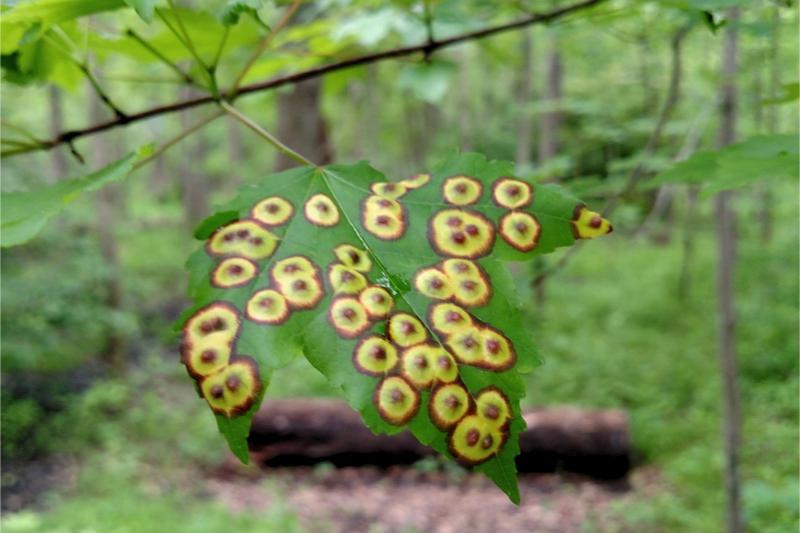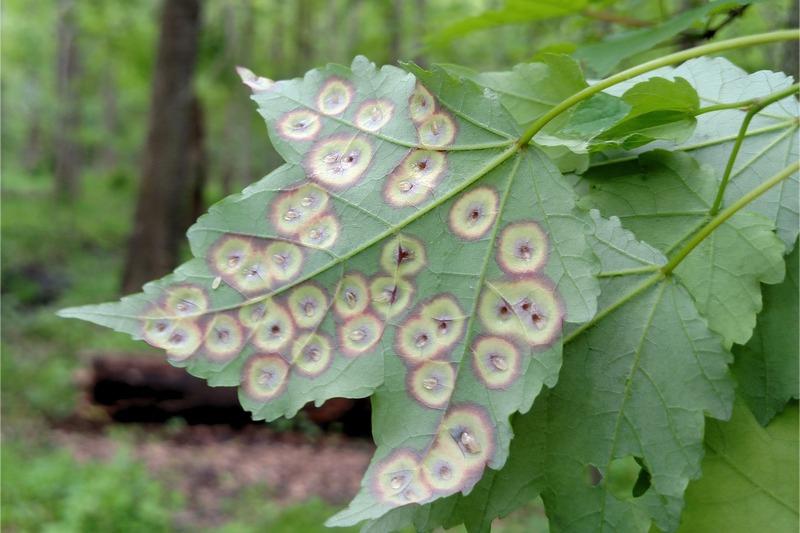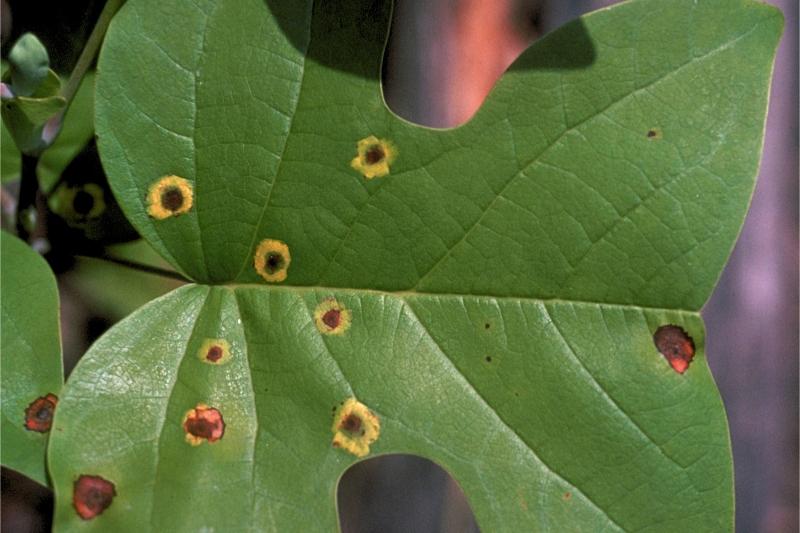

Plant galls are tissue abnormalities which can be triggered by insects, mites, or microbes. Eyespot galls are named for the bullseye or target-like pattern of colors associated with the leaf gall. These types of galls are often caused by the larvae of a midge, a type of small fly. Gall midges rarely injure plants, and eyespot galls do not need to be controlled.
Maple eyespot gall
The most colorful and noticeable of the eyespot galls occur on red maple (Acer rubrum), created by the ocellate gall midge (Acericecis ocellaris), a native species. The midge may also use silver maple (Acer saccharinum), striped maple (Acer pensylvanicum), and sugar maple (Acer saccharum) as host plants.
The small adult midge emerges from the soil in the spring and lays its eggs in the leaf tissue on the undersides of leaves. As the larva feeds and grows, the leaf tissue surrounding it swells slightly and the plant develops red and yellow rings around the gall. The gall spots are 8 to 10 millimeters in diameter.
The color of the gall is most intense in June and later turns brown. The larva completes its development in 8 to 10 days, then drops to the ground and burrows into the soil and pupates. There is one generation per year.