
From Fall 2026 issue of Branching Out. Subscribe to Branching Out here. Read more Invasives in Your Woodland articles here. This article contains information current as of date of publication.
There's an old saying: “One man’s trash is another man’s treasure.” I was reminded of this recently – or, at least, the different perspectives part of it – as I reviewed the draft of an upcoming UME publication about weeds found in mid-Atlantic pastures. I was struck how many of the plants considered “weeds” in the text were native to the region. It included many invasive plants as well, and a few that were both invasive and toxic to domesticated animals if ingested. I wondered if any of the plants in the guide were a) found in woodland settings, b) were toxic to livestock and other animals, and c) were used in human recipes. The answer is this issue’s spotlight: Perilla mint. (Note: Although there is no current scientific documentation that it is harmless to pets, many ingested plants can cause gastrointestinal upset in cats and dogs.)
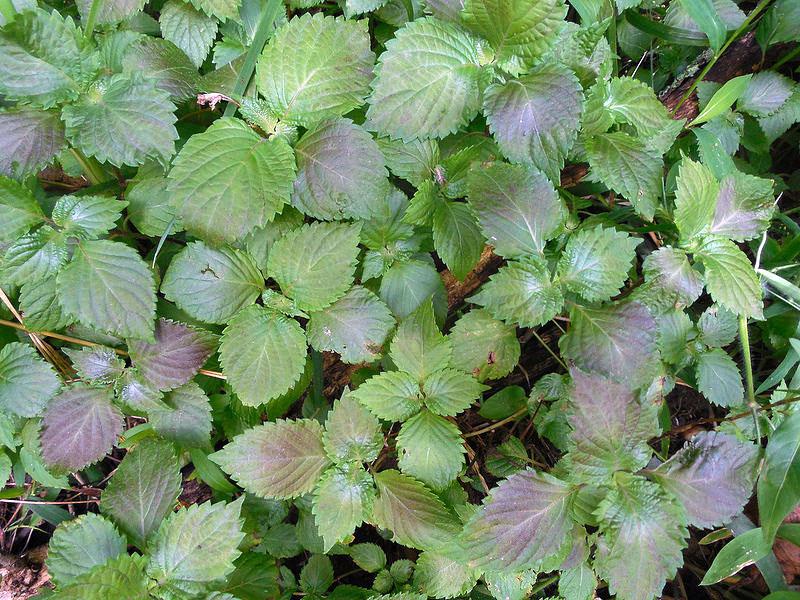
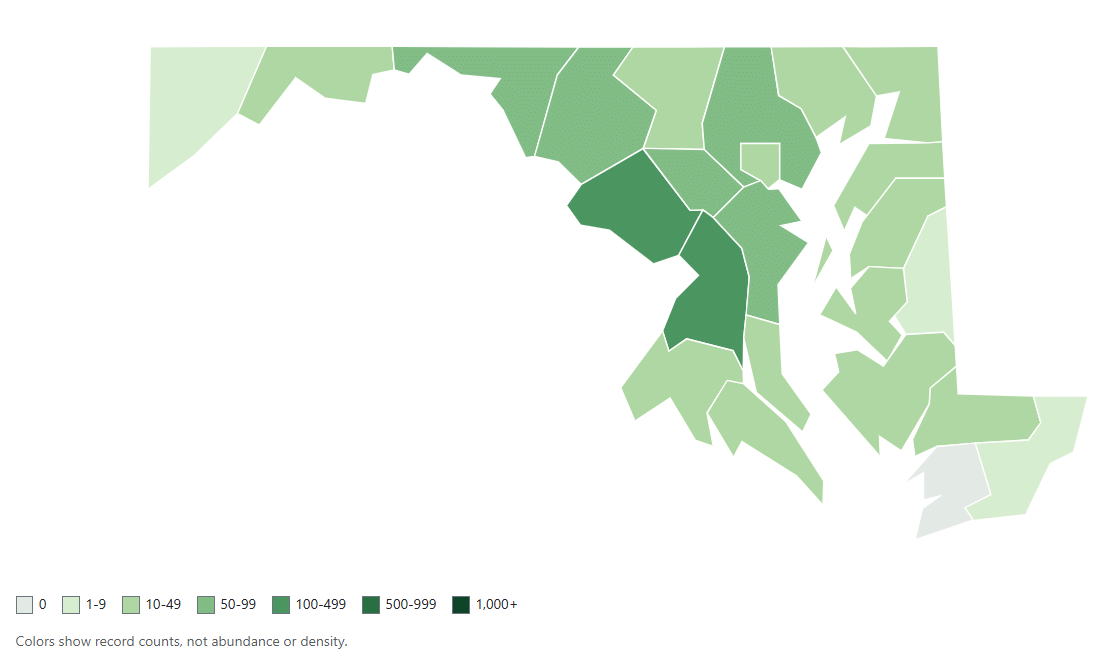
Perilla mint (Perilla frutescens) has several other names, including “beefsteak plant,” “purple mint,” and “shiso” (when used as an ingredient in Japanese and Korean recipes). The plant is native to southeastern Asia and was imported to the U.S. in the early 19th century for ornamental planting, and more recently for cultivation for cooking. However, it escaped cultivation and is now found in from eastern Pennsylvania to Missouri and to the Gulf coast. In Maryland, the plant is recorded in every county except Somerset (see map below).
What is it?
Perilla mint is an annual herb in the mint family. Its rapid growth and prolific reproduction allow it to spread into natural areas and compete with native vegetation. It colonizes roadsides, disturbed ground, landscape beds, and woodland edges. It grows in full sun or partial shade and tolerates conditions ranging from moist, rich soil to relatively dry sites. Consequently, it can spread in both cultivated landscapes and adjoining natural areas.
How does it spread?
Perilla mint spreads by seed, with wind and flowing water dispersing the seeds beyond the original planting. The seeds remain viable in soil for several years, so removing visible plants should be accompanied by additional scouting in succeeding years.
How can I identify it?
This upright, branching herb grows 1-3 feet tall. Its square stems bear short hairs; these characteristics are shared with many other mint-family plants. Leaves are opposite and broadly oval, wrinkled, with sharply toothed edges. Foliage ranges from green in the spring to purple or reddish purple in the fall, which can aid for identification. Crushed leaves release a distinctive, sometimes musky, mintlike fragrance. Small, bell-shaped, two-lipped white and purple flowers appear in elongated clusters from July through October. See the photo gallery below.
How can I control it?
Hand-pull small infestations, including the fibrous roots; plants are particularly easy to remove when soil is moist. Mowing can prevent seed production. Removing flower clusters before seeds develop also helps limit spread. Treatment with glyphosate can be effective, and return visits may be needed to ensure complete control.
For more information:
Learn more about Perilla mint:
Perilla frutescens (NC State Extension)
“Beefsteak plant” in TPM/IPM Weekly Report (UME)
Beefsteak Plant (Perilla Mint) (Perdue Extension)