

FS-1069 | March 2018
Poultry Farm Electrical Safety: Know How to Recognize and Prevent Potential Hazards
By Jonathan Moyle, Jennifer Rhodes, Tom Tabler, and Stephen Collier
Farming is one of the most dangerous occupations in the world and consistently ranks in the top six most deadly jobs in the United States. Poultry farmers work with many different types of electrical equipment daily. Harsh environments inside and outside the poultry house can affect the safety of electrical equipment and create hazards. Growers need to take steps to prevent electrical injury. Poultry farmers can use the following safety guidelines when working around or on electrical equipment.
Make Sure Electricity is off Before Working on Equipment
The best way to safely work on an electrical device is to unplug it. If that is not an option, turn off the breaker in the panel box and lock the box so no one can turn the power back on. Let others know you are working on electrical equipment to prevent them from re-energizing it. When working with electricity, have someone nearby who can help if there is an emergency.
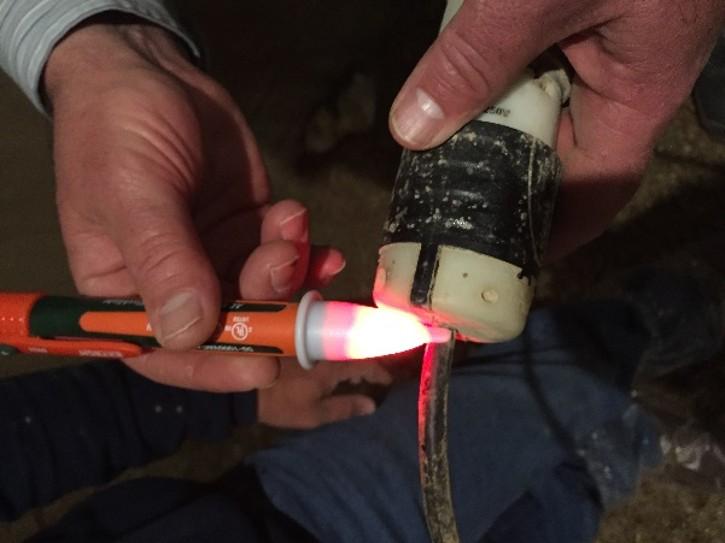
Always test for voltage before starting work, even if the equipment is turned off at the breaker (the wrong switch may have been turned off). Every farmer should have a voltage meter (figure 1). They range from simple, inexpensive units that only indicate if electricity is present, to more expensive ones that can measure electrical current.
Use Proper Tools when Working with Electricity
Only use tools that are insulated to prevent electrocution. Dispose of uninsulated farm tools that might be used for electrical work in order to prevent accidents.
If you are using a ladder, make sure it is not aluminum. While these ladders are cheaper and lighter than fiberglass, aluminum conducts electricity and can lead to electrical injuries.
Keep Panel Boxes Clean and Free of Debris
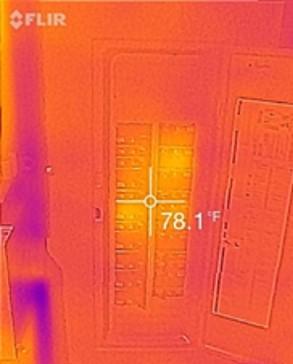
Dust is a constant problem in chicken houses. Dust can build up in and on electrical panel boxes, resulting in overheating and fires. You can use a thermal camera to identify problems in the panel that need to be corrected (figure 2).
Look for Problems with Equipment and Cords
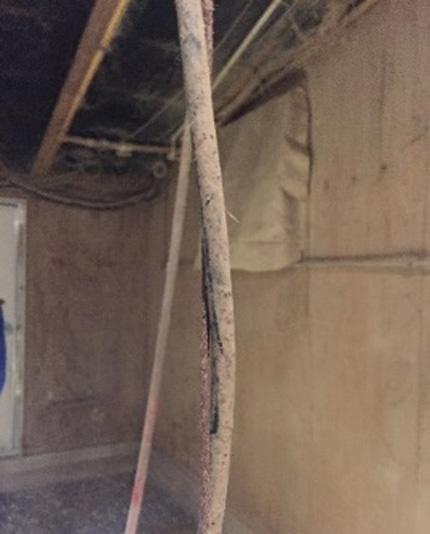
Don’t wrap electrical cords around cables. Raising and lowering the cables can wear through the electrical cord’s insulated protection, which can cause electrical shorts (figure 3).
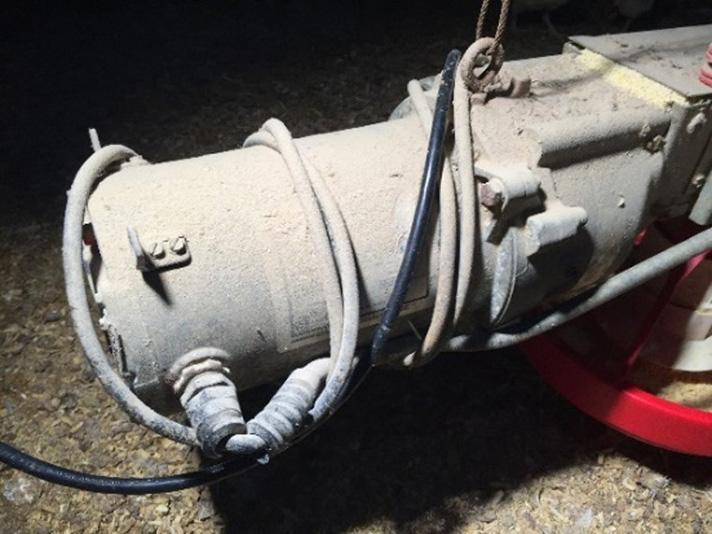
Do not wrap electrical cords around motors since this can damage the cord insulation when the motor heats up during use. It can also damage the insulation around the cord due to vibration of the motor.
Make sure the strain release on motors are functioning properly (figure 4). A strain release relieves a cord of stresses that could break the conductor inside the cord or even the connection between the plug and the cord. Replace worn strain releases.
Do not use extension cords (drop cords) to run permanent motors. Check the outer insulation on electrical cords regularly. You should not be able to see the individual red, black, white, or green wires beneath the insulated covering. Look at plugs to make sure that they are wired properly; again, you should not be able to see the wires.
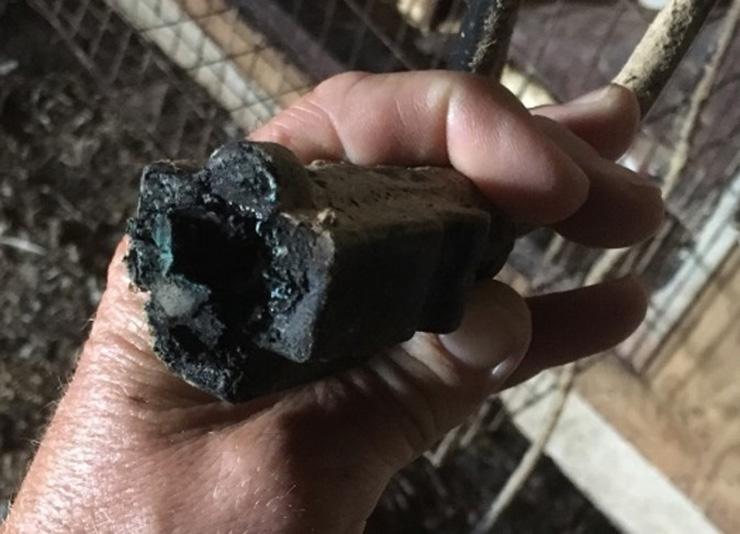
Much like dust, moisture is a constant threat in chicken houses. Check plugs for signs of black residue or melted plastic that may indicate the plug has been wet, overheated, or shorted out (figure 5). To prevent the risk of electrocution, never touch a wet electrical cord unless you are sure the correct breaker is turned off in the panel box and there is no way the wet cord can be energized (use electrical meter to check). Replace any plug that shows signs of being charred, melted, or overheated.
Use electrical tape to wrap the point where the electrical cord and the plug meet to help seal out moisture, dust, and other contaminants. Make sure cords are placed so that water from misters and foggers cannot cause damage them.
Watch for Hazards Outside of the Poultry House
All guide wires on the farm should be well marked and out of the way of normal traffic. Make sure overhead lines will not interfere with feed trucks and other work on the farm. Use caution when working on elevated equipment.
If power lines are a potential hazard, mark them so they are visible (most electric companies will provide this service). Always call 811 (Miss Utility) prior to digging so the utility company can identify buried powerlines. If you do not contact the electric company before digging, you may be liable (and potentially injured) if you damage underground utilities.
Improperly Grounded Motors are Safety Risk
Over time, vibrations and temperature fluctuations can loosen ground wires, resulting in motors that are not grounded. Improperly grounded motors are a big safety risk. Motors should be checked annually to make sure they are properly grounded.
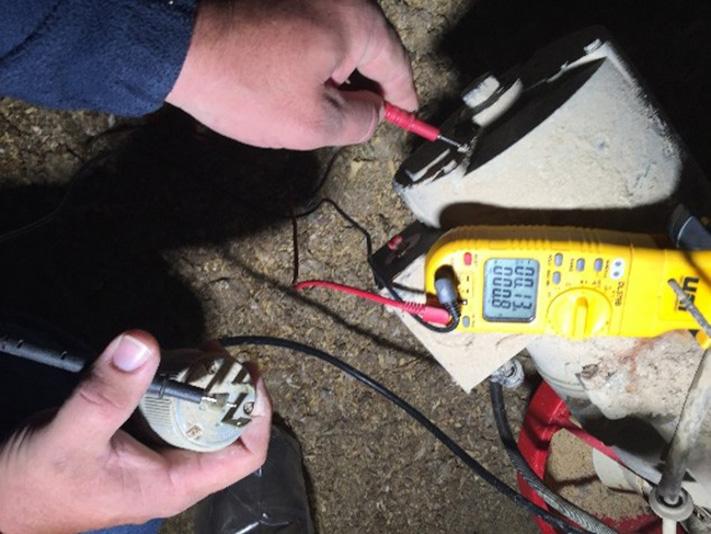
You can check the motor using an electrical tester (figure 6). Unplug the motor and connect one probe to the ground leg of the cord leading to the motor. Connect the other end of the meter to the outside of the motor casing. Make sure the probe touches the metal part of the case (it may be necessary to remove debris).
The electrical meter should show that current can flow from one probe to the other. If current doesn’t pass through the cord to the motor casing, there is a problem that needs to be fixed.
Note: The use of commercial names does not represent an endorsement by the authors or the University of Maryland Extension.
Photo credits: Jon Moyle
JONATHAN MOYLE
jmoyle@umd.edu
JENNIFER RHODES
jrhodes@umd.edu
TOM TABLER
Mississippi State University
STEPHEN COLLIER
University of Delaware
This publication, Poultry Farm Electrical Safety: Know How to Recognize and Prevent Potential Hazards (FS-1069), is a part of a collection produced by the University of Maryland Extension within the College of Agriculture and Natural Resources.
The information presented has met UME peer-review standards, including internal and external technical review. For help accessing this or any UME publication contact: itaccessibility@umd.edu
For more information on this and other topics, visit the University of Maryland Extension website at extension.umd.edu
University programs, activities, and facilities are available to all without regard to race, color, sex, gender identity or expression, sexual orientation, marital status, age, national origin, political affiliation, physical or mental disability, religion, protected veteran status, genetic information, personal appearance, or any other legally protected class.
When citing this publication, please use the suggested format:
Moyle, J., Rhodes, J., Tabler, T., & Collier, S. (2018). Poultry Farm Electrical Safety: Know How to Recognize and Prevent Potential Hazards (FS-1069). University of Maryland Extension. go.umd.edu/FS-1069.
-
Commercial Poultry Production >
Commercial Poultry Production > -
Commercial Poultry Publications >
Commercial Poultry Publications >
Poultry Webinars
Poultry Growers Electrical Farm Safety Workshop/Webinar
Bill Brown: In Memoriam
Safety Hazards in the Poultry Environment
Farm Electrical Safety Review
Electrocution & Fire Hazards Outside the Poultry House