

EC-9 ❘ 2021
Ag 101 Curriculum: Agriculture Education for Agricultural Service Providers
By Andrew Kness, Erika Crowl and Darren Jarboe
-
Curriculum Summary
Curriculum Summary -
Lesson 1: Introduction to Maryland Agriculture
Lesson 1: Introduction to Maryland Agriculture -
Lesson 2: Grain Production
Lesson 2: Grain Production -
Lesson 3: Horticulture
Lesson 3: Horticulture -
Lesson 4: Forage Production
Lesson 4: Forage Production -
Lesson 5: Livestock Production & Animal Husbandry
Lesson 5: Livestock Production & Animal Husbandry -
Acknowledgements and Appendix
Acknowledgements and Appendix
Curriculum Summary
A basic understanding of common agricultural practices is important for agricultural service professionals and advisors to possess. Because these professionals are making decisions on conservation and production practices, their understanding of how these practices work on the farm can influence the recommendations and cost-share decisions they make. However, many new hires to various governmental agricultural service providers have limited understanding of common agricultural practices, especially those in the Mid-Atlantic Region. Many have strong backgrounds in the environmental or biological sciences, but may have never been exposed to real-world agricultural production. The United States Department of Agriculture Natural Resources Conservation Service (USDA-NRCS) and University of Maryland Extension (UME) believes this gap in practical agricultural production knowledge needs to be addressed in order to keep farms viable into the future and service providers safe when on the farm.
Curriculum Goal
Development of a program that will educate agricultural service providers on several key aspects of the agriculture industry so they may have a better understanding of Maryland agriculture. This working knowledge of farming in Maryland will allow agricultural service providers to better assist and communicate with their clients, ultimately improving the relationships these professionals have with producers and enhancing the services they provide.
Curriculum Development, Application, and Course Format
This curriculum was developed as a program within the UME via grant money and partnership through the USDA-NRCS to meet the goal of educating Maryland agriculture service providers on Maryland agriculture. The intended audience of this program is new/relatively new hires to state and local agencies, such as USDA-NRCS, Maryland Department of Agriculture (MDA), Soil Conservation Districts (SCDs), Farm Service Agency (FSA), and the Maryland Department of Environment (MDE).
This curriculum is to be offered as a two-day program across the state at two UME research farms, Wye Research and Education Center (Wye) in Queenstown, MD and the Western Maryland Research and Education Center (WMREC) in Keedeysville, MD. The first day will consist of primarily classroom instruction; the second day will be hands-on learning, demonstrations, and tours on the research farms (draft agendas in Appendix). The classroom instruction portion of the course can be adapted to a virtual format for distance learning (draft agenda in Appendix). There is also the possibility of a tour of a commercial farm at the conclusion of the second day. Each lesson is intended to be taught by university faculty with specialization in each respective area to create a diverse and complete learning experience from unbiased and neutral experts to ensure the information delivered is data-driven and research based. This setting also presents a neutral and friendly platform for participants to ask questions.
While this program is developed with Maryland Agriculture in mind, this curriculum is also intended to be easily modified and adapted to other states that wish to implement a similar program. The framework for the course and its lessons are outlined in this curriculum.
Lesson 1: Introduction to Maryland Agriculture
Summary
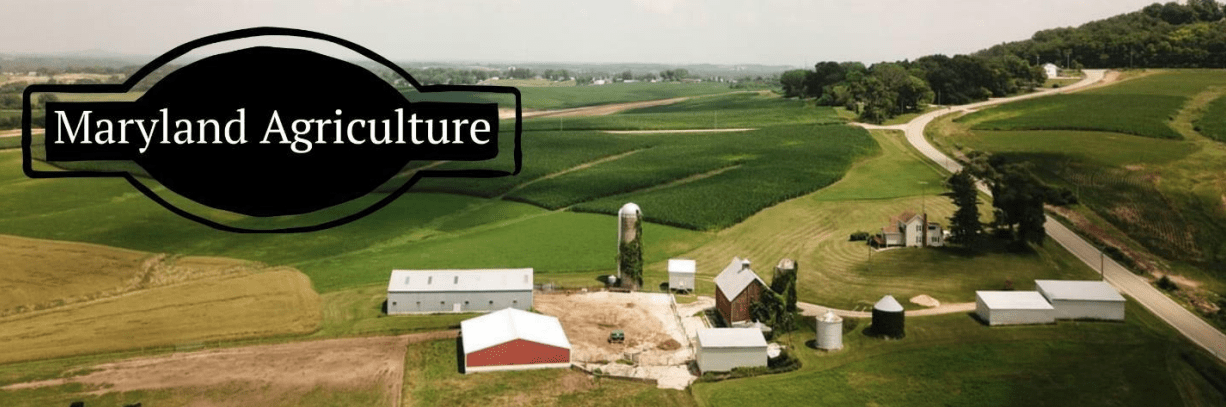
In this lesson, agricultural service providers will be introduced to Maryland Agriculture. Through vocabulary, reviewing different aspects of agriculture, and beginning to converse about agriculture and food systems, service providers will become comfortable with the basics of Maryland agriculture.
Lesson Objectives
Service Providers will be able to:
- Understand the size and scope of Maryland agriculture, economics, number of farms, and acreage in farms.
- Understand the diversity of Maryland agriculture and geographic distribution of different agricultural sectors throughout the state.
Lesson Supplies, Handouts, and Materials
- Maryland Agricultural Statistics Bulletin, pp. 3-4
- Introduction to Maryland Agriculture PowerPoint presentation
- Handout 1-1: Overview of Maryland Agriculture, USDA NASS.
Activity
- (15 mins): Instructor will provide an introductory overview of Maryland agriculture. Focus will be on industry economic impact, size and scale of farms, and geographic distribution of different sectors of agriculture across the state.
- Discussion and Presentation Points:
- Where to find agricultural statistics?
- NASS.USDA.gov
- Maryland Department of Agriculture
- Economic impact: Maryland Agriculture and Resource Based Industry Development Corporation (MARBIDCO)
- Maryland agriculture statistics, general overview
- Number of farms
- Number of acres in farms
- Average farm size
- Major crops
- Conservation practices
- Value of production
- Major sectors by geographical area
- Where to find agricultural statistics?
- Supplement with PowerPoint presentation, Maryland Agricultural Statistics Bulletin, and Handout 1-1.
- Discussion and Presentation Points:
Additional Resources & Information
Lesson 2: Grain Production
Summary
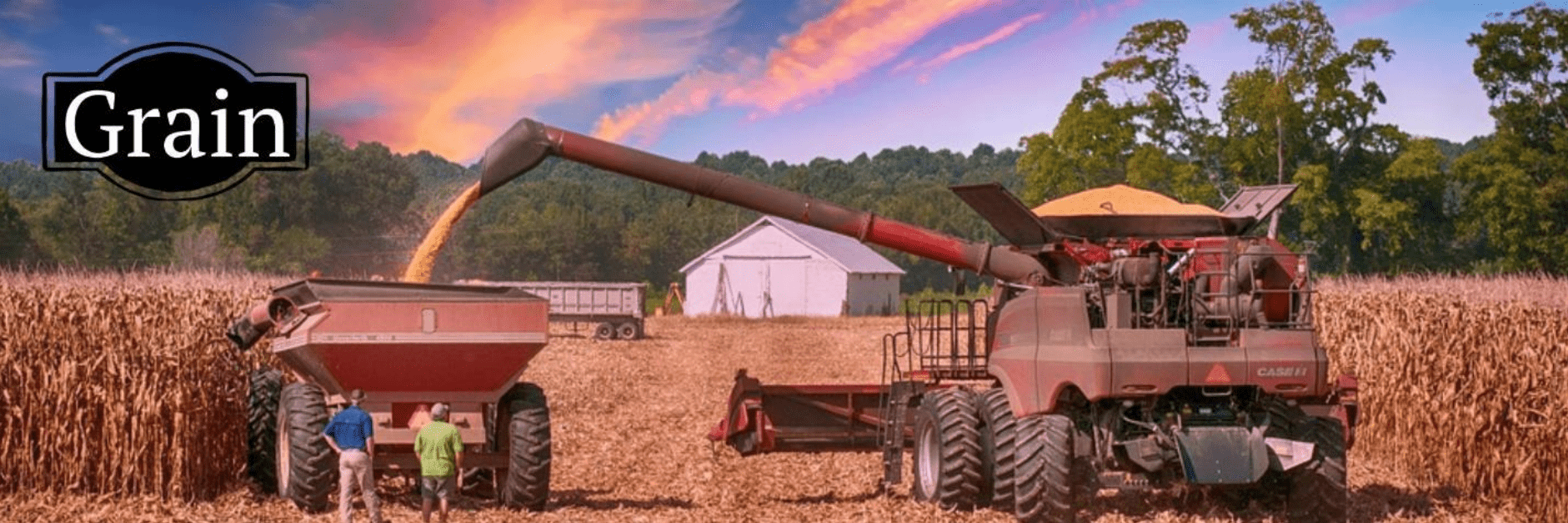
Representing over 65% of Maryland’s farmland, grain production is the largest land use sector of Maryland agriculture and is second in the state for on-farm income behind the poultry sector. The grain industry is vast and is a major sector in every county in the state. The grain industry plays an important role in providing feed for the region’s livestock, including one the largest broiler chicken industries in the nation located on the Delmarva Peninsula.
Statewide, the grain sector includes about half a million acres of corn and soybeans each, about 350,000 acres of soft red winter wheat, grown primarily as a cover crop and harvested for local flour mills, and about 35,000 acres of feed barley.
In this lesson, agricultural service providers will become familiar with statistics of the Maryland grain industry, vocabulary as it relates to grain production, and learn how grain is produced on Maryland farms.
Lesson Objectives
Service Providers will be able to:
- Understand the size, scale, and importance of the grain industry in Maryland and the Mid-Atlantic Region.
- Understand the major grain crops grown in Maryland and their end-uses.
- Understand how grain crops are grown in Maryland, including equipment and production practices.
- Utilize resources to look up local grain commodity prices to gauge the grain farm economy
- Define common grain vocabulary.
Lesson Supplies, Handouts, and Materials
- Maryland Agricultural Statistics Bulletin, pp. 5-6, 14, 16-18
- Grain Production, PowerPoint presentation
- Maryland Department of Agriculture Conservation Choices
- Missouri’s Farm Safety website
- Research farm to host farm tour
- Grain fields for farm tour (ie. corn, soybean, wheat, barley, sorghum, canola/rapeseed, and sunflower)
- Grain farming equipment for farm tour (ie. combine, grain cart, grain bin, planter, grain drill tractor, sprayer, spreader)
- (Optional): Potted or dried plant samples for classroom instruction:
- Corn
- Soybean
- Wheat
- Barley
- Sorghum
- Canola/rapseed
- Sunflower
- (Optional): Grain samples for classroom instruction:
- Same as #5 above
Activity (Day 1: Classroom Instruction)
- (40-50 mins): Instructor will provide classroom instruction regarding common grain production methods for corn, soybean, and small grain. Insight will be given on expected yields for each crop, field prep, planting, harvesting (including grain handling and storage) and sale. A brief overview of economics and commodity markets will be explained and where to find current information.
- Discussion and Presentation Points:
- Why is grain grown here? Discussion of the need for livestock feed, specifically for broilers in the region
- How farmers manage nutrient inputs on grain farms
- Major grain crops produced in Maryland: corn, soybean, wheat
- Outline general production practices for each
- Major tillage practices
- Major types of planting equipment
- In-season management of pests
- Harvest and harvest equipment
- Transport of grain from field to farm to point of sale
- Discussion of global commodity markets
- Supplement with PowerPoint presentation, Maryland Agricultural Statistics Bulletin, and handouts identified by the instructor(s).
- Discussion and Presentation Points:
- (10 mins): Discuss the importance of cover crops in grain production and where they fit into grain rotations. Instructor will provide statistics on statewide acres and common cover crops and cover crop practices.
- Discussion and Presentation Points:
- Cover crops and their role and place in grain production
- Maryland’s Cover Crop Program
- Cover crops and their role and place in grain production
- Supplement with PowerPoint presentation
- Discussion and Presentation Points:
- Optional (5-10 mins): Pass around potted plant samples and ask participants to try to figure out what they are. Instructor will explain general identifying characteristics and features of each plant to help students identify the plants (ie., ligule, auricle, vernation, growth habit, leaf blade, collar, seed head, and flowers).
- Optional (5-10 mins): Pass around grain samples and ask students to identify each sample. Instructor will explain identifying characteristics and features of each grain.
Activity (Day 2: Field Instruction)
- (45 mins): Instructor will facilitate hands-on learning. Students will get to see grain fields and equipment up-close, depending on time of year and equipment present. Possible activities/demonstrations to view:
- Corn, soybean, and small grain fields. Discuss and view planting and harvest equipment. Discuss specific practices used to produce the crop in question.
- Tour tractors, planters, grain drill, combine, grain cart, grain storage/handling, tillage equipment, sprayers, and spreaders. Discuss purpose of each piece of equipment.
- Possible equipment demonstrations.
- Best management practices (BMPs) installed in grain fields.
- Grassed waterways, strip cropping, contour farming, cover crops
- Supplement with Maryland Department of Agriculture Conservation Choices
- Equipment safety. Instructors review basic on-farm equipment safety necessary to keep agriculture service providers safe while on the farm.
- Supplement with handouts from Farm Safety website.
Additional Resources & Information
Lesson 3: Horticulture
Summary
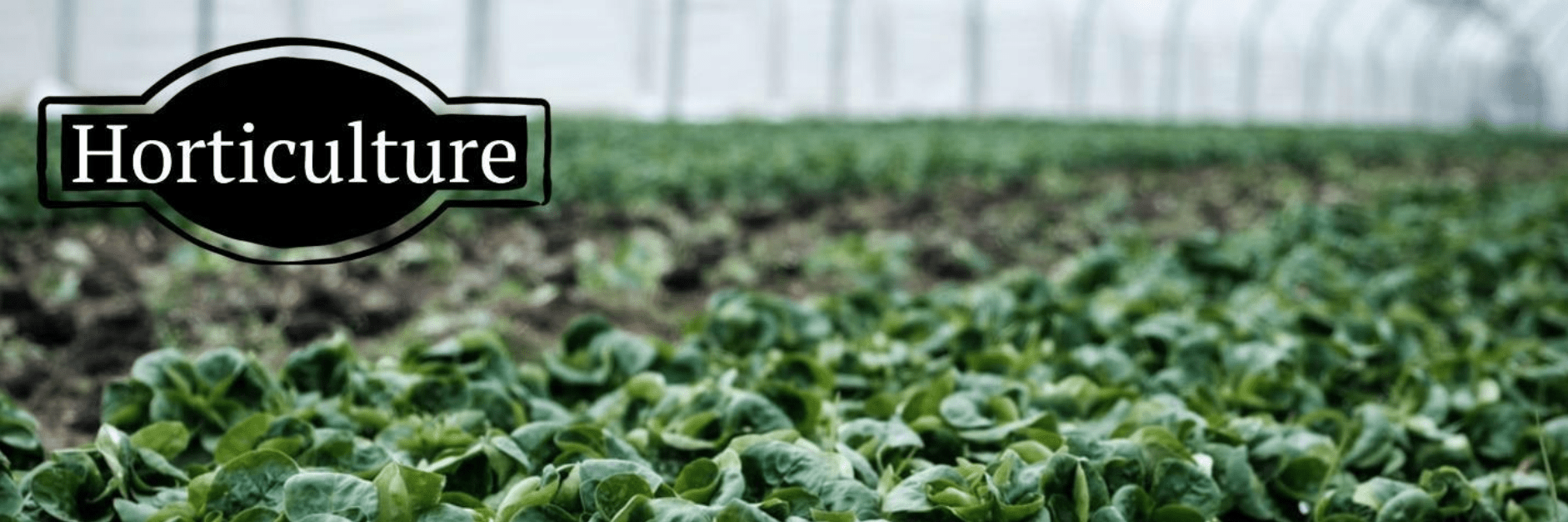
Maryland’s horticulture industry represents only 18% of farms, but is third in farm sales behind poultry and grain. This industry comprises many high-value, labor-intensive crops such as fruit, vegetable, orchard, greenhouse, and nursery production. Maryland's close proximity to major urban centers, such as the Washington DC metro area, Baltimore, Philadelphia, and New York offer access to high-dollar markets. Nurseries and greenhouses retail to the booming landscape industry. Fruit and vegetable farms market their products primarily direct-to-consumer through farmers markets, on-farm markets and stands, CSAs, and local retailers; although some commercial re-wholesaling and contract growing for processors still exists on the Eastern Shore with processing of lima beans, green beans, peas, sweet corn, pickling cucumbers, and melons.
In this lesson, students will learn about the size, scope, and distribution of the horticulture industry. In doing so, they will understand the different production practices common in Maryland and how farms bring products from the field to market.
Lesson Objectives
Service Providers will be able to:
- Understand the size, scale, and importance of the horticulture industry in Maryland and the Mid-Atlantic Region.
- Understand the major horticulture crops grown in Maryland and their end-uses.
- Understand the major production practices and equipment involved in horticulture production.
- Understand the difference between retail/direct market and wholesale operations.
- Define common horticulture vocabulary.
Lesson supplies, Handouts, and Materials
- Maryland Horticulture, Ornamentals PowerPoint presentation and Vegetable and Fruit PowerPoint Presentation
- Maryland Agricultural Statistics Bulletin, pp. 6, 8-9
- Research farm to host farm tour
- Horticulture fields, orchards, and/or greenhouses for farm tour
- Horticulture equipment for farm tour
Activity (Day 1: Classroom Instruction)
- (1 hr 20 mins): Instructor will provide classroom instruction regarding common horticulture crops and common production methods, such as row-crop, plasticulture, high-tunnel, greenhouse, and nursery. Differences will be explored between retail and wholesale operations.
- Supplement with PowerPoint presentation, Maryland Agricultural Statistics Bulletin, and handouts identified by the instructor(s)
Activity (Day 2: Field Instruction)
- (45 mins): Instructor will facilitate hands-on learning. Students will get to see fruit, vegetable, and/or nursery production fields and equipment up-close, depending on the time of year and equipment present. Possible activities/demonstrations to view:
- Greenhouse and high tunnels. Discuss and view planting and harvesting equipment. Discuss specific practices used to produce the crop in question.
- Tour tractors, transplanter, specialized spraying equipment, and tillage equipment.
- Possible equipment demonstrations.
- Irrigation equipment.
Lesson 4: Forage Production
Summary
Maryland grows over half a million acres of various forages. Major forages include grass and legume hay, haylage, corn silage, and pasture. These forages are grown to feed livestock such as dairy and beef cattle, equines, sheep, goats, and to a lesser extent, pasture-raised hogs and poultry. Much of the acreage is concentrated in cattle and horse-rich counties, such as those in Northern, Central, and Southern Maryland.
In this lesson, agricultural service providers will become familiar with statistics of the Maryland forage industry, vocabulary as it relates to forage production, and learn how forage is produced on Maryland farms. Students will also learn about key factors in forage production related to forage quality.
Lesson Objectives
Service Providers will be able to:
- Understand the size and scope of forage production in Maryland and its importance to the livestock industry.
- Understand the forage crops grown in Maryland and their end-uses.
- Understand how forages are grown in Maryland, including equipment and production practices.
- Understand the different methods of forage production and forage storage.
- Understand the importance of forage quality.
- Define common forage vocabulary.
Lesson Supplies, Handouts, and Materials
- Maryland Agricultural Statistics Bulletin, pp. 7
- Maryland Department of Agriculture Conservation Choices
- Maryland Forage Production PowerPoint presentation
- Research farm to host farm tour
- Hay or pasture fields for farm tour
- Hay or silage equipment for farm tour
- (Optional): Potted or dried plant samples for classroom instruction:
- Orchard grass
- Timothy
- Tall Fescue
- Kentucky Bluegrass
- Bermuda grass
- Oats
- Perennial Ryegrass
- Triticale
- Barley
- Alfalfa
- White Clover
- Red Clover
Activity (Day 1: Classroom Instruction)
- (40-50 mins): Instructor will provide classroom instruction that gives an overview of the common forage crops in Maryland and how they are grown. Instructor will discuss how forages are harvested (mechanical vs. livestock on pasture). The processes of making silage, hay, and haylage will be explained. Basic forage plant biology will be discussed in order to explain harvest timing and forage quality. Insight will be given on expected yields for each type of forage, field prep, planting, maintenance of perennial forages, and harvesting. A brief overview of hay markets will be explained and where to find current market information.
- Supplement with PowerPoint presentation, Maryland Agricultural Statistics Bulletin, and handouts identified by the instructor(s)
- Optional (10-20 mins): Pass around potted plant samples and ask participants to try to identify the plants. Instructor will explain identifying characteristics and features of each plant to help students identify the plants (ie. ligule, auricle, vernation, growth habit, leaf blade, collar, seed head, and flowers).
Activity (Day 2: Field Instruction)
- (1 hr): Instructor will facilitate hands-on learning. Students will get to see forage fields and equipment up-close, depending on the time of year and equipment present. Possible activities/demonstrations to view:
- Pasture, paddocks, and rotational grazing. Discuss and view planting and harvest equipment. Discuss specific practices used to produce the forage in question.
- Ask students to break into groups to walk forage stands and identify the species of forage present in the field.
- Tour hay and silage equipment
- Mower, chopper, rake, tedder, baler, wagons
- Tour forage facilities
- Silos, hay storage
- Possible forage equipment demonstrations.
- Best management practices (BMPs) installed in pastures
- Waterers, heavy use areas, stream crossings, exclusion fencing
- Equipment safety. Instructor review basic on-farm equipment safety necessary to keep agriculture service providers safe while on the farm.
- Pasture, paddocks, and rotational grazing. Discuss and view planting and harvest equipment. Discuss specific practices used to produce the forage in question.
Additional Resources & Information
Lesson 5: Livestock Production & Animal Husbandry
summary
In terms of cash receipts, the livestock sector represents over 60% of Maryland farm sales. The majority of this is dominated by the commercial broiler poultry industry located on Maryland’s Eastern Shore. Second behind poultry are cattle, including dairy and beef. Maryland also has a predominant equine industry and the most horses per square mile of any state in the country.
Livestock production is often one of the most misunderstood sectors of agriculture, especially when it comes to animal confinement and animal husbandry. This lesson will familiarize students with the types of animal agriculture common in the state, as well as with how they are raised and why they are raised in such ways. Service providers will become familiar with terminology in livestock production so they will feel more comfortable conversing with farmers and have a better understanding of animal production on the farm.
Lesson Objectives
Service Providers will be able to:
- Understand the size and scope of livestock production in Maryland and its economic impact.
- Understand the types of livestock and their associated production methods.
- Understand and identify farm equipment and facilities involved in animal production.
- Define common animal agriculture vocabulary.
Lesson Supplies, Handouts, and Materials
- Maryland Agricultural Statistics Bulletin, pp. 10-13, 19
- Handout 5-1: Maryland Horse Industry Statistics
- Handout 5-2: Poultry Biosecurity for Allied Businesses & Government Employees
- Handout 5-3: Delmarva Chicken Production Facts
Acknowledgements
Funding for this program has been provided by an award through the USDA-NRCS.
Appendix
| Time | Presentation |
|---|---|
| 9:00 -9:15 | Lesson 1: Introduction to Maryland Agriculture |
| 9:15 - 10:15 | Lesson 2: Grain |
| 10:15 - 10:25 | Break |
| 10:25 - 11:45 | Lesson 3: Horticulture |
| 11:45 - 12:45 | Lunch |
| 12:45 - 1:45 | Lesson 4: Forages |
| 1:45 - 2:00 | Break |
| 2:00 - 3:15 | Lesson 5: Livestock |
| Time | Presentation |
|---|---|
| 9:00 - 9:15 | Introductions Start at main Wye Research Farm |
| 9:15 - 10:00 | Grain - look at equipment, crops, BMPs, & facilities Lesson 1 |
| 10:00 - 10:45 | Horticulture Lesson 3 |
| 10:45 -11:00 | Drive to Wye Angus Farm |
| 11:00 - 11:45 | Forages Lesson 4 |
| 11:45 - 12:30 | Livestock & Biosecurity Lesson 5 |
| 12:30 - 1:30 | Lunch |
| 1:30 - 2:00 | Drive to local poultry farm |
| 2:00 - 3:00 | Poultry farm tour & post-program evaluations |
On-farm tours of:
- Equipment:
- Tractor, planter, grain drill, tillage tools, grain bins and grain handling facilities, silos, combine, box spreader, sprayer, hay and forage equipment
- Crops:
- Tour of crops growing on the Wye farm (grain and horticulture)
- View production practices (row crop vs. plasticulture vs. high tunnels, etc.)
- Beef Cattle/livestock equipment & facilities:
- Animal husbandry, chutes, corrals, pastures & paddocks, rotational grazing
- Cost-share/BMPs (Best Management Practices):
- Manure storage facilities, pesticide storage facilities, fencing, stream crossings, buffers, etc.
- Orchard
| Time | Presentation |
|---|---|
| 9:00 - 9:15 | Lesson 1: Introduction to Maryland Agriculture |
| 9:15 - 10:15 | Lesson 2: Grain |
| 10:15 - 10:30 | Break |
| 10:30 - 11:30 | Lesson 4: Forages |
| 11:45 - 12:00 | Wrap up, discussion, questions |
| Time | Presentation |
|---|---|
| 9:00 - 10:15 | Lesson 3: Horticulture |
| 10:15 - 10:30 | Break |
| 10:30 - 12:00 | Lesson 5: Livestock |
| 12:00 - 12:15 | Wrap up, questions, evaluations |
Andrew Kness
akness@umd.edu
Erika Crowl
ecrowl@umd.edu
Darren Jarboe
jarboe@umd.edu
This publication, Ag 101 Curriculum: Agriculture Education for Agricultural Service Providers (EC-9) is a series of publications of the University of Maryland Extension and the Department of Agriculture. The information presented has met UME peer review standards, including internal and external technical review. For help accessing this or any UME publication contact: itaccessibility@umd.edu For more information on this and other topics, visit the University of Maryland Extension website at extension.umd.edu.
University programs, activities, and facilities are available to all without regard to race, color, sex, gender identity or expression, sexual orientation, marital status, age, national origin, political affiliation, physical or mental disability, religion, protected veteran status, genetic information, personal appearance, or any other legally protected class.
When citing this publication, please use the suggested format:
Kness, Andrew et. all(2021). Ag 101 Curriculum: Agriculture Education for Agricultural Service Providers(EC-9). University of Maryland. go.umd.edu/EC-9